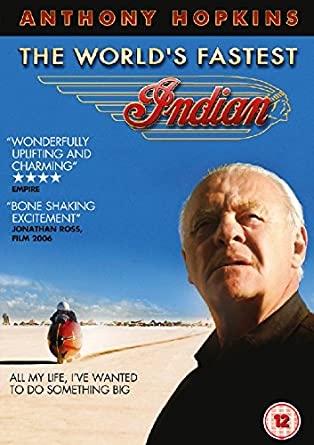
The World's Fastest Indian (2006)

For twenty-five years in Invercargill, New Zealand, Burt Munro (1899-1978) has been working on increasing the speed of his motorcycle, a 1920 Indian. He dreams of taking it to the Bonneville Salt Flats to see how fast it will go. By the early 1960s, heart disease threatens his life, so he mortgages his house and takes a boat to Los Angeles, buys an old car, builds a makeshift trailer, gets the Indian through customs, and heads for Utah. Along the way, the people he meets are charmed by his open, direct friendliness. If he makes it to Bonneville, will the old guy be allowed on the flats with makeshift tires, no brakes, and no parachute? And will the Indian actually respond?
"Based On One Hell Of A True Story"
Burt Munro: If you don't go when you want to go, when you do go, you'll find you've gone.
Auckland, New Zealand
(studio)
Bonneville Salt Flats, Utah, USA
Invercargill, Southland, New Zealand
New Mexico, USA
Oreti Beach, Southland, New Zealand
Penny's Gas Station Location, Rush Valley, Utah, USA
Salt Lake City, Utah, USA
Skull Valley, Utah, USA
(pulled over by police officer)
Southland, New Zealand
Timaru, Canterbury, New Zealand
Tooele, Utah, USA
(old hospital)
Wendover, Utah, USA
(salt flats)
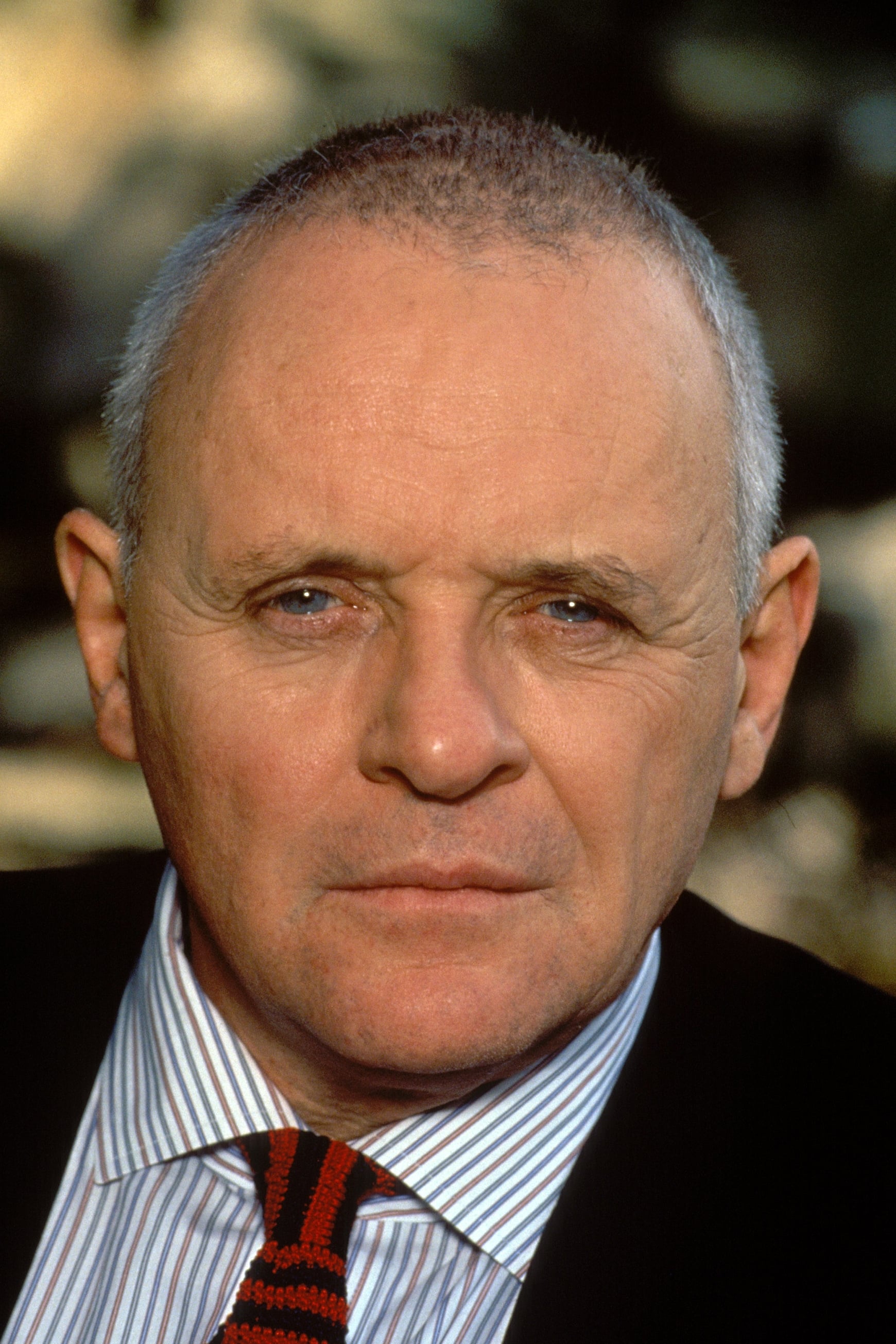
Burt Munro's children visited the set one day, when, according to writer, producer, and director Roger Donaldson, "Tony (Sir Anthony Hopkins) was having a particularly good Burt day." His performance was so authentic that it moved them to tears.
Many of the props from his home and workshop used for filming were actually owned by Burt Munro, including all the exploded pistons and the piston mold that Sir Anthony Hopkins uses for a scene in the film. These were on display at the Southland Museum and Art Gallery. These, as well as small pieces of costume, such as one of Munro's ties on loan from his son, were used by Hopkins to add to his character's authenticity.
The set of Burt Munro's (Sir Anthony Hopkins') garage and shack was formerly the site of a gang headquarters in Invercargill, New Zealand.
Tim Shadbolt (Frank) was the Mayor of Invercargill in real-life, from 1998 to present (as of 2016).
Burt Munro was 68 years old when he set the still-unbeaten record of 1000 cc world record (Born 1899; record set in 1967). Sir Anthony Hopkins was 68 years old when he shot this movie (Born 1937, movie filmed in 2005).
Continuity
When the Challenger I is being pushed to the start line and the start of its run announced, the next shot shows it clearly parked in the background, followed by a shot of it driving down the track.
When Burt Munro grabs two eggs from the chicken coop, they are white, but in the next scene they are brown.
When the Airman and Burt Munro are driving in the car and see the shaving signs after the last sign, there is a shot of the two men in the car and out the back window no signs are visible.
When Burt's motorcycle and trailer break loose from his car at high speed, the trailer upsets on the gravel covering the shoulder of the road, settling on the left side of the motorcycle. Yet when the bike and trailer are righted, there is no "road rash" or damage of any kind on the left side of the cycle's fairing.
When Burt Munro is racing the group of young guys towards the beginning he has on a dark tan tinted pair of goggles. But when he wrecks his bike around the turn and stands up, he has on white non-tinted goggles.
Factual errors
Burt talks about his twin brother and tells Tom a story about how he died as a youngster. The real Burt Munro had a twin sister who died at birth.
Burt Munro was born March 25. The character in the movie celebrates a birthday party five days before leaving New Zealand. Speed Week at Bonneville is in August. It takes 21 days for a ship leaving New Zealand to reach Long Beach in California, and 11 hours to drive from Los Angeles to Bonneville in Utah. It leaves one to imply that the movie begins in late June/early July.
Burt is told to put his bags in the trunk of the taxi as he arrives in America, which is a 1957 Chevy Bel Air. He goes to the rear and just opens it but all cars at this time would have required a key to open the trunk.
(at around 1h 50 min) Burt mispronounces the Maori name for New Zealand, saying "Hiatierawa" instead of "Aotearoa" (meaning The Land of the Long White Cloud).
When Burt is driving in town near Bonneville, there are a few cars with "modern" build styles, most notably a blue 32 Ford Roadster parked on the street with a 1980's or 1990's billet-style look, which arrived much later than the movies time frame.
Revealing mistakes
At the beginning of the movie, the young neighbor who has boiled the kettle for Burt's tea takes the kettle directly from the stove and without oven gloves or a cloth to absorb the heat. The kettle would have been extremely hot through conduction and could not be handled without thermal protection.
At 1:36: Burt starts buckling his helmet, turns around, the strap is not buckled, then puts his goggles on; next shot, the helmet is buckled.
Miscellaneous
When Burt is resting on the side of the road after his heart attack, the 1957 Ford Police car has missing hood and front insignia "Fairlane" emblems. This is a customizer's trick, called "shaving" trim to give it a custom look. Police cars were used for their obvious intent, and would not have the shaved emblems.
Anachronisms
In one scene, when Burt Munro goes to Timaru in New Zealand before heading to the US, a cellphone tower can clearly be seen in the background.
When Burt Munro is in the United States, the tone and type of sirens that can be heard in the background at various times are that of modern day emergency vehicles, and not from the 1960's.
There is a modern (lower height, aluminum body with rounded edges, modern logo) U-Haul trailer visible in a scene at the salt flats.
In the highway scenes filmed in the United States, the center line markings are yellow --- the North American standard was white until the late 1960's or early 1970's.
When Burt Munro makes a left turn in his car, with Fernando as a passenger, behind them you can see modern-day vehicles parked nearby.
Crew or equipment visible
When Burt Munro gets into the back of the taxi in Los Angeles, you can see a crew member wearing a blue coat, a hat and sunglasses reflected in the window.
In the scene in which Burt Munro and the Indian are caught speeding by the state trooper, skid marks created by the cruiser in other takes are clearly visible in at least one shot.
Character error
In the movie, the nickname of one of Burt Munro's friends is mispronounced. The friend's nickname was "Rollie." In the movie, this is pronounced to rhyme with "jolly," but in real life the nickname rhymed with "holy."
In the final scene when Burt Munro unlocks the paddle lock so that he can slide the bolt to the left to open the door, the bolt was already in the unlocked position. The clasp of the paddle lock needs to go through the bracket at the end of the bolt AND the bracket directly above it if you want to lock the bolt in the closed position so that the door cannot be opened.