
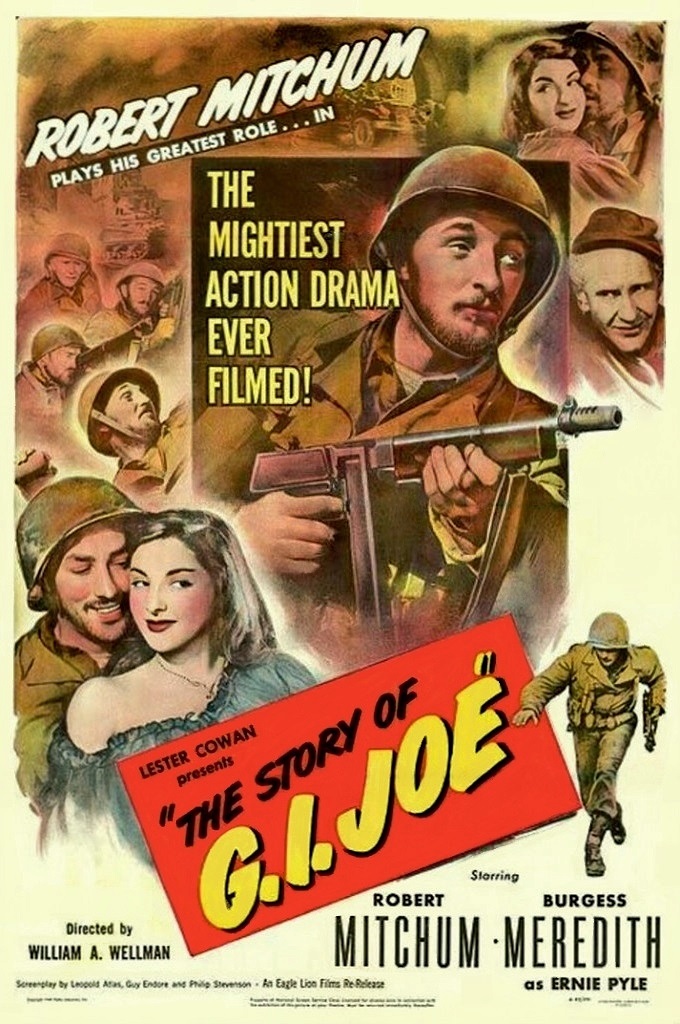
The Story Of G.I. Joe (1945)

The story of men at war and that of the esteemed Pulitzer prize winning war correspondent Ernie Pyle. Soon after the U.S. entry into World War II, Pyle joined C Company, 18th Infantry in North Africa. There he got to know the men and often wrote about them in his columns mentioning them by name, something both the soldiers and their families back home appreciated. Pyle moved to other units but as C Company is the first he went into combat with, he considers them "his" company and rejoins them in Italy. Many will die but his reporting brings a human face to war.
A motion picture as big as Ernie's own heart
Ernie Pyle: (Voice-over): For those beneath the wooden crosses, there is nothing we can do, except perhaps to pause and murmur, "Thanks pal, thanks."
Iverson Ranch - 1 Iverson Lane, Chatsworth, Los Angeles, California, USA
(marching through countryside just before the "baptism of fire.")
Fort Benning, Georgia
(Location)
Culver Studios - 9336 W. Washington Blvd., Culver City, California, USA
(Studio)
Camp Cooke, California, USA
(Location)

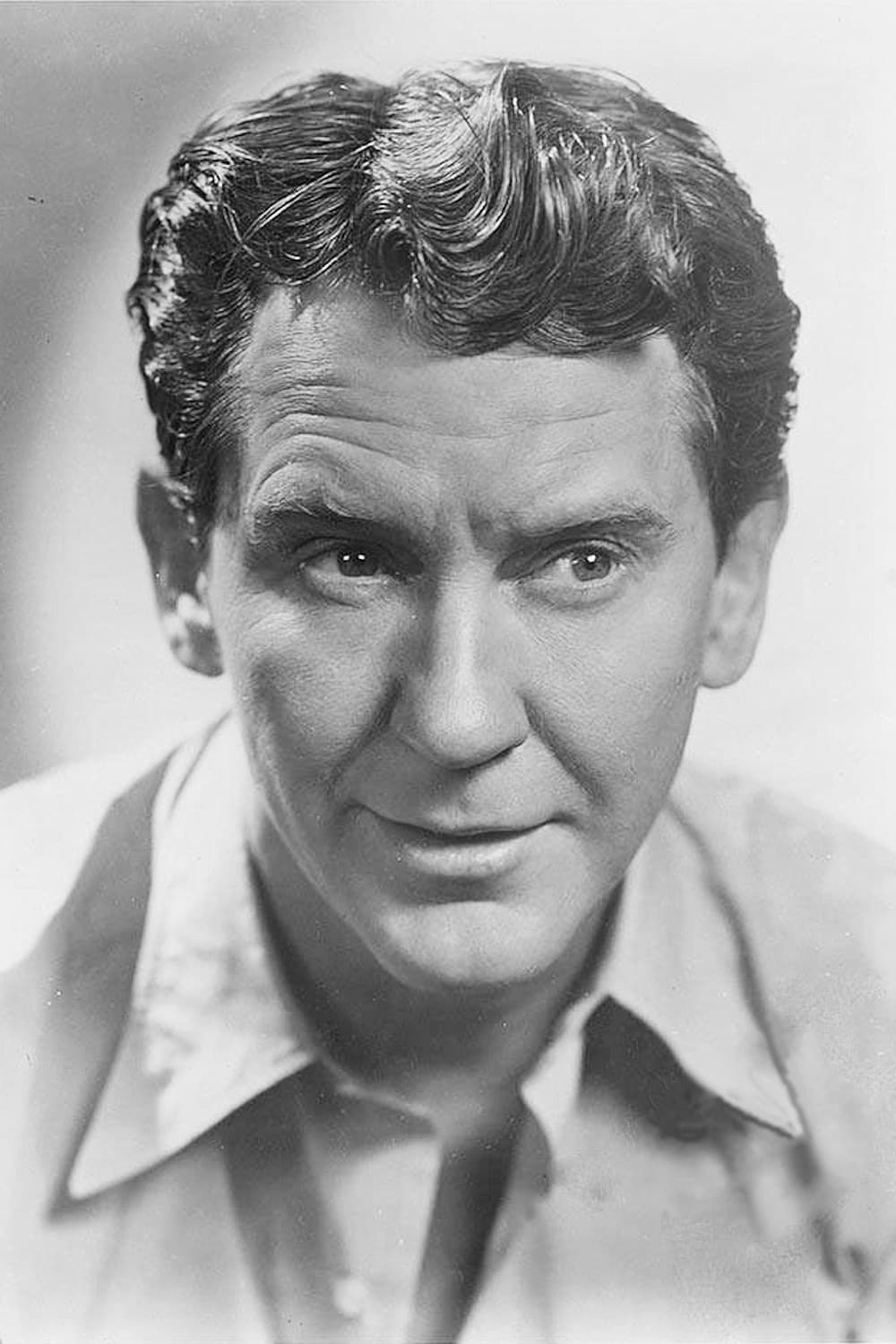

The extras in the film were real American GIs, in the process of being transferred from the war in Europe to the Pacific. Many of them were killed in the fighting on Okinawa--the same battle in which Ernie Pyle was killed by a Japanese machine gunner--never having seen the movie in which they appeared.
This is the film that propelled Robert Mitchum to stardom. It also brought him his only Academy Award nomination.
During WW2, infantry soldier Frank Feldman wrote a letter to his wife, describing how his unit watched the movie one evening away from the battlefield. He wrote that the film was very accurate, and that many soldiers left the viewing "with tears in their eyes." The letter survives to this present day.
War correspondent Ernie Pyle acted as advisor to the film. He was killed not long after the film was completed.
The creator of the G.I. Joe Action figure, Hasbro executive Donald Levin, got the idea for the name from this movie. He was originally going to have several names like Rocky the Marine, Ace the fighter pilot, Salty the sailor. Levin was told to keep it to one and after struggling to name the doll; he saw this movie and then licensed the name.
Continuity
About 34 minutes in, a camouflaged M4 Sherman is seen firing. Moments later when the tank is hit and burns it has transformed into a non-camouflaged M3 Lee.
When the monastery is bombed...there are four bombs that explode on the left side of the monastery. After a shot of soldiers cheering and more monastery bombing...the same shot with four bombs exploding on the left side is shown again.
Factual errors
The unit Pyle is with--the 18th Infantry Regiment, 1st Infantry Division--never fought in the Italian campaign. After the Sicilian campaign ended, it was brought back to England and began training for the D-Day invasion in Normandy. The 1st Division would eventually spearhead the assault on Omaha Beach.
Much of this film revolves around the battles around Monte Cassino and the controversial bombing of the abbey, with several references to the monastery being used by the Germans as an observation post. Although the film acknowledges that the Germans used it as a defensive position after the bombing, it does not mention that the abbey had been unoccupied by the Germans and that the bombing was unnecessary. Given that this movie was filmed in 1945 while the war was still being fought, it is perhaps understandable that this fact was not mentioned.
At about 12 minutes in, the squad takes a break during a heavy rainstorm that has turned the dirt road they've been walking on into thick, gooey mud. A few seconds later a jeep speeds down the road and skids to a stop in front of Lt. Walker, with its tires squealing. Since the "road" was pure mud, there would have been no friction between the tires and the road surface and therefore they wouldn't have squealed.
A G.I. has ongoing problems with a vinyl recording from his wife and son--he perpetually plays it on a record player every time he returns from patrol, but it always sounds like it's playing backwards, and in fact at one point he expresses frustration that it plays backwards and that he knows nothing about record players, and constantly looks for someone among the new replacements who knows anything about record players so they can fix it for him. His platoon mates join in his frustration that he cannot hear his son's voice speaking normally and saying "Daddy." Eventually one day, without changing how he played it, it miraculously plays correctly and he hears his son's voice and goes nuts. However, it would be impossible to play a record that sounds like it's playing backwards like that. You would only hear a slowed-down or sped-up sound if the turntable was the wrong speed for the recording, but not a reversed unintelligible sound.
Crew or equipment visible
When Ernie leaves his sleeping bag and other heavy gear before crossing a small stream, the shadows of the camera crew, boom mics, etc., are clearly visible as he begins entering the water.
In a night battle scene of US soldiers advancing, it is lit only by artillery explosions; a cameraman is visible in the middle distance pointing a hand-held camera back towards the men.