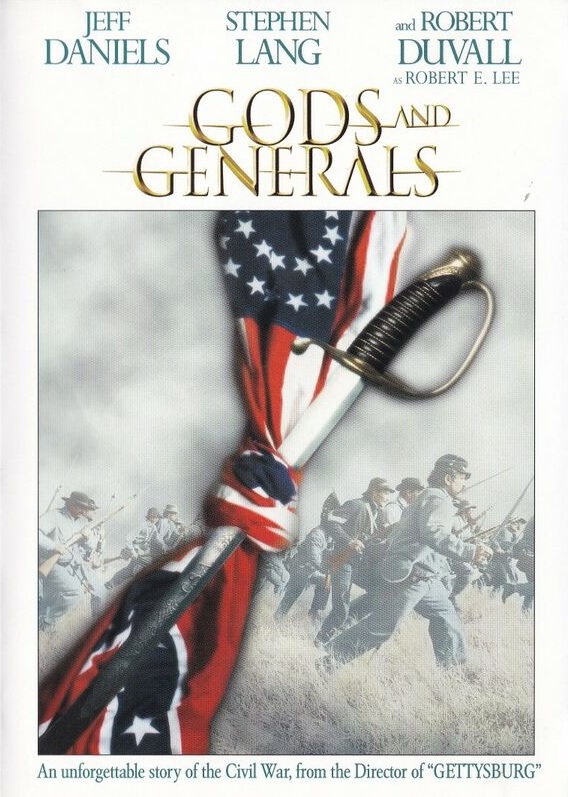
Gods And Generals (2003)

The rise and fall of confederate general Thomas "Stonewall" Jackson, as he meets with military success against the Union from 1861 to 1863, when he is accidentally killed by his own soldiers.
The nation's heart was touched by....
General Robert E. Lee: It is well that war is so terrible... or we should grow too fond of it.
Harper's Ferry, West Virginia, USA
Antietam Battlefield, Sharpsburg, Maryland, USA
Lexington, Virginia, USA
Sharpsburg, Maryland, USA
Staunton, Virginia, USA


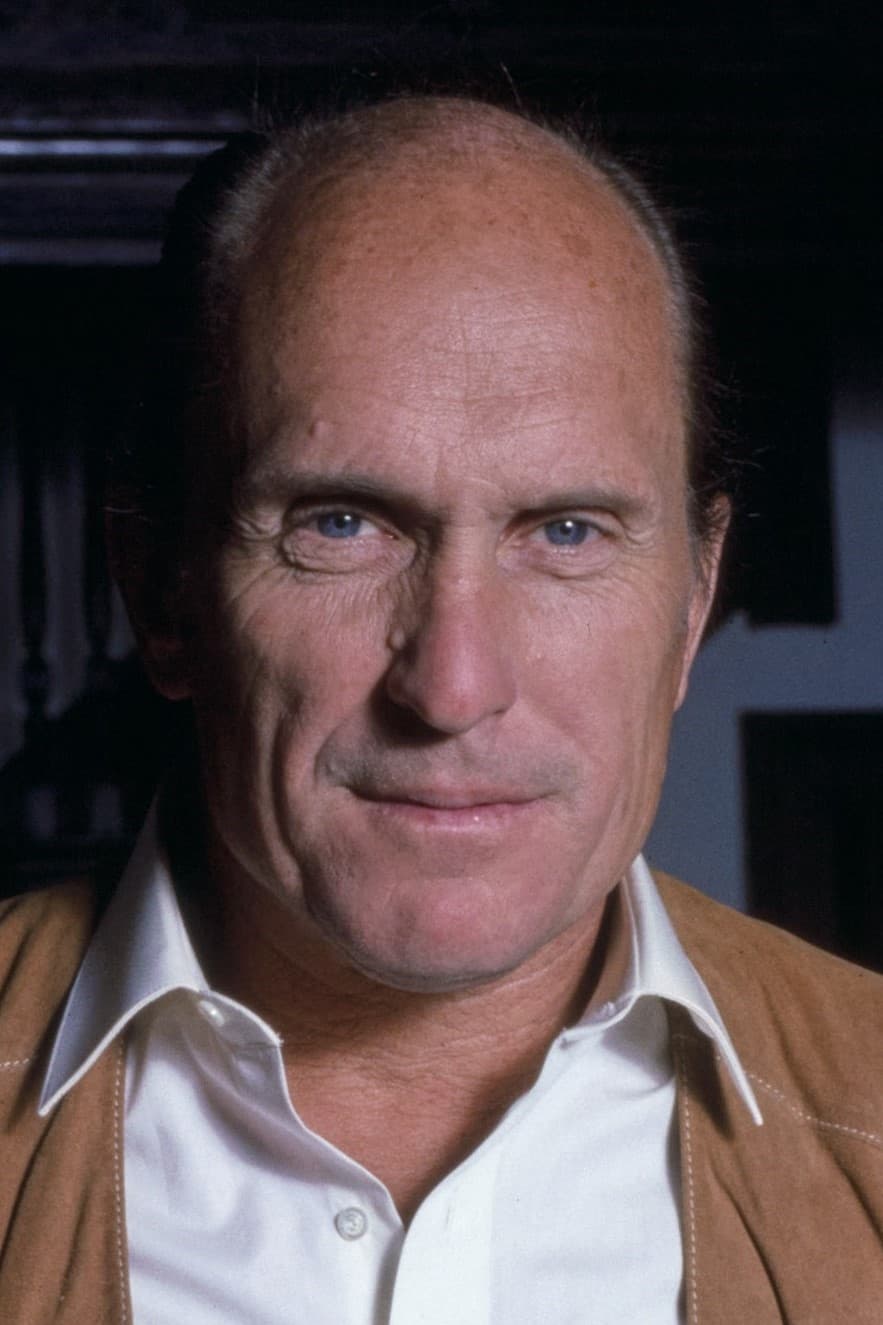
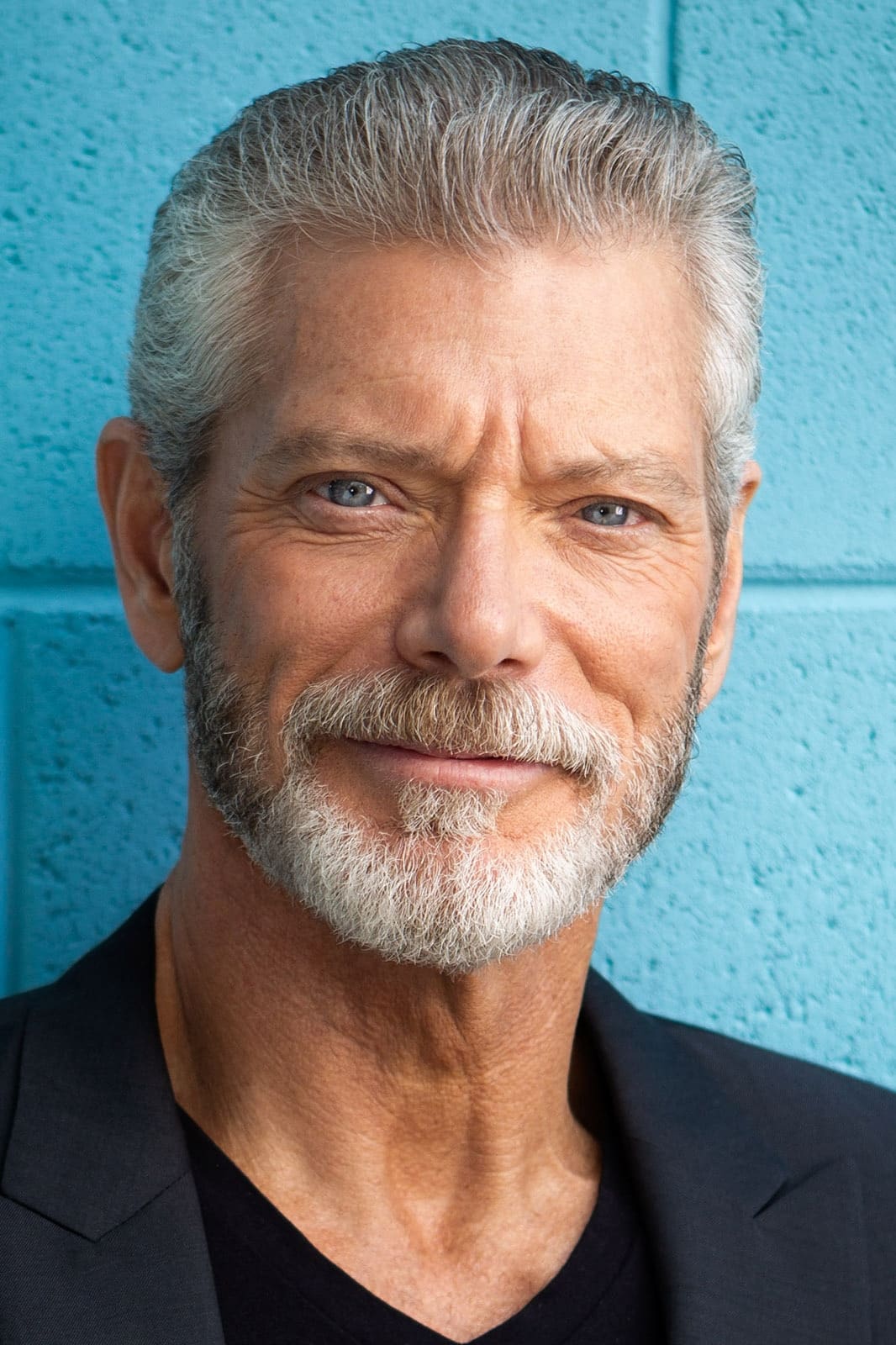
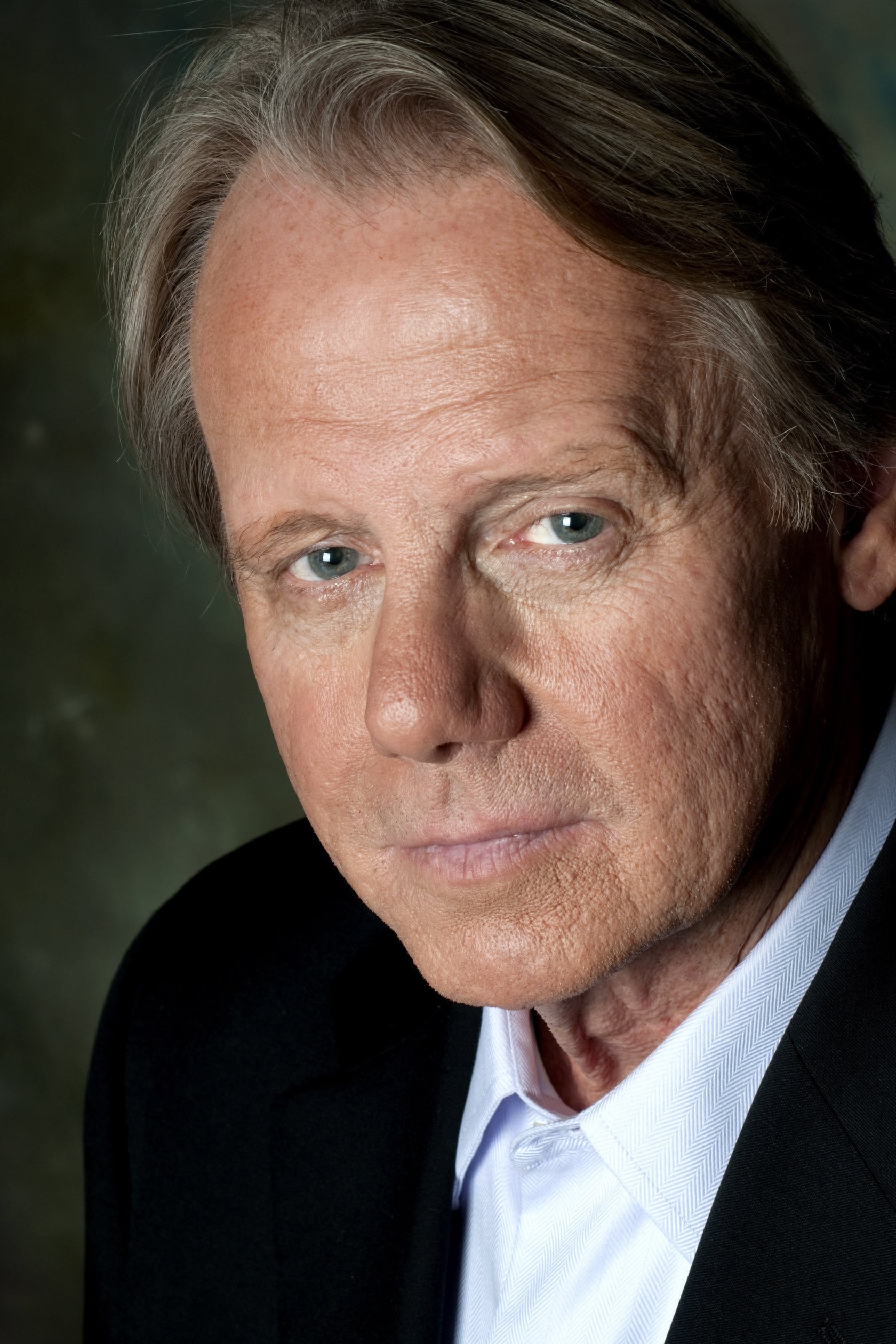
Some scenes were filmed on Robert Duvall's estate in Virginia, which was the site of some Civil War skirmishes.
Martin Sheen was in the Washington, D.C. area in early September 2001, filming scenes for The West Wing (1999). He was prepared to take a Tuesday morning flight from Dulles to LAX if Warner Brothers agreed to pay him $1 million to reprise his role of Robert E. Lee from Gettysburg (1993). Because Warner Brothers passed, Sheen was not on Flight 77 the morning of September 11, 2001.
The majority of the Civil War re-enactors in the movie volunteered to appear without pay. In return, the production company agreed to donate at least $500,000 to preserve a Civil War battlefield.
The wide shots of the Union infantry advancing toward the stone wall during the Battle of Fredericksburg were not set up or filmed as visual effects shots. The film's re-enacting unit shrunk drastically due to the terrorist attacks of September 11, 2001, and subsequent travel concerns and military reserve call-ups. It wasn't fully evident until the wide shots were viewed in post-production. Visual effects supervisor Thomas G. Smith had to digitally create over 17,000 low-resolution CGI soldiers, then map out individual speeds for them: running, walking, or crawling wounded. He then added 3,000 dead soldiers to scatter around the shot.
Russell Crowe was the first choice to play Stonewall Jackson. Crowe expressed initial interest but eventually declined, citing a need to return to Australia and take a break from movie making. The role was then offered to Stephen Lang, who was already signed and rehearsing to reprise his Gettysburg (1993) character of General George Pickett. Billy Campbell took over the Pickett role.
Continuity
As the 20th Maine is storming Marye's Heights, the flag bearer is seen being shot down, with the flag pole breaking in half. He has a sprig of green tucked under his hat, right above his ear. This indicates that this is a shot taken from footage of the Irish Brigade's attack, since only the Irish soldiers wore these sprigs of green (and can be seen putting them on in a deleted scene on the soundtrack's extra features.)
When Colonel Patton speaks his only line in the movie, no one is sitting in front of him or the two men to his right. However, in the previous and subsequent scenes, Generals Longstreet, Lee and Jackson are shown seated in front of Patton and the others.
During the battle of Fredericksburg, it shows brigades charging one after another with a period in between each. However after each brigade is shown charging, the previous brigade seems to disappear from the field. Only a few soldiers are shown falling back, far too few to make up even the most devastated brigades.
Hancock's hair changes during his visit to the Beale House after the Battle of Fredericksburg.
During the attack on the stone wall, Tom Chamberlain is shown marching with a musket, marching without a musket, then loading and firing a musket, then again without a musket.
Factual errors
Robert Edward Lee and Thomas Jonathan Jackson are shown wearing full beards at the very start of the Civil War, but they did not look like this until sometime later. Lee had dark hair going gray and wore a drooping mustache of the type favored by army officers in the 1850s. He grew his well-known beard while serving as Jefferson Davis's military advisor. Jackson was clean shaven and grew a beard later out of his well-known disinterest in personal grooming and appearance.
The 20th Maine did not charge independently at Fredericksburg. It was part of the 3rd Brigade, 1st Division of the 5th Corp of the Union Army. No lone regiment charge at the Confederate position without supporting regiments around it.
Before the Battle of Fredricksburg, the the Irish Brigade's famous green flags were in the process of being replaced; the only regiment to have the green flag was the 28th Massachusetts. Days after the battle, Gen. T.F. Meagher, commander of the Irish Brigade, had the new emerald flags presented at what is known as the "Death's Dinner" while the deaths of their comrades were still fresh on their minds.
When Jeb Stuart visits Jackson in his camp he introduces himself as a Lieutenant Colonel but he wears the shoulder boards of a full colonel which is a full rank higher (a lieutenant colonel wears a silver leaf while a full colonel displays an eagle). Later in the scene Jackson refers to him as "General Stuart".
After the Battle of Chancellorsville it began to rain; General Jackson wore a raincoat on the evening ride, this is shown in the film. After the General is struck and falls from his horse, dirt and dust fly from the ground. After Jackson was put onto the stretcher he was indeed dropped, but this was because the soldiers carrying him slipped in the mud, not because of gunfire.
Incorrectly regarded as goofs
The tender of the locomotive bears the initials V & T R R, which many would consider to be initials of the Virginia and Truckee Railroad, which is situated in Nevada, not in Virginia, and was not established until 1870. However, they could actually be the initials of the Virginia and Tennessee Railroad, established 1850, and was very instrumental during the war.
Revealing mistakes
Although it is well concealed for the open field fighting shots, the Fredericksburg street-fighting scenes show the historical re-enactors shooting over the heads of the enemy, for safety reasons.
During the Battle of Fredericksburg, Lt. Colonel Chamberlain loads and fires a rifle. When he does so, he pours gunpowder down the barrel and then rams it without putting a bullet in.
During the fight in the Antietam cornfield, in the Special Edition version, a catapult can clearly be seen at the bottom of the screen launching stunt men into the air. (Timestamp: 1:29:14)
During the battle of Fredericksburg, a cannon bursts, knocking General Lee and other officers off their feet. Before it explodes a gunner is going through the motions of ramming a charge down the barrel, with sound-effect, except the rammer is beside the barrel and not down the muzzle. (2:28:04, Special Edition version)
At Bull Run, when the Confederates overrun the batteries for the first time, there's a close shot of Union troops turning about with an officer ordering, 'About face! About face, men." The Union troops in front have black haversacks on their left hips and they are flat, completely empty. Haversacks carried men's toiletry items, food, writing tools, and everyday items. They wouldn't be flat.
Miscellaneous
The 20th Maine Regiment halts before being given the order to do so when entering Fredericksburg.
Some cannon shells explode directly behind troop formations, which would be impossible to do without going through the troops themselves.
During the First Battle of Bull Run, a cavalry bugler sounds the order to charge before General J.E.B. Stuart gives the order.
Anachronisms
When Stonewall Jackson is leaving the Virginia Military Institute, as the camera pans past the flagpoles, "New Barracks" can be seen. New Barracks wasn't built until 1949. In 1861, all that would have been visible is the iconic "Old Barracks" which was built in 1848.
The style of the stone wall at the sunken road in Fredericksburg is that of the 1930s reconstruction, not that of the original wall. (The stones are larger in cross-section in the reconstruction rather than the original flatter stones.)
During the first battle, a dead soldier is clearly wearing modern boots. A large "H" is visibly imprinted on the sole of the boot.
Wristwatch visible on the Confederate soldier nearest the camera in many of the Fredericksburg sections.
Air conditioners are seen in the windows of W&L University at 10:32 into the film. They are located on the far left, which is Newcomb Hall, while the flag is waving in the foreground.
Audio/visual unsynchronized
During the First Battle of Manassas, Brigadier=General Bee is exhorting his men with his famous 'Stone Wall' speech. While he is doing this, his mouth does not perceivably move.
Crew or equipment visible
When the Beale brothers leave for war, the boom mic and set lights are reflected in their brass breast plates.
Errors in geography
During several shots of the Fredericksburg town battle, St. Peter's Roman Catholic Church is clearly visible. This church is one of the larger landmarks of Harper's Ferry, WV, where many of the Fredericksburg scenes were filmed.
Confederate soldiers at Fredericksburg are shown using cotton bales as parts of fortifications, but cotton was not a Virginia crop, nor was Fredericksburg a shipping point for moving raw cotton to mills in the north.
When Joshua Lawrence Chamberlain looks through his binoculars before the Battle of Fredericksburg, he would have been standing on the north side of the Rappahannock River looking at the city towards the south. But the Point of View shot through the binoculars shows what would have been seen looking north from Maryes Heights.
Character error
Even after referring to Colonel Kemper correctly by rank, General Pickett a minute later states 'Do your duty, General'.
Robert Duvall (in character as Robert E Lee) is wearing the uniform of a full bird Colonel when he is offered command of the Union Army. Robert E Lee only achieved the rank of Lt. Col when he resigned from the US Army to go home to Virginia. The insignia should be the silver oak leaf, not the eagle.
During the First Battle of Bull Run, soldiers are seen firing uselessly into the air, rather than at their enemies.
When Colonel Ames is about to order his battalion to the front at Fredericksburg, Lieutenant Colonel Chamberlain salutes him and then finishes his salute before being saluted back. It is standard practice for a subordinate to salute, wait until a superior has saluted back, and then finish saluting.