
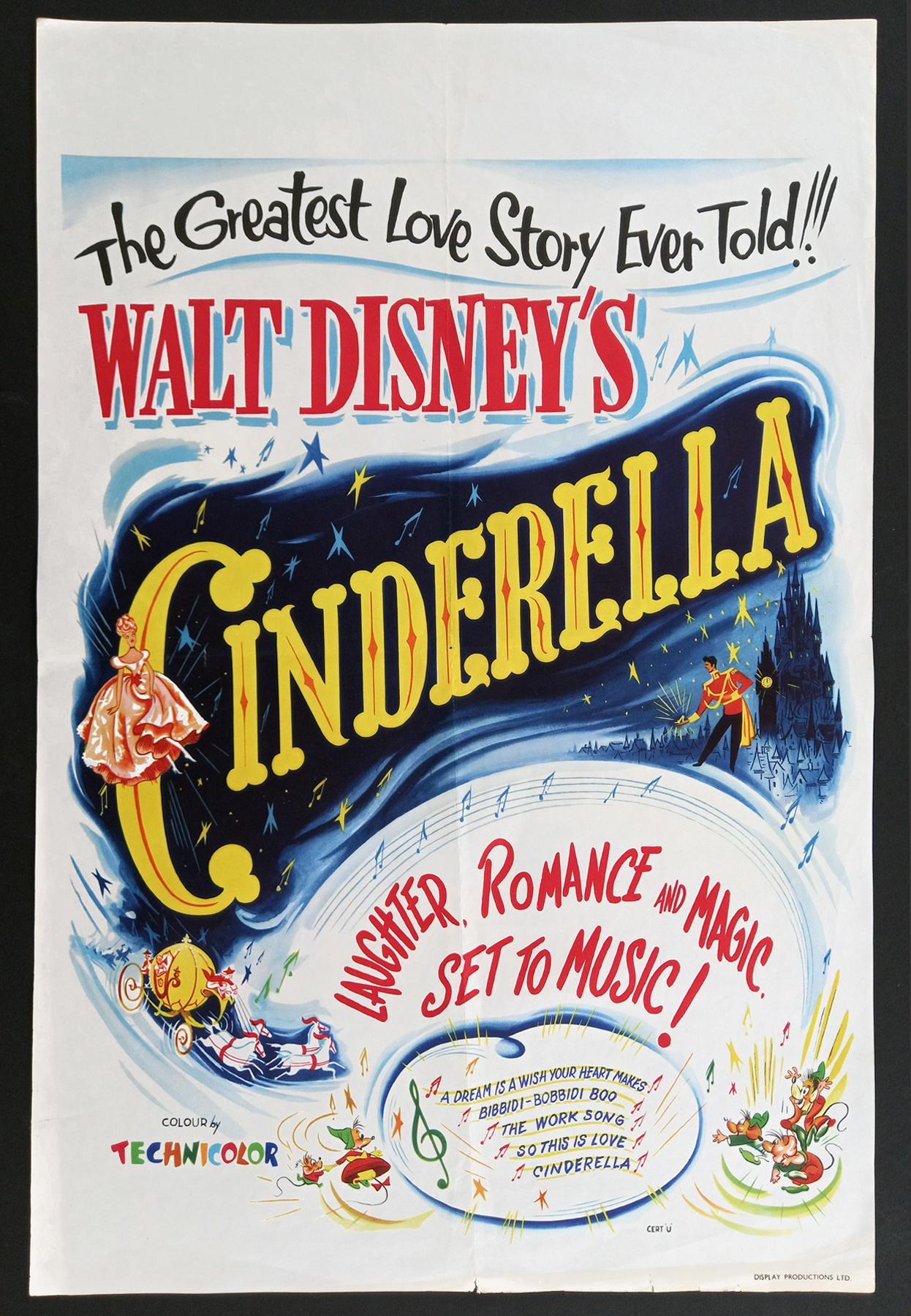
Disney's Cinderella (1950)

Beautiful Cinderella, a young woman with a heart of gold, sees her world turn upside down when her beloved mother dies, and her pained father remarries another woman: the wicked widow Lady Tremaine, the insufferable mother of cruel and jealous Anastasia and Drizella. As a result, things go from bad to worse, and before long, Cinderella finds herself at the mercy of the Lady. Now, doomed to serve her forever, shabby and neglected Cinderella doesn't stand a chance of attending the King's royal ball. Of course, captivating the handsome Prince is out of the question. As the night advances, will Cinderella ever find her own Prince Charming?
The greatest love story ever told.
Cinderella: [to the clocktower chiming] Oh, that clock! Old killjoy. I hear you. "Come on, get up," you say, "Time to start another day." Even he orders me around. Well, there's one thing. They can't order me to stop dreaming.
Walt Disney Studios, Burbank, California, USA
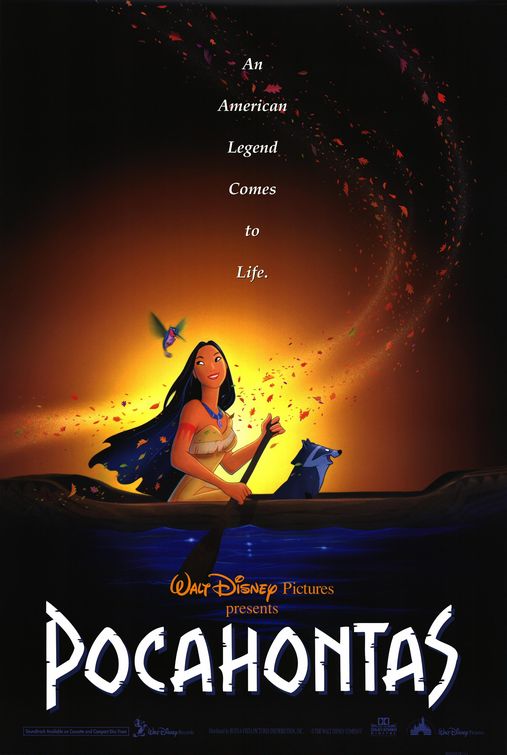
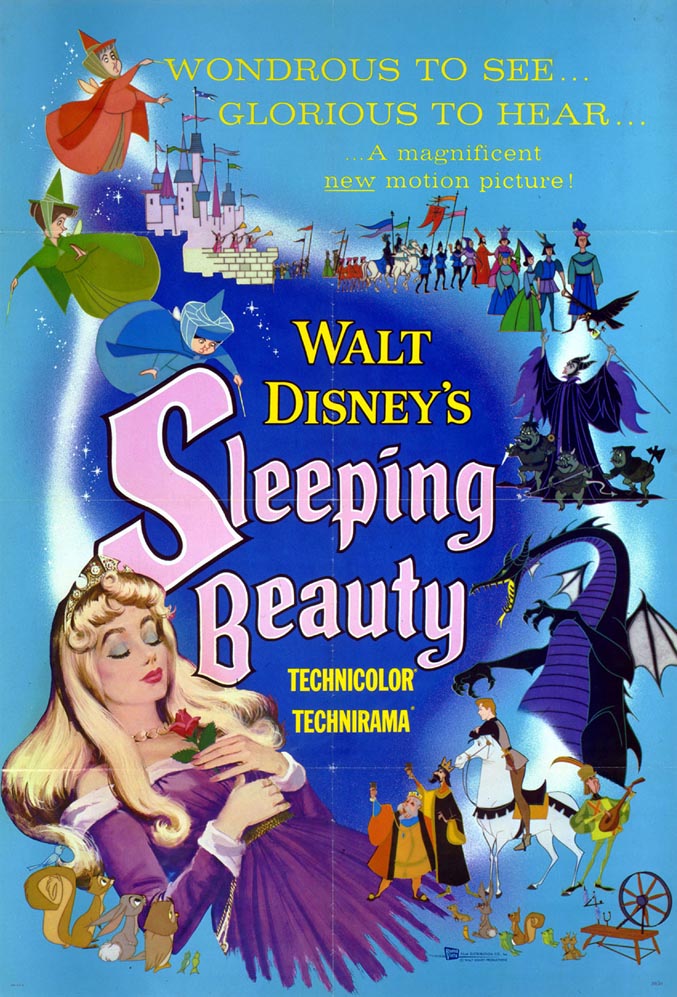
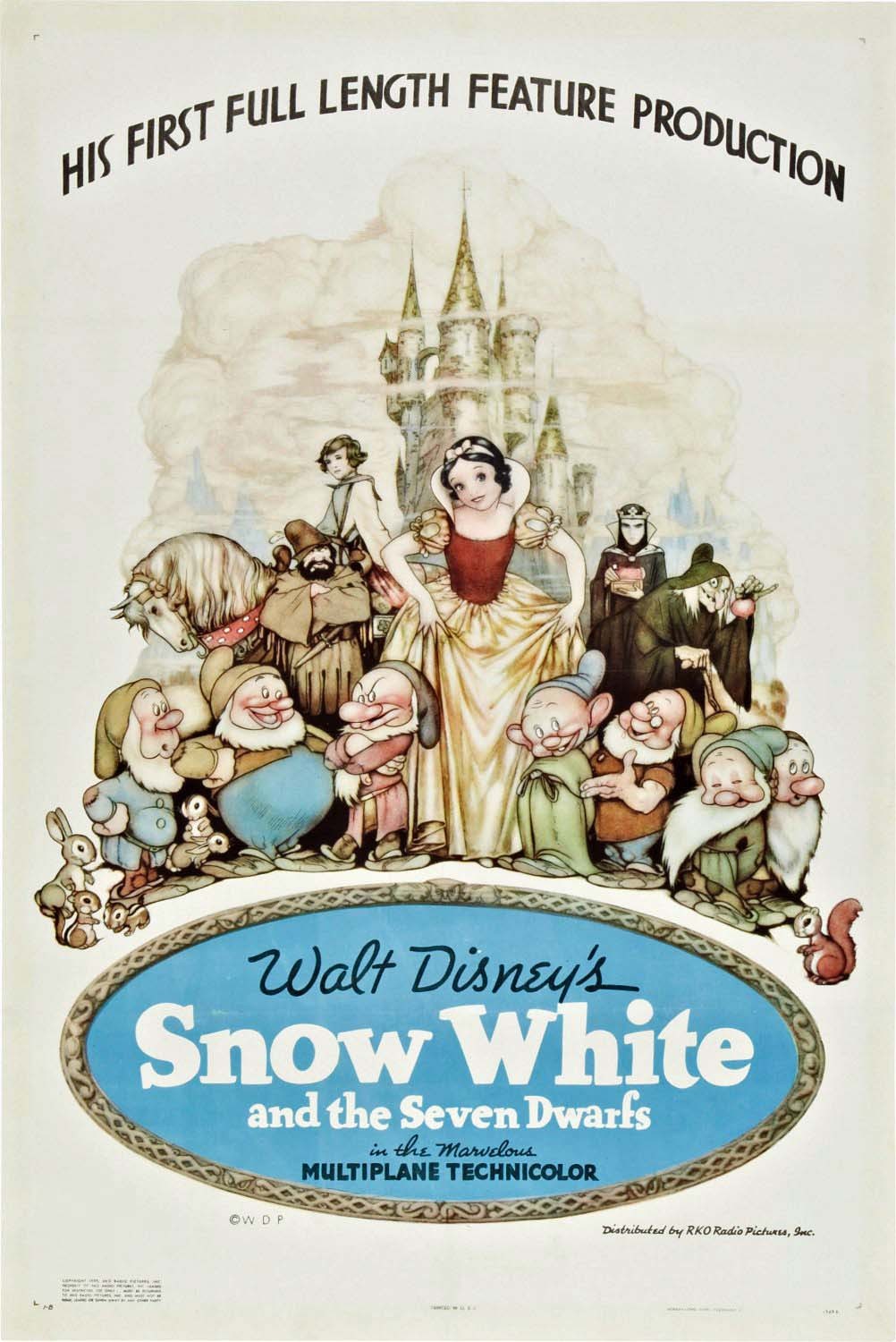
In both Cinderella (1950) and Sleeping Beauty (1959), the main character's friends surprise her with a new dress, calling out "Surprise! Surprise! Surprise! Happy birthday!"
Not only is the name of the prince never revealed, he is nowhere in the film mentioned as "Prince Charming".
Ilene Woods beat exactly 309 girls for the part of Cinderella, after some demo recordings of her singing a few of the film's songs were presented to Walt Disney. However, she had no idea she was auditioning for the part until Disney contacted her; she initially made the recordings for a few friends who sent them to Disney without telling her.
Ilene Woods suffered from Alzheimer's disease in the later years of her life. During this time, she did not even remember that she had played Cinderella, but nurses claimed that she was very much comforted by the song "A Dream Is A Wish Your Heart Makes".
Lucifer was modeled after animator Ward Kimball's cat. Animators were having trouble coming up with a good design for that cat, but once Walt Disney saw Kimball's furry calico, he declared, "There's your Lucifer."
When Cinderella is singing "Sing, sweet nightengale", three bubbles form the head and ears of Mickey Mouse.
The first fully-developed, feature-length film the studio released after wartime cutbacks forced them to release several "package films" (Melody Time (1948), _Fun and Fancy Free (1947)_, et al). The success of the animation department depended greatly on its success.
Walt turned for the first time to "Tin Pan Alley" song writers, to write the songs. This would later become a recurring theme in Disney animation.
The royal proclamation on the castle gate wall reads: " All loyal subjects of his Imperial Majesty are hereby notified by royal proclamation that in regard to a certain glass slipper, it is upon this day decreed that a quest be instituted throughout the length and breadth of our domain. The sole and express purpose of said quest is as follows to wit: That every single maiden in our beloved Kingdom shall try upon her foot this aforementioned slipper of glass, and should one be found whose foot shall properly fit said slipper, such maiden will be acclaimed the subject of this search and the one and only true love of his Royal Highness, our noble Prince. And said Royal Highness will humbly request the hand of said maiden in marriage to rule with him over all the Land as Royal Princess and future Queen."
According to Ilene Woods, who did the voice for Cinderella, it was Walt Disney who suggested the layered harmonies in the "Sweet, Sweet Nightengale" sequence. She thinks that it might have been the first time that it was attempted.
According to Marc Davis, one of the directing animators of Cinderella, at least 90% of the movie was done in live action model before animation.
Was the first Disney film to have its songs published and copyrighted by the newly created Walt Disney Music Company. Before movie soundtracks became merchandisable, movie songs had little residual value to the film studio that owned them and were often sold off to established music companies for sheet music publication.
GOOFY HOLLER: When both the King and the Grand Duke fall from the chandelier.
The transformation of Cinderella's torn dress to that of the white ball gown was considered to be Walt Disney's favorite piece of animation.
Walt Disney had not had a huge hit since Snow White and the Seven Dwarfs (1937). The production of this film was regarded as a major gamble on his part. At a cost of nearly $3,000,000, Disney insiders claimed that if this movie had failed at the box office, it would have been the end of the Disney studio. The film was a big hit. The profits from its release, with the additional profits from record sales, music publishing, publications and other merchandise gave Disney the cash flow to finance a slate of productions (animated and live action), establish his own distribution company, enter television production and begin building Disneyland during the decade.
Disney restored and re-mastered the movie for its 4 October 2005 DVD release as the sixth installment of Disney's Platinum Edition series. According to the Studio Briefing, Disney sold 3.2 million copies in its first week and earned over $64 million in sales.
Although pumpkins are originally from Central and North America, settlers brought samples back to Europe, where they flourished in popularity. It is realistic to see them growing in European farms in the era of this story.
The story takes place roughly in June. In the movie, the sun rises slightly before 6:00 AM (in France), as it would within a few weeks of the summer solstice. Also by this time, a pumpkin would have grown to 20-40 pounds.
Gus' full name is Octavius, presumably after the Roman Emperor.
Cinderella's carriage is actually a live-action model painted white with black lines; this was the first time this technique had actually been used.
[June 2008] Ranked #9 on the American Film Institute's list of the 10 greatest films in the genre "Animation".
(at around 47 mins) The transformation of Cinderella's torn dress to that of the white ball gown was considered to be Walt Disney's favorite piece of animation.
Continuity
(at around 7 mins) When Cinderella is getting dressed in the morning she pulls the hair ribbon around all of her hair. In the next shot it is tied only around half.
(at around 10 mins) When Cinderella wakes Lucifer up at the beginning of the movie, she opens the room door from right to left. The shadow of the door on the floor moves from left to right.
(at around 6 mins) Cinderella's bed sheet has patches, but when the birds fold it, the patches are gone.
(at around 20 mins) Gus is under the teacup on the tray in Cinderella's right hand, which she gives to Drizella. She gives one in her left hand to Anastasia's room. However, Anastasia is the one who finds Gus on her tray when it should have been Drizella.
(at around 1h 13 mins) When Cinderella and the Prince are getting married, Cinderella wears a long-sleeved wedding gown. Afterwards, when they wave through the back window of the carriage, her gown has puffed sleeves.
Factual errors
(at around 38 mins) On the palace clock when the clock strikes eight, the eleven reads 'XII'.
(at around 58 mins) When the Duke tells the King that the Prince wants to marry the girl he danced with at the ball (Cinderella), he happily offers to knight the Duke. As a Grand Duke, the Duke holds a peerage; a knighthood can only be conferred on someone who does not hold a peerage (non-noble).
The Duke is a Grand Duke, a member of the Royal Family, but he is not treated as a member of the Royal Family by the King.
Light shining through a door casts Cinderella's shadow onto the far wall next to her. Lady Tremaine's wall shadow is in the same proportion as C, though she is much closer to the light source. Her shadow would be much taller and wider.
Incorrectly regarded as goofs
On the palace clock, the Roman numeral 4 is written as "IIII" instead of "IV". However, historically, 4 in Roman numerals was written "IIII". The subtractive system in Roman numerals in which 4 is written as "IV" is fairly recent.
(at around 59 mins) As the King loses his temper over Cinderella disappearing after the ball, the Duke addresses the King as "Your Highness", then addresses him correctly as "Your Majesty" a few moments later. However, it is possible that the King's reaction simply caused the Grand Duke to become flustered.
An earlier goof report described the full moon at midnight during Cinderella's midnight escape in the carriage as being too close to the horizon for anywhere but polar regions. In fact the moon did not appear at all during this scene. Just before the clock started to chime at midnight, with Cinderella and the Prince on the bridge, the moon appears as a reflection in the water and can easily be high in the sky. Later, in the view of the palace in the wee hours with the Grand Duke agonizing about facing the King, the moon is rather low but not excessively so for a summer night at a hypothetical location in central Europe, which is much farther north than most of the USA. This looks like reasonable artistic liberty.
Revealing mistakes
(at around 52 mins) When the King is dancing down the hall after leaving the Duke in charge of the ball, there is light filtering out of the open door at the end of the hall. When he closes the door, the light is still there.
When the Grand Duke reads the royal proclamation when he enters the Tremaine house he's reading it differently from the royal proclamation posted outside the castle by adding sentences and paraphrasing.
Anachronisms
The stepmother begins the music lesson by instructing her daughter to sing in "the pear-shaped tone." This refers to the shape that resonant sound produces on an oscilloscope, an invention predated by the setting of the story.
Audio/visual unsynchronized
(at around 1h 8 mins) When Anastasia is kicking the footman into the piano keys, his head hits the keys on the far left of the piano, but higher-pitched notes can also be heard, which could not possibly be heard from the far left end of the piano.
(at around 53 mins) When Cinderella and the Prince are dancing, just before they go out into the garden, they cast large shadows onto the wall. These shadows do not match their movements.
(at around 1h 3 mins) Just before the stepmother locks Cinderella in her room, she asks Gus and Jaq what they are warning her about. When the stepmother takes her key, Cinderella turns around while she says "Oh, no!", but her mouth isn't moving.
Anastasia yells, "And look! That's my sash! Wearing my sash, she can't!" when she tears her sash off of Cinderella's dress, but her mouth doesn't move as she tears it off.
Plot holes
(at around 56 mins) At midnight, everything changed returns to normal, except the glass slippers. This logical contradiction is absent from the original fairy tale, where the slippers are an ordinary gift, not a magical creation, by the fairy godmother.
(at around 48 mins) One of the girls presented to the Prince at the ball is introduced as a Princess. Why is a Princess, whom we must presume the Prince knows already, at the ball?
A big problem with Disney's version of the story is that for all the Grand Duke knows, Lady Tremaine organized a
scam
to marry off her most attractive daughter to Prince Charming, thus making them all members of the Royal Family. Learning from the royal proclamation that any maiden whose foot fits a certain glass slipper will become a future queen, Lady Tremaine could've employed an artisan who spent all night making a near-replica for Cinderella; then put the Grand Duke off guard with Drizella and Anastasia making fools of themselves, which led naturally to the genuine slipper being shattered when in fact the stepmother deliberately tripped the footman. With the Grand Duke thus suitably dismayed, Cinderella would then be able to produce the fake slipper, which of course, perfectly fits her foot.
Of all the times the Cinderellas fairy god mother she could have appeared . She doesn't appear till the night of the ball .
Character error
Whenever Cinderella's bare feet are shown, she doesn't have toes, except for in the final scene where the Duke places the glass slipper on her foot. The only other human characters to have their bare feet shown, the stepsisters, are both shown to have large, prominent toes.
Cinderella's right slipper is the one that was left on her foot after the Fairy Godmother's spell ended, but when she presents it to the Grand Duke after the other slipper is broken, he slips it onto her left foot.
(at around 53 mins) While singing "So This is Love," Cinderella dips her hand in a fountain on the palace grounds, but she's wearing full-length evening gloves as she does it. No one would put their hand in water while wearing gloves.
(at around 14 mins) When the mice wind their tails together and Jaq picks one of them to decide who should distract Lucifer, he doesn't seem to realize that he's holding his own tail until the other mice have jumped away, when he should've already felt his own digits on it.
(at around 59 mins) As the King loses his temper over Cinderella disappearing after the ball, he accuses the Duke of being in "a plot" with the Prince. We never learn what this "plot" may be.