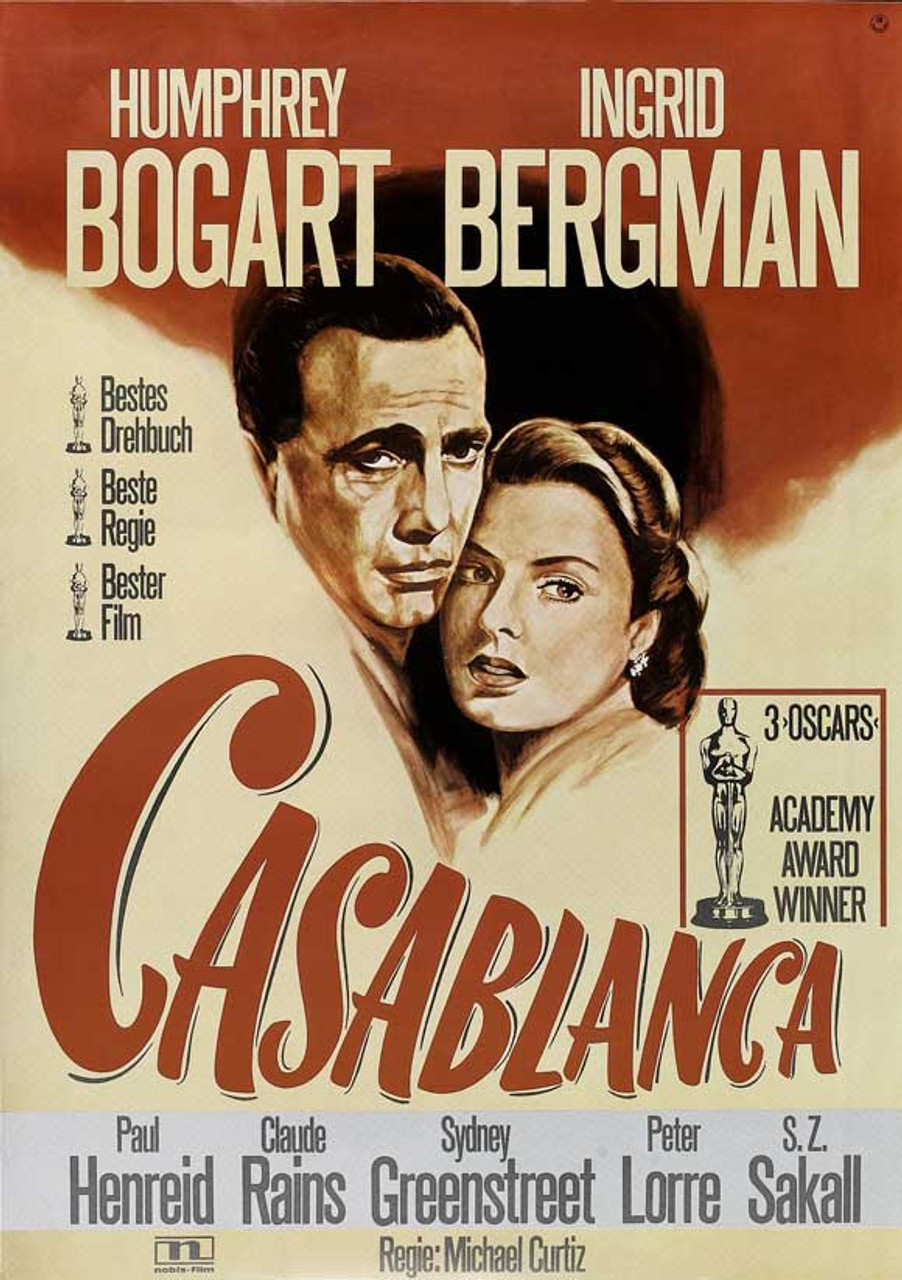
Casablanca (1943)

One of the most beloved American films, this captivating wartime adventure of romance and intrigue from director Michael Curtiz defies standard categorization. Simply put, it is the story of Rick Blaine (Humphrey Bogart), a world-weary ex-freedom fighter who runs a nightclub in Casablanca during the early part of WWII. Despite pressure from the local authorities, notably the crafty Capt. Renault (Claude Rains), Rick's caf? has become a haven for refugees looking to purchase illicit letters of transit which will allow them to escape to America. One day, to Rick's great surprise, he is approached by the famed rebel Victor Laszlo (Paul Henreid) and his wife, Ilsa (Ingrid Bergman), Rick's true love who deserted him when the Nazis invaded Paris. She still wants Victor to escape to America, but now that she's renewed her love for Rick, she wants to stay behind in Casablanca. "You must do the thinking for both of us," she says to Rick. He does, and his plan brings the story to its satisfyingly logical, if not entirely happy, conclusion.
They had a date with fate in Casablanca!
Rick: Of all the gin joints, in all the towns, in all the world, she walks into mine.
Flagstaff, Arizona, USA
Metropolitan Airport - 6590 Hayvenhurst Avenue, Van Nuys, Los Angeles, California, USA
(Strasser's arrival)
Van Nuys Airport - 6590 Hayvenhurst Avenue, Van Nuys, Los Angeles, California, USA
Warner Brothers Burbank Studios - 4000 Warner Boulevard, Burbank, California, USA
(studio)
Waterman Drive, Van Nuys, Los Angeles, California, USA
(airport runway)
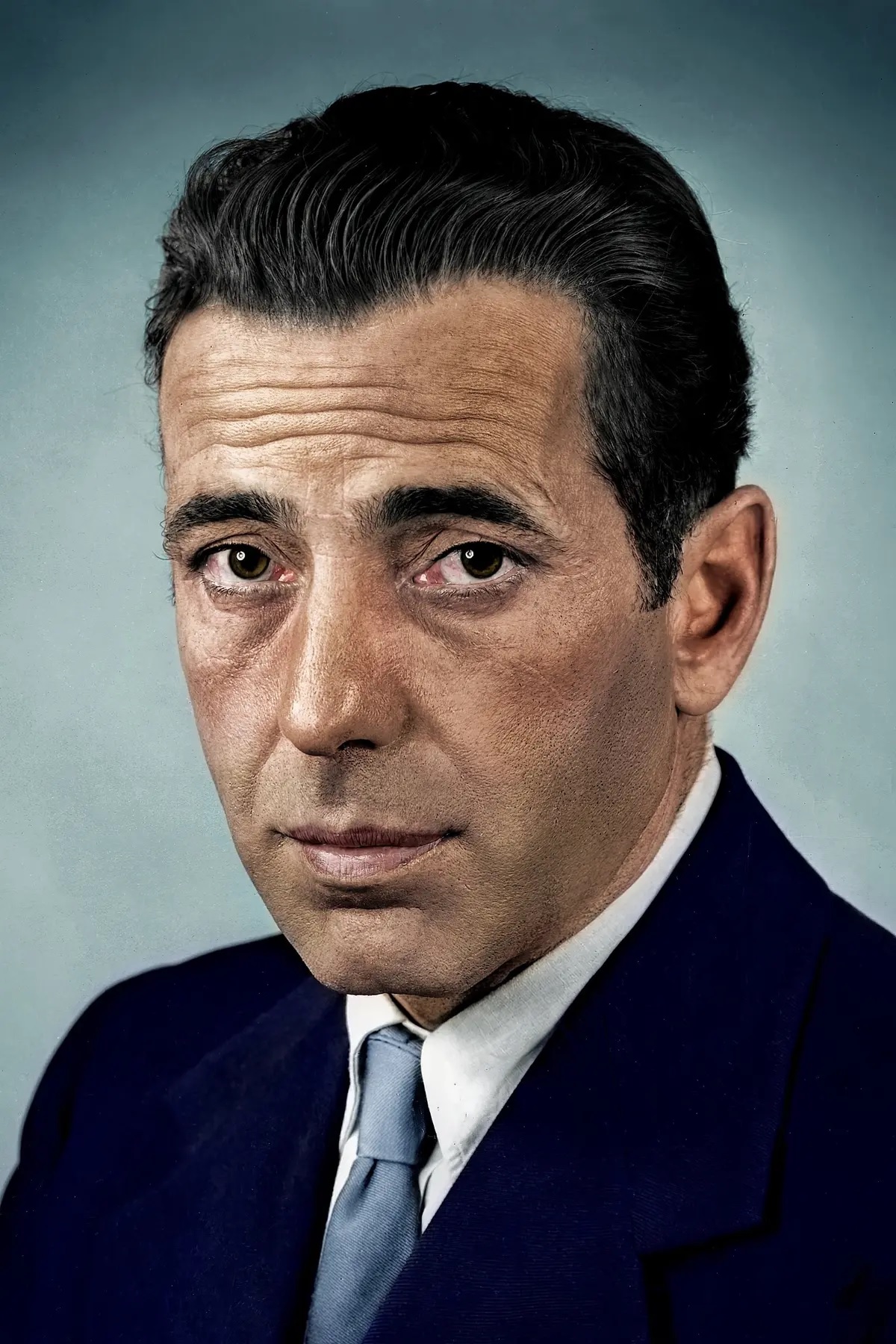
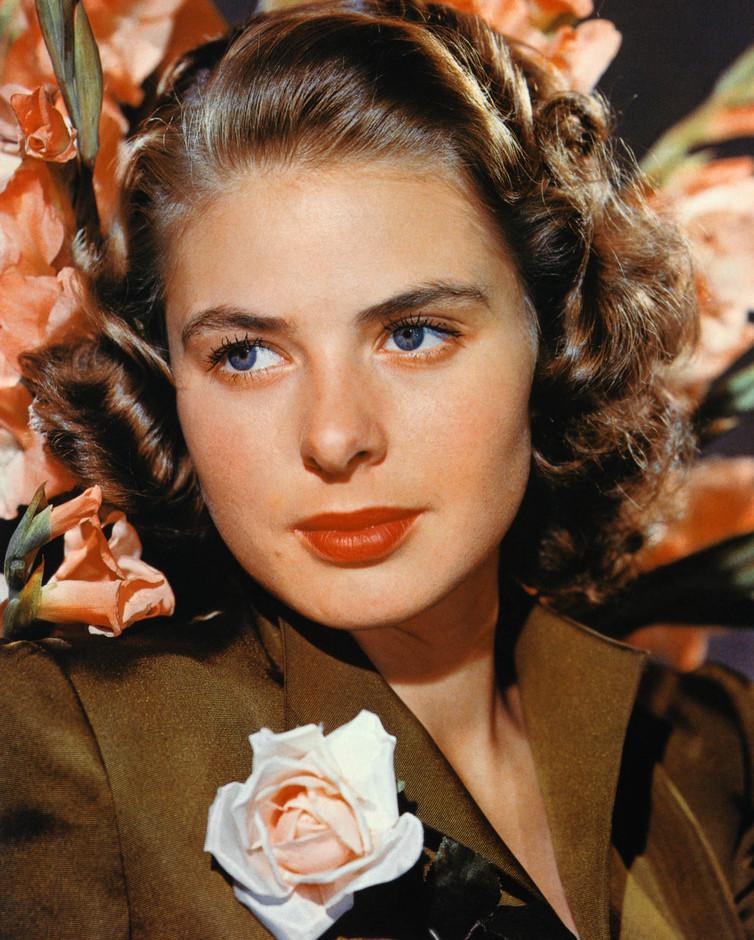
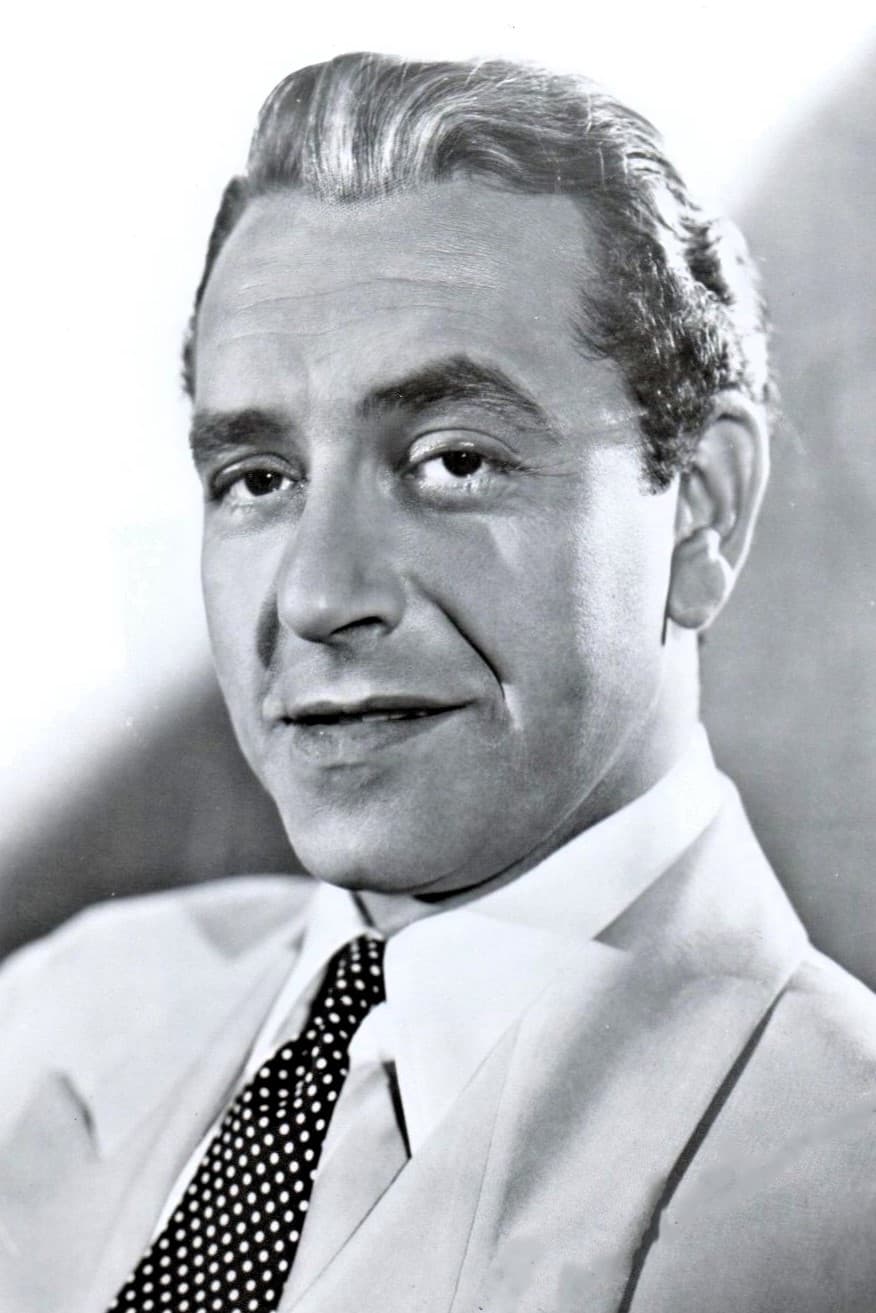
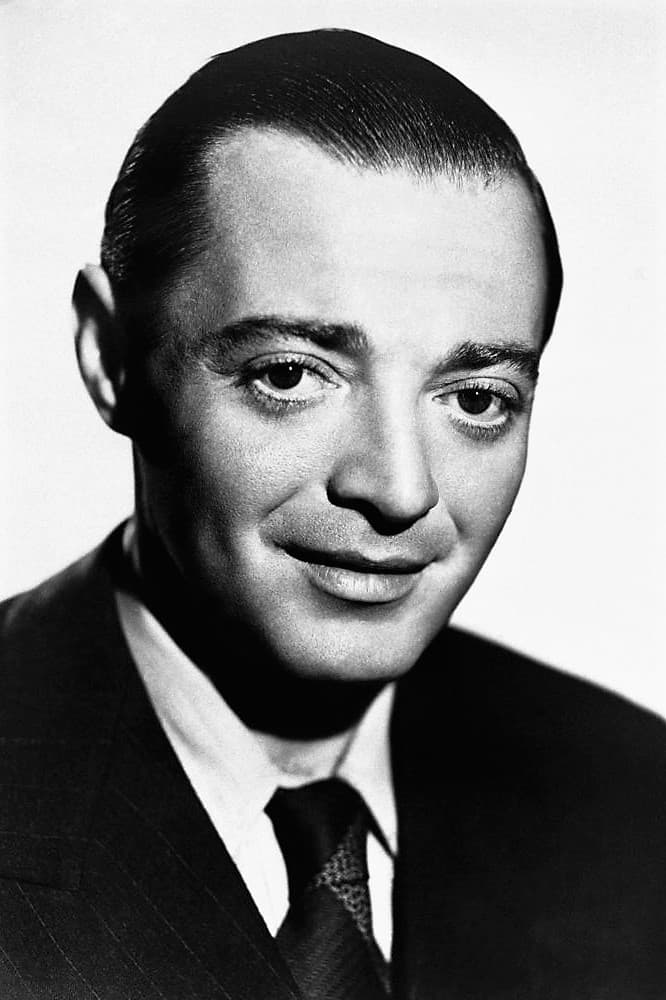
Studio publicity in 1941 claimed that Ronald Reagan and Ann Sheridan were scheduled to appear in this film, and Dennis Morgan is mentioned as the third lead. This was never the case, however, and the false story was planted, either by a studio publicist or a press agent for the three other actors, to keep their names in the press. Meanwhile George Raft was angling for the part with Jack L. Warner, but Hal B. Wallis had been assigned to search for what would be Humphrey Bogart's next starring role. He wrote to Warner that he had found the next movie for Bogart and the role was perfect for him. Nobody else was ever considered for the part.
The Allies invaded Casablanca in real life on 8 November 1942. As the film was not due for release until spring, studio executives suggested it be changed to incorporate the invasion. Warner Bros. chief Jack L. Warner objected, as he thought that an invasion was a subject worth a whole film, not just an epilogue, and that the main story of this film demanded a pre-invasion setting. Eventually he gave in, though, and producer Hal B. Wallis prepared to shoot an epilogue where Humphrey Bogart and Claude Rains hear about the invasion. However, before Rains could travel to the studio for this, David O. Selznick (whose studio owned Bergman's contract) previewed the film and urged Warner to release it unaltered and as fast as possible. Warner agreed and the premiered in New York on November 26. It did not play in Los Angeles until its general release the following January, and hence competed against 1943 films for the Oscars.
Ingrid Bergman's contract was owned by producer David O. Selznick, and producer Hal B. Wallis sent the film's writers, Philip G. Epstein and Julius J. Epstein, to persuade Selznick to loan her to Warner Bros. for the picture. After 20 minutes of describing the plot to Selznick, Julius gave up and said, "Oh, what the hell! It's a lot of shit like Algiers (1938)!" Selznick nodded and agreed to the loan.
Mich?le Morgan asked for $55,000, but Wallis refused to pay it when he could get Ingrid Bergman for $25,000.
After shooting, Max Steiner spoke against using "As Time Goes By" as the song identifying Rick and Ilsa, saying he would rather compose an original song in order to qualify for royalties. However, Hal B. Wallis replied that since the filming had ended, Ingrid Bergman had cut her hair very short for For Whom the Bell Tolls (1943) which was shooting at a distant locale and she therefore could not re-shoot already-completed scenes that had used "As Time Goes By".
Producer Hal B. Wallis considered Hedy Lamarr for the role of Ilsa, but she was then under contract to MGM (which wouldn't release her) and she didn't want to work with an unfinished script anyway. She later portrayed Ilsa in a 1944 radio show based on movie scripts, "Lux Radio Theater". At the time both Ingrid Bergman and Humphrey Bogart were overseas entertaining the troops. Rick was played on radio by Alan Ladd.
Producer Hal B. Wallis nearly made the character Sam a female. Hazel Scott, Lena Horne, and Ella Fitzgerald were considered for the role.
Paul Henreid was loaned to Warners for the role of Victor Lazlo by Selznick International Pictures against his will. He was concerned that playing a secondary character would ruin his career as a romantic lead.
The script was based on the unproduced play "Everybody Comes to Rick's". Samuel Marx of MGM wanted to offer authors (Murray Burnett and Joan Alison) $5,000 for it, but MGM boss Louis B. Mayer refused; Irene Lee of the Warner Brothers story department praised it to Jack L. Warner, who agreed to buy it for $20,000.
Dooley Wilson (Sam) was a professional drummer who faked playing the piano. As the music was recorded at the same time as the film, the piano playing was actually a recording of a performance by Elliot Carpenter who was playing behind a curtain but who was positioned such that Dooley could watch, and copy, his hand movements.
"Rick's Caf? Am?ricain" was modeled after Hotel El Minzah in Tangiers.
Because the film was made during WWII they were not allowed to film at an airport after dark for security reasons. Instead they used a sound stage with a small cardboard cutout airplane and forced perspective. To give the illusion that the plane was full-sized, they used little people to portray the crew preparing the plane for take-off. Years later the same technique was used in the film Alien (1979), with director Ridley Scott's son and some of his friends in scaled down spacesuits.
Director Michael Curtiz' Hungarian accent often caused confusion on the set. He asked a prop man for a "poodle" to appear in one scene. The prop man searched high and low for a poodle while the entire crew waited. He found one and presented it to Curtiz, who screamed "A poodle! A poodle of water!" See also The Charge of the Light Brigade (1936).
Captain Renault's line, "You like war. I like women," was changed from "You enjoy war. I enjoy women," in order to meet decency standards.
Warner Bros. had intended to use the "Horst-Wessel-Lied", the anthem of the Nazi party, during the "battle of the anthems" sequence, but the copyright was controlled by a German company, and Warners dropped that anthem for the lesser "Die Wacht Am Rhein" rather than violate the rights (which would have prompted the German copyright holder on the song to prohibit the movie from being shown in any country not at war with Germany).
The German song, "Die Wacht Am Rhein", which the inebriated Nazi officers play on the piano is originally from World War I. The Germans are reminiscing about their time in the last war.
Many of the shadows were painted onto the set. [rumor]
The scene of Maj. Strasser's arrival was filmed at Metropolitan Airport, now known as Van Nuys Airport, just outside of Los Angeles.
In the German version, the immortal line "Here's lookin' at you, kid", became, "Ich seh' Dir in die Augen, Kleines" which translates as "I look in your eyes, honey".
Conrad Veidt, who played Maj. Strasser, was well known in the theatrical community in Germany for his hatred of the Nazis, and in fact was forced to hurriedly escape the country when he found out that the SS had sent a death squad after him because of his anti-Nazi activities.
Many of the actors who played the Nazis were in fact German Jews who had escaped from Nazi Germany.
Rick never says "Play it again, Sam." He says: "You played it for her, you can play it for me. Play it!". Ilsa says "Play it, Sam. Play 'As Time Goes By"'.
The movie's line "Here's looking at you, kid" was voted as the #5 movie quote by the American Film Institute.
"Here's looking at you, kid" was improvised by Humphrey Bogart in the Parisian scenes and worked so well that it was used later on again in the film. He originally used the same line in Midnight (1934). It is also rumored that during breaks, Ingrid Bergman would play poker with other cast members. Since she was still learning English, Bogart would occasionally watch the game, and he added "Here's looking at you" to her poker repertoire.
In 2007, the American Film Institute ranked this as the #3 Greatest Movie of All Time.
The movie's line "Here's looking at you, kid." was voted as the #1 of "The 100 Greatest Movie Lines" by Premiere in 2007.
The movie's line "Louis, I think this is the beginning of a beautiful friendship." was voted as the #65 of "The 100 Greatest Movie Lines" by Premiere in 2007.
Venerable character actor Clarence Muse, who lost the role of Sam to Dooley Wilson, played the role in the 1955 TV series. Ludwig St?ssel was promoted from the minor role of Leuchtag to the S.Z. Sakall part (renamed Ludwig), Marcel Dalio was elevated from the minor role of Emil, the croupier, to the Claude Rains role (renamed Renaud), and Dan Seymour was promoted from the small part of Abdul to Ferrari, the Sydney Greenstreet role.
The movie's line "I stick my neck out for nobody." was voted as the #42 of "The 100 Greatest Movie Lines" by Premiere in 2007.
The movie's line "Of all the gin joints in all the towns in all the world, she walks into mine." was voted as the #67 movie quote by the American Film Institute (out of 100).
When the Epstein brothers won an Oscar for their script, they became the first (and as for 2007 the only) Academy Award winning twins.
The movie's line "Louis, I think this is the beginning of a beautiful friendship." was voted as the #20 movie quote by the American Film Institute.
The movie's line "Round up the usual suspects." was voted as the #32 movie quote by the American Film Institute (out of 100).
The movie's line "We'll always have Paris." was voted as the #43 movie quote by the American Film Institute (out of 100).
Humphrey Bogart's wife Mayo Methot continually accused him of having an affair with Ingrid Bergman, often confronting him in his dressing room before a shot. Bogart would come onto the set in a rage. In fact, despite the undeniable on-screen chemistry between Bogart and Bergman, they hardly spoke, and the only time they bonded was when the two had lunch with Geraldine Fitzgerald. According to Fitzgerald, "the whole subject at lunch was how they could get out of that movie. They thought the dialogue was ridiculous and the situations were unbelievable... I knew Bogart very well, and I think he wanted to join forces with Bergman, to make sure they both said the same things." For whatever reasons, Bogart and Bergman rarely spoke after that.
"As Time Goes By" was written by lifelong bachelor Herman Hupfeld and debuted in 1931's Broadway show "Everybody's Welcome", sung by Frances Williams, It had been a personal favorite of playwright and high school teacher Murray Burnett who, seven years later, visited Vienna just after the Nazis had entered. Later, after visiting a cafe in south France where a black pianist had entertained a mixed crowd of Nazis, French and refugees, Burnett was inspired to write the melodrama "Everybody Comes To Rick's", which was optioned for production by Martin Gabel and Carly Wharton, and later, Warners. Aftr the film's release, "As Time Goes By" stayed on radio's "Hit Parade" for 21 weeks. However, because of the coincidental musicians' union recording ban, the 1931 Rudy Vallee version became the smash hit. (It contains the rarely-sung introductory verse, not heard in the film.) Max Steiner, in a 1943 interview, admitted that the song "must have had something to attract so much attention".
The song "As Time Goes By" from the film is number 2 on the American Film Institute's (AFI) 100 Years... 100 Songs list.
Humphrey Bogart, Ingrid Bergman and Paul Henreid later reprised their roles for a radio performance of on the CBS radio program "The Screen Guild Players", a war benefit show.
The film's success led to plans for a sequel, which was to be called Brazzaville. Ingrid Bergman was not available, so Geraldine Fitzgerald was considered for Ilsa before the project was killed. It was not until the late 1990s and Michael Walsh's novel "As Time Goes By" that a true sequel ever came to pass.
To maximize profits from foreign distribution of the film, the studio suggested that any unpleasant characters other than the Nazis should also be from an enemy country, namely Italy. This is why Ugarte, Ferrari, and the dark European pickpocket are Italian.
Several times the writers discussed having Rick leave with Lois/Ilsa, but this was always rejected (and the censors would not have allowed it with her married to Victor). Their major problem was to make it plausible that despite clearly loving Rick she would leave with Victor; the final scene was rewritten many times until this was achieved.
Just before he shot Maj. Strasser (Conrad Veidt), Humphrey Bogart ad-libbed the line, "All right, Major, you asked for it." But Hal B. Wallis pointed out that this made it look as though when Strasser drew his gun first it was self-defense. Veidt was recalled and the scene reshot without the added line, but the original version was used in the trailer for the movie.
It was claimed when the movie was in release that Jack Benny can be seen briefly in it.
Joy Page, who played the young Bulgarian wife, was the stepdaughter of studio head Jack L. Warner. She, Humphrey Bogart and Dooley Wilson were the only American-born people in the credited cast.
Renault tells Rick he knows that he ran guns to Ethiopia, referring to Italy's invasion in 1935. In the Italian version of the picture, Renault's line became, "You ran guns to China."
The French dialogue between Yvonne and the French officer translates as: French Officer: "Hey you, you're not French to go out with a German like that!" Yvonne: "What are you butting in for?" French Officer: "I am butting in...? Yvonne: "It's none of your business!"
Around nine minutes into the movie, Rick OKs a credit slip dated 2-Dec-1941.
In the 1980s, this film's script was sent to readers at a number of major studios and production companies under its original title, "Everybody Comes To Rick's". Some readers recognized the script but most did not. Many complained that the script was "not good enough" to make a decent movie. Others gave such complaints as "too dated", "too much dialog" and "not enough sex".
The difference in height between Humphrey Bogart and Ingrid Bergman changes throughout the film. This is because Bergman was actually a few inches taller than Bogart, though to create the illusion that it was vice versa, Michael Curtiz had Bogart stand on boxes and sit on pillows in some shots, or had Bergman slouch down (as evident when she sits on the couch in the "franc for your thoughts" scene).
Carl's back story is hinted at once, when he is referred to as "Professor" by a waiter.
Ingrid Bergman's line "Victor Laszlo is my husband, and was, even when I knew you in Paris" was almost cut from the film because during that time it was deemed inappropriate for a film to depict or suggest a woman romancing with another man if she were already married. However, it was pointed out that later in the film she explains that she had thought Laszlo was dead at the time, and the censors allowed the line to stay in.
Dooley Wilson was, in fact, the only member of the cast to have ever actually visited the city of Casablanca.
Was voted the 3rd Greatest film of all time by Entertainment Weekly.
Voted #2 film of all time by the American Film Institute.
At a salary of $25,000 for five weeks' work, Conrad Veidt was the highest-paid actor on the set and on loan from MGM. His main competition for the Maj. Strasser role was Otto Preminger, under contract to 20th Century-Fox, for whom Darryl F. Zanuck had demanded the outrageous sum of $7,000 per week.
Warner Brothers purchased the play for $20,000, the most anyone had ever paid for an unproduced work.
The original unproduced play, "Everybody Comes to Rick's", was found by Irene Lee, who headed the story department at Warner Bros., on a trip to office of Jack Wilk, story editor for Warner East Coast operations in New York, where the typed script had sat for a year. It arrived at Warner Bros. Studios to be read as a potential film project on the day after the Japanese bombed Pearl Harbor.
The influx into Hollywood of large numbers of European exiles fleeing the war helped the casting enormously. In fact, of all the featured players in the film who get screen credit, only three were born in the United States: Humphrey Bogart, Dooley Wilson and Joy Page.
S.Z. Sakall, who plays the maitre d' at Rick's Cafe, actually has more screen time than Peter Lorre or Sydney Greenstreet.
The letters of transit that motivate so many characters in the film did not exist in Vichy-controlled France - they are purely a plot device invented by the screenwriters. Playwright Joan Alison always expected somebody to challenge her about the letters, but nobody ever did.
Rick and Ilsa standing over Sam's piano in Paris was the first scene to be shot. Filming a tender love scene with two actors who had just met was not planned, but the filming of Now, Voyager (1942) had gone over schedule, so Paul Henreid and Claude Rains were not available.
The Paris train station set was recycled from Now, Voyager (1942).
Hal B. Wallis didn't want Humphrey Bogart wearing a hat too often in the film, as he thought it made Bogart look like a gangster.
When this film won the Academy Award for Best Picture, Jack L. Warner was first on stage to accept the award, beating the film's actual producer, Hal B. Wallis, who was incensed at this slight and never forgave Warner. Wallis, at the time regarded as the "wunderkind" at the studio, left Warner Brothers shortly afterwards.
Although this was an overtly anti-Nazi film, it wasn't the first one that Warner Bros. had made (it had come out several years earlier with Confessions of a Nazi Spy (1939)). Warners was the first Hollywood studio to be so open about its opposition to the Nazi regime, and the first to prohibit its films from being distributed in Nazi-occupied territories. Indeed, Harry M. Warner was making speeches denouncing Nazi activities in Germany as early as 1936.
In the famous scene where the "Marseillaise" is sung over the German song "Watch on the Rhine", many of the extras had real tears in their eyes; a large number of them were actual refugees from Nazi persecution in Germany and elsewhere in Europe and were overcome by the emotions the scene brought out.
Casablanca, Morocco, was one of the key stops for refugees fleeing Nazi-occupied Europe, which is why the original playwrights chose the city for the setting of their play (though initially they had opted for Lisbon).
The first writers to tackle a screenplay were ?neas MacKenzie and Wally Kline, who spent six weeks on the project. Afterwards, Julius J. Epstein and Philip G. Epstein came on board, and their major contribution was the building up of Claude Rains' Capt. Renault character.
Hal B. Wallis's first choice for director was William Wyler.
Other actresses considered for the part of Ilsa were Edwige Feuill?re, Mich?le Morgan and Tamara Toumanova. Ingrid Bergman was one of the first choices, but she was under contract to David O. Selznick, who was stalling because he wanted her for For Whom the Bell Tolls (1943). Selznick finally agreed when he learned that the Epstein brothers and Michael Curtiz were working on the film, all of whom he respected and trusted. Warner Bros. also agreed to loan Selznick the services of Olivia de Havilland in return.
At one point it looked like there was going to be trouble casting a foreign actor in the part of Victor Laszlo. Herbert Marshall, Dean Jagger and Joseph Cotten were considered until Paul Henreid became available.
Ingrid Bergman and Paul Henreid make their first appearance 24 minutes into the film.
Howard Koch was instructed to start the screenplay all over again, paying particular attention to Rick's background and the ending, while the Epsteins were struggling with their version. Writers Casey Robinson and Lenore J. Coffee were asked to critique the two versions and found much merit in both, though Robinson thought the romantic angle lacking and was subsequently tasked with ramping this up.
The Epstein brothers finished their screenplay three days before the film began shooting; Howard Koch completed his two weeks after shooting had begun. All three were on call throughout the entire shooting period even though the Epsteins had been summoned to Washington to work on Frank Capra's "Why We Fight" documentary series.
Rick's Cafe was one of the few original sets built for the film, the rest were all recycled from other Warner Brothers productions due to wartime restrictions on building supplies.
The film cost approximately $950,000, some $100,000 over budget.
When President Franklin Delano Roosevelt returned from a wartime conference in Casablanca with Winston Churchill, he asked for a screening of the film at the White House. In Spanish, "casa blanca" means "White House."
The title was changed from "Everybody Comes to Rick's" to "Casablanca" partly due to the success of the similarly titled Algiers (1938).
Humphrey Bogart had to wear platform shoes to play alongside Ingrid Bergman.
To prepare for working with Humphrey Bogart, Ingrid Bergman watched The Maltese Falcon (1941) many times.
Joan Alison always envisioned Clark Gable as Rick, who "was my concept of a guy that I would like... I hated Humphrey Bogart. I thought he was a common drunk."
It was reportedly Humphrey Bogart's idea to have Rick be a chess player (when we first see Rick he is playing chess against himself), though some say it was writer Howard Koch's idea.
Ingrid Bergman considered her left side as her better side, and to the extent possible that was the side photographed throughout the film, so she is almost always on the right side of the screen looking towards the left regardless of who is in the shot with her. However, there are several shots where she is to the left and Humphrey Bogart is on the right, including the flashbacks to the street scene in Paris (0:41:50) and the scene at the window (0:43:40). There are also several scenes where Bergman is centered between Paul Henreid and Bogart, suggesting the triangle nature of their relationship; in these shots Henreid is usually to the left and Bogart is usually on the right, including the scene where she and Henreid enter the caf? at just before the famous "Battle of the Anthems" (1:07:40); the scene where Captain Renault arrests Victor Laszlo (1:34:00); and at the end of the final airport scene (1:39:00).
Madeleine LeBeau, who plays Yvonne, and Marcel Dalio, who plays croupier Emil, were husband and wife at the time of filming. They had not long before escaped the Nazis by fleeing their native France.
Howard Hawks had said in interviews that he was supposed to direct Casablanca (1942) and Michael Curtiz was supposed to direct Sergeant York (1941). The directors had lunch together, where Hawks said he didn't know how to make this "musical comedy", while Curtiz didn't know anything about "those hill people." They switched projects. Hawks struggled on how to direct the scenes that involved singing, namely the "La Marseillaise" scene. It is ironic to note that most of his other films involved at least one singing scene.
It is never revealed why Rick cannot return to America. Julius J. Epstein later said that "My brother and I tried very hard to come up with a reason why Rick couldn't return to America. But nothing seemed right. We finally decided not to give a reason at all."
Was named the best screenplay of all time by the Writers Guild of America (2006).
In the original script for Casablanca, then titled "Everyone Come to Rick's", Isla was not a 'virtuous' woman. She was living with an already married American business man. It was Rick who left her when he found out. And when she and Victor come to Casablanca, she is not married to him, either.
Dooley Wilson was borrowed from Paramount at $500 a week.
High school teacher Murray Burnett co-authored the play while on summer vacation.
Early in the production, studio head Jack L. Warner offered the role of Rick Blaine to George Raft, but the actor turned it down. As the shooting script took shape, producer Hal B. Wallis began to envision actor Humphrey Bogart in the Rick Blaine role. As Bogart was under contract to Warner Bros. the role was assigned to him by Wallis. But after Bogart had been cast in the role, George Raft reconsidered his decision and contacted Warner to deliver the news that he had decided to accept the 'Casablanca' part after all. After consulting with Wallis - who had never envisioned anyone but Bogart in the role - Warner decided to support his producer: Warner explained to Raft that Humphrey Bogart had been cast in the role of Rick Blaine, and that the part was no longer available.
It is unclear where the line, "Here's looking at you, kid," originated, but it definitely predated both "Casablanca" and earlier stage work by Bogart. On March 9, 1932 - 10 years before "Casablanca" - Eddie Cantor signed his name in cement at Grauman's Chinese Theater and wrote, "Here's looking at you, Sid" (referring to Sid Grauman, owner of the theater). Cantor certainly meant it as a take-off on "Here's looking at you, kid", which evidently was a line in circulation at the time.
Continuity: A knight on the chessboard disappears momentarily in the opening chess game.
Continuity: The man who is shot escaping from police dies next to an arch where a woman suddenly appears.
Continuity: Rick's tie is suddenly knotted differently when he sees Ilsa in the bazaar.
Continuity: When Rick gets on the train after standing in the rain, his coat is completely dry.
Continuity: The Venetian blinds in Victor's and Ilsa's hotel room.
Continuity: While chatting to Captain Renault outside the Caf? Am?ricain, Rick lights a cigarette, then in the next shot, lights another.
Continuity: While Captain Renault is chatting with Rick outside the Cafe Americaine, the medal to the left on Relault's tunic clearly extends below the pocket flap. In the next scene the medal is significantly smaller and does not extend below the pocket flap.
Incorrectly regarded as goofs: The fact that Louis' fake phone call to the airport fools Rick shows that the letters of transit are meant to be used as exit documents. Yet in the end, the Laszlos board without anybody ever checking the documents. If once Louis was a hostage he could get the Laszlos around any exit check, why did Rick insist on the letters of transit being filled out? He did it to make it "even more official"; the Laszlos would be protected in case there was an unexpected document check later, either on arrival at Lisbon, or at Casablanca if someone else arrived on scene and events did not continue as planned.
Continuity: At the airport, the epaulets on Major Strasser's coat disappear and reappear between shots.
Audio/visual unsynchronized: When the trumpet and trombone players raise their instruments to play "La Marseillaise", the music begins a split second before they start playing.
Audio/visual unsynchronized: When Yvonne is kicked out of Rick's in the first scene there, the comments she shouts as she walks outside don't match her lip movement at all.
Revealing mistakes: Just after the scene where Ugarte gives Rick the "letters of transit", Sam is playing "Knock on Wood". The drummer isn't actually playing the drums.
Continuity: An extra (elderly man with white goatee and hat) is shown being herded into the police station along with other "usual suspects" and in the very next shot is seen along the street peering upward at the plane landing from Lisbon.
Continuity: In the hangar scene at the airport, the bottles of "Vichy water" on the shelf below the table change positions between shots.
Continuity: When Rick receives the transit documents from Ugarte, he pockets them in his inside right pocket. When he gets them out and puts them on Sam's piano, he gets them out of his left inside pocket.
Continuity: When Victor goes to get the papers from Rick, he takes off his hat and stands with his arm by his side. A second later he is suddenly holding his lapel, and subsequently lowers his arm again.
Audio/visual unsynchronized: When the bartender spins Rick around on his chair and kisses him on both cheeks, saying, "Boss, you've done a beautiful thing," Rick smacks him on the back and replies, "Get away from me, you crazy Russian." We hear the sound of the smack quite a while after Rick hits the bartender.
Audio/visual unsynchronized: When Rick tells Louis to make out the transit papers in the name "Mr. and Mrs. Victor Lazlo", Ilsa moves toward Rick with her mouth moving. She is obviously saying, "Why my name?" which is the line she delivers in the next shot.
Incorrectly regarded as goofs: Renault says, "We mustn't underestimate American blundering. I was with them when they blundered into Berlin in 1918." The Allies had only occupied small sections of German territory by the time of the Armistice and never approached Berlin. Some people think it strange that Berlin-born Conrad Veidt, who played Strasser, didn't point it out on the set. It is likely, however, that Renault was merely being sarcastic to Strasser and that it isn't a factual error at all.
Errors made by characters (possibly deliberate errors by the filmmakers): When Major Strasser first enters Rick?s, a German soldier says "Captain Strasser is here" to Captain Renault.
Factual errors: Ugarte very clearly says that the Letters of Transit are "signed by General de Gaulle." This would render them useless in Casablanca, as Charles de Gaulle was the leader of the Free French Forces, which was actively fighting against the Nazi-controlled Vichy regime that controlled, among other territories, French Morocco (thus controlling Casablanca). This error is present in the screenplay as well. (However, since this is never mentioned again in the film, it is possible that Ugarte misspoke and meant to say "General Weygand," a prominent Vichy leader. Nonetheless, that Ugarte says "General de Gaulle" is quite clear in the film.)
Factual errors: There is a French tricolor with crescent and star in the middle waving over the Police offices at the beginning of the film. Such flag was never used in Morocco. During the time of the French Protectorate the flag of Morocco was the same as today, red with a green pentagram in the middle. The civil ensign used between 1923 and 1956 added a small French tricolor in the canton but never a crescent and star.
Continuity: Early on in the movie, from the perspective of the band, you see that Sam has his piano facing towards the band. When we see it again a few moments later, the piano is facing away from the band.
Errors in geography: In the map at the beginning of the film, the map shows what is supposedly Casablanca. However, Casablanca is not that far north. The city actually shown is more like Tangier, as Casablanca, while a coastal city, is actually farther south.
Incorrectly regarded as goofs: Major Strasser is supposed to be a Gestapo officer, yet he wears the uniform of a Luftwaffe major. However, since the Gestapo is the German secret police it is entirely likely that Strasser would wear any uniform or none at all, as a deception.
Continuity: When Rick is listening to Annina explain the situation in Bulgaria with his back to the camera, we see him take a drink of brandy. The shot switches before he put his glass down. But in the new shot with the camera facing him, Rick only has a cigarette in his hand and the brandy glass isn't visible.
Continuity: When he enters in the Rick's, Ugarte passes through the people who are in the doorway and turns to his right. The subsequent shot shows him walking to the left, behind Rick.
Continuity: When Major Strasser talks with Rick about Laszlo, he leans his elbows on the table and crosses his fingers. In the next shot he is raising his right hand to join his left. And after, between cuts, he appears with both arms leaning on the table.
Continuity: Laszlo enters Rick's and sits down with Ilsa on his left-hand side. Soon after, when a woman begins to play guitar and to sing, Laszlo appears sitting with Ilsa on his right side.
Continuity: Ilsa sends the waiter to call Sam. Sam pushes the piano to Ilsa's table. When Rick comes to reprimand Sam for singing "As Time Goes By," he is standing next the piano, which Sam has pushed away from the table. In the next long shot, Rick is a little ways from Ilsa's table, which has changed places.
Continuity: When Laszlo enters Rick's for the first time, he puts his hat on a chair next to the one he sits in. Later, before Capt. Renault sits on the same chair, Laszlo picks up the hat and puts it on the floor. When Laszlo leaves, he does not pick up his hat. But when he leaves Rick's, he is holding his hat.
Continuity: When Carl sits with a couple of friends, he finishes pouring the brandy and rubs his hands together. In the following shot, his right hand is resting on his left arm.
Continuity: When Rick has a discussion outside and they are regularly bathed with the lighthouse light every few seconds the time for a full turn varies due to cuts in the scene.
Audio/visual unsynchronized: While accompanying Sam on "If I Could Be With You", the guitarist pats her instrument in rhythm, yet the sound we hear can only be made when the guitar is actually strummed.
Continuity: During the discussion between Rick and the police captain in the captain's office, the cigarettes keep changing - sometimes missing, burned at different lengths, etc.
Continuity: When Rick places the letters of transit under Sam's pile of sheet music on the piano, the sheet music is on the right side (from the back) and Sam's ashtray and drink are on the left. Later the drink and ashtray are on the right and the sheet music is on the left.
Incorrectly regarded as goofs: At the very beginning we see a turning globe as a voice describes the plight of those fleeing the war. As the globe turns, we can see across the Soviet Union. The description, Union of Socialist Soviet Republics, is not wrong. Although it was not used as frequently as Union of Soviet Socialist Republics it is an accepted translation of the Russian name.
Revealing mistakes: There are multiple instances throughout the film where the action of Sam's hands on the piano bears no resemblance to the piano part heard. Especially notable is the first time Sam sings "As Time Goes By" for Ilsa; a rapid treble run is executed that would have necessitated the movement of his right forearm. None is seen.
Continuity: When Rick has a drink of bourbon with Signor Ferrari in the Blue Parrot, Ferrari puts the cork back in the bottle. In the next shot the bottle is uncorked.
Factual errors: During the flashback scene in Paris, loudspeaker trucks are shown with the Gestapo telling the Parisians not to act when the Germans arrive tomorrow. In fact, Paris issued no warnings about the German advance at all. The German blitzkrieg overwhelmed the French so completely that all communications were either stymied or went astray.
Continuity: When Victor and Ilsa first go to the Blue Parrot in search of exit visas, the parrot sitting outside is clearly a different bird than the one sitting outside later in the film when Rick comes to see Ferrari.
Revealing mistakes: After police break up underground group's meeting and Laszlo escapes to Rick's caf?, Laszlo is trying to bandage his arm with a dish towel. The towel falls off several times yet there is no blood on it.
Anachronisms: Throughout the film, liquor bottles are seen with revenue stickers across the tops of the bottles. Liquor in Casablanca is not subject to US revenue taxes. As the film wasn't actually shot in Casablanca, this was overlooked.
Errors made by characters (possibly deliberate errors by the filmmakers): When Rick and Ilsa are listening to the sound of German guns out the window in Paris, Rick comments that they are from the "New German 77s. Actually, the German Army used a 77 mm. field gun in World War I, not World War II. The script writers, (or perhaps Rick himself) may have been thinking of this older weapon.