
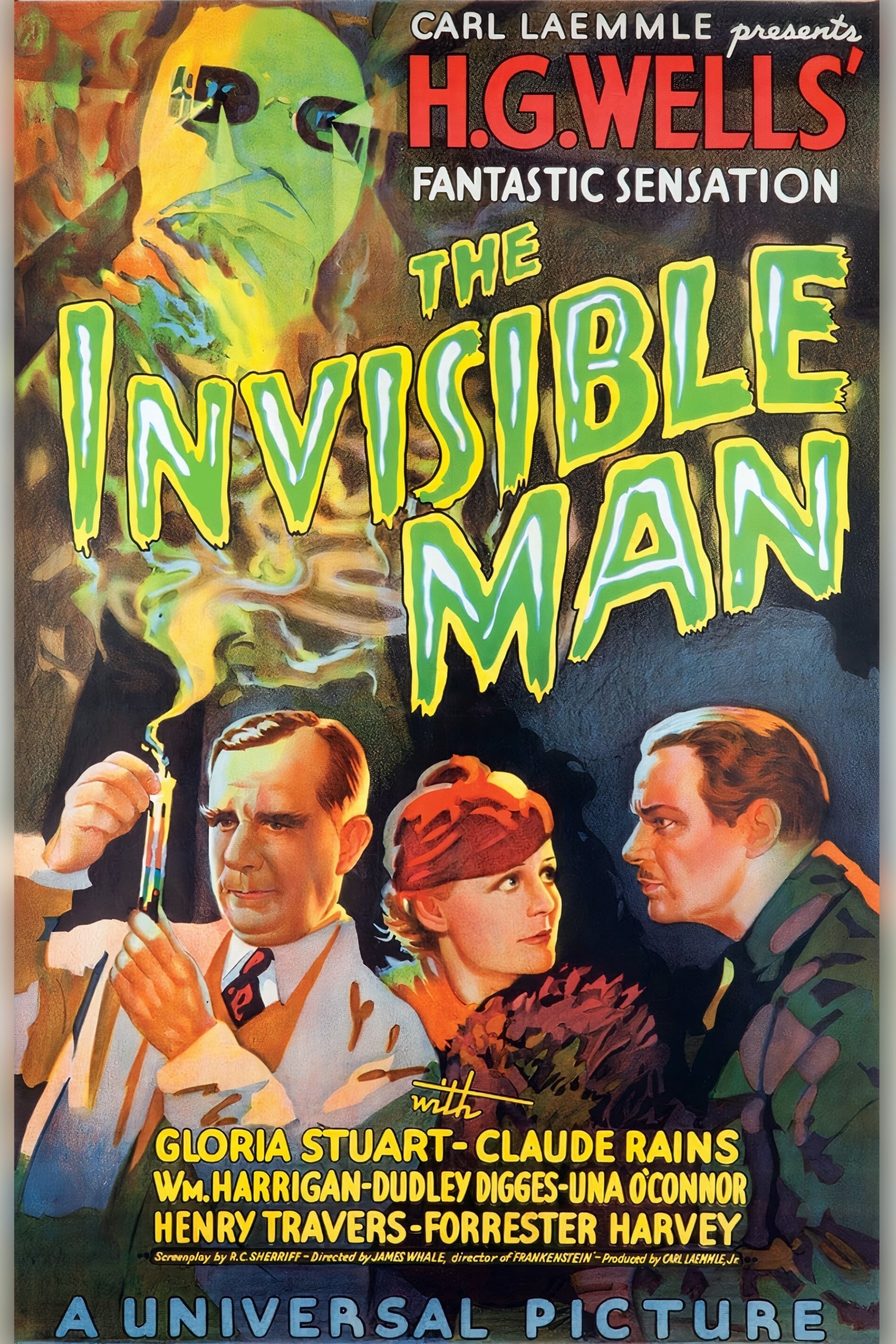
The Invisible Man (1933)

A mysterious man, whose head is completely covered in bandages, wants a room. The proprietors of the pub aren't used to making their house an inn during the winter months, but the man insists. They soon come to regret their decision. The man quickly runs out of money, and he has a violent temper besides. Worse still, he seems to be some kind of chemist and has filled his room with messy chemicals, test tubes, beakers and the like. When they try to throw him out, they make a ghastly discovery. Meanwhile, Flora Cranley appeals to her father to do something about the mysterious disappearance of Dr. Griffin, his assistant and her sweetheart. Her father's other assistant, the cowardly Dr. Kemp, is no help. He wants her for himself. Little does Flora guess that the wild tales, from newspapers and radio broadcasts, of an invisible homicidal maniac are stories of Dr. Griffin himself, who has discovered the secret of invisibility and gone mad in the process.
Catch me if you can!
The Invisible Man: We'll begin with a reign of terror, a few murders here and there, murders of great men, murders of little men - well, just to show we make no distinction. I might even wreck a train or two... just these fingers around a signalman's throat, that's all.
Universal Studios - 100 Universal City Plaza, Universal City, California, USA

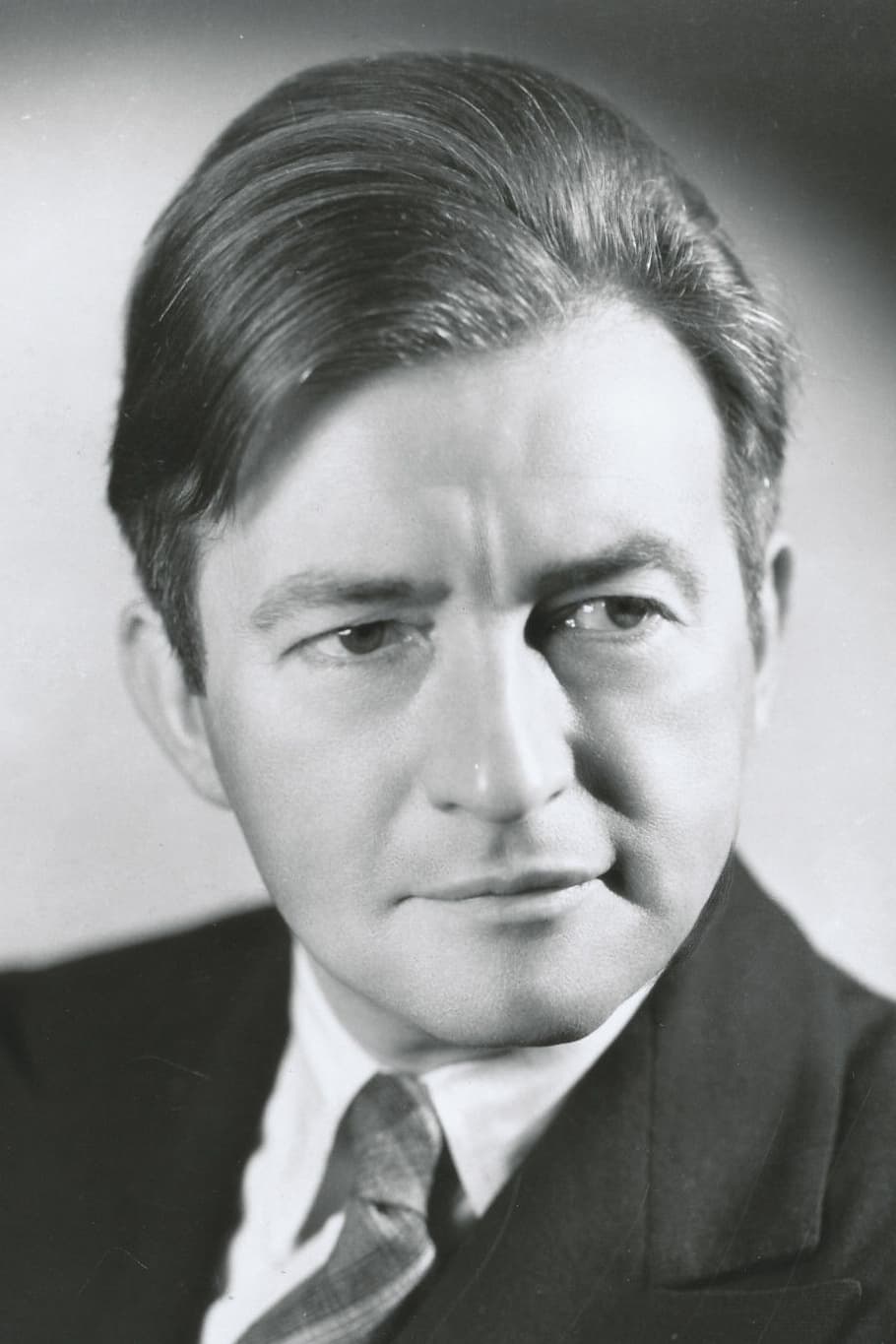
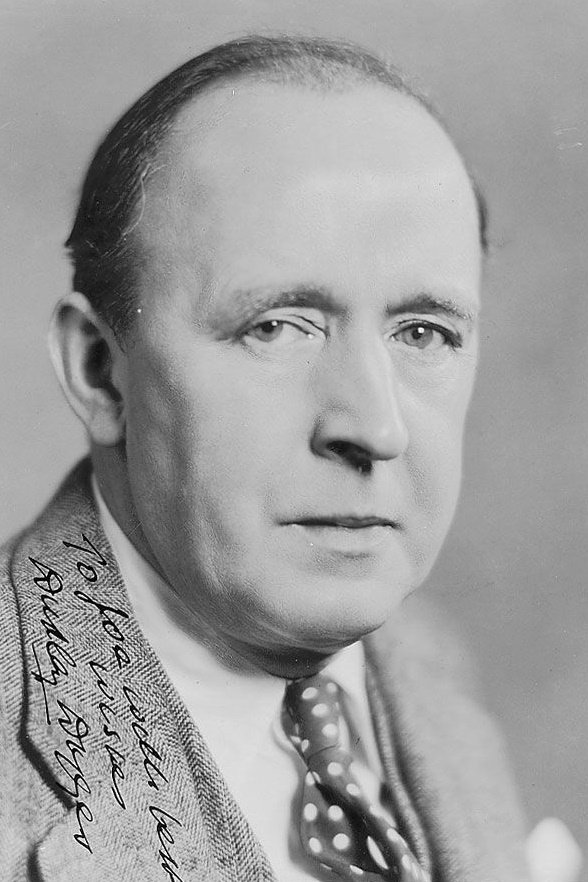
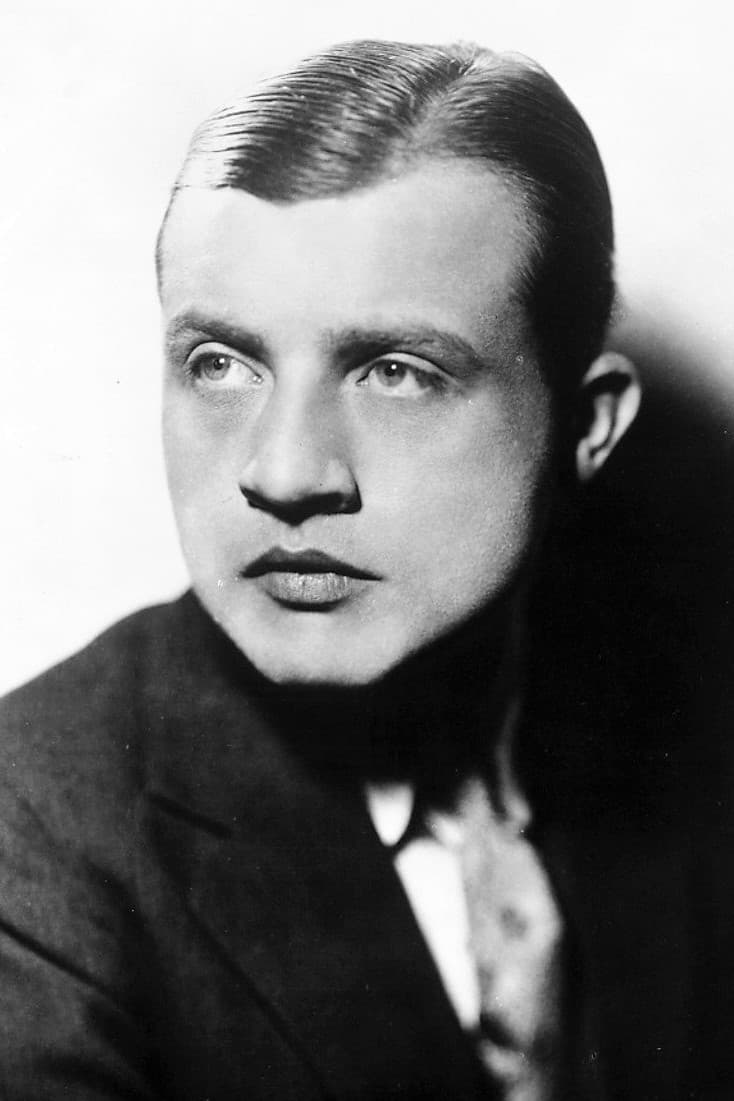
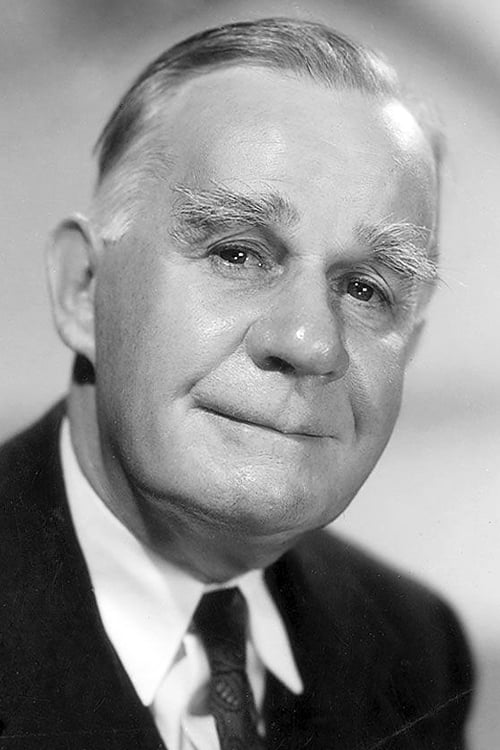
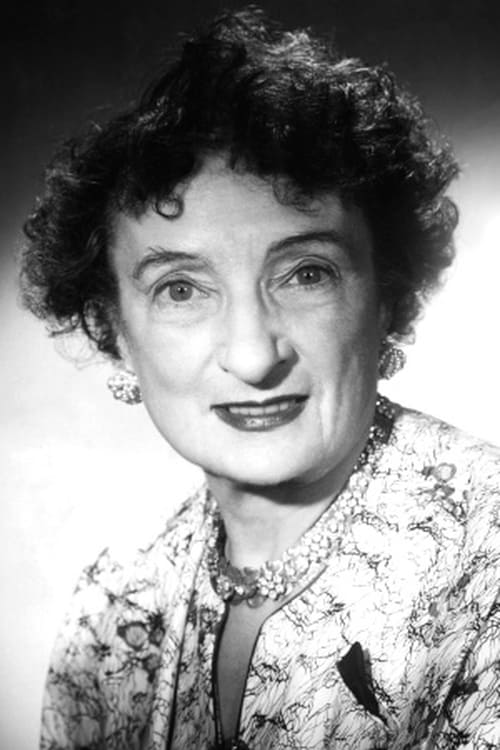
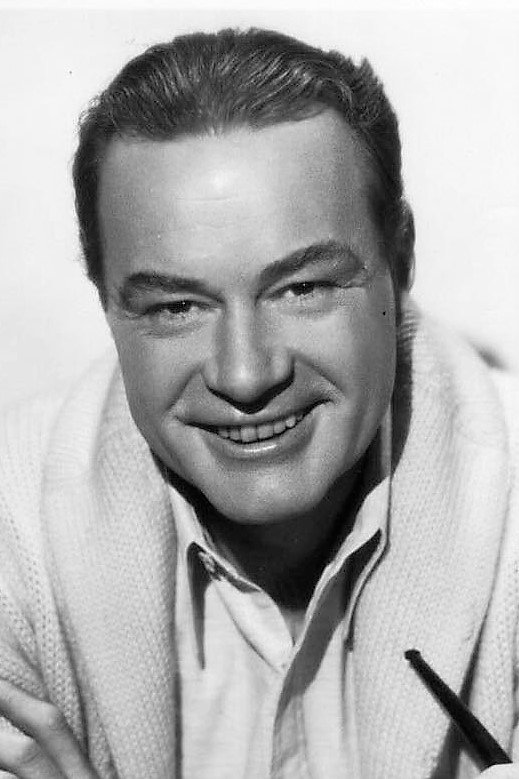
On the DVD short documentary, Claude Rains' daughter Jessica Rains tells of a time when her father brought her to see a re-release of this movie in the theater in Pennsylvania in 1950. It was bitterly cold and his face was completely covered by a hat and scarf. When he spoke to ask for the tickets, the attendant immediately recognized his voice and wanted to let them in for free. Rains was quite upset at this and demanded that he pay full price.
In order to achieve the effect that Claude Rains wasn't there when his character took off the bandages, James Whale had Rains dressed completely in black velvet and filmed him in front of a black velvet background.
Claude Rains' daughter Jessica Rains was born in 1938, 5 years after this movie was released. The first time she ever saw her father in a movie was in 1950, when he took her to a showing of 'The Invisible Man' in a small Pennsylvania theater. While the film was playing, Rains was telling his daughter all about how it was made. The other theater patrons stopped watching the movie and instead listened to Rains' anecdotes.
When screenwriter R.C. Sherriff came to Hollywood to write this film, he asked the staff at Universal Pictures for a copy of the H.G. Wells novel he was supposed to be adapting. They didn't have one, all they had were 14 "treatments" done by previous writers on the project, including one set in Czarist Russia and another set on Mars. Sherriff eventually found a copy of the novel in a secondhand bookstore, read it, thought it would make an excellent picture as it stood, and wrote a script that, unlike Universal's Dracula (1931) and Frankenstein (1931), was a closer adaptation of the book. This was fortunate, because Wells had negotiated script approval when he sold the rights.
Continuity
(at around 29 mins) When Griffin first visits Kemp, he locks the library door and puts the key in his pocket, but when Kemp leaves, he easily opens the door, which is now unlocked.
(at around 35 mins) The ink spots on the police inspector's face change between shots.
(at around 20 mins) The man who has the bike torn from his hands was not present in the wide shot of the people scattering. Also, when the bike is torn away, the people who were running away have disappeared.
(at around 21 mins) When Dr. Kemp stands before Dr. Griffin's opened cupboard, his cigarette jumps from his left hand to his right between camera cuts when Dr. Cranley walks away.
(at around 7 mins) When Jenny enters the Invisible Man's room with the mustard, the way he holds the napkin to hide his lower face changes in between shots.
Factual errors
Unfortunately a truly invisible man would also be a blind one. An invisible cornea would not refract light and an invisible retina would not register photon impulses.
Incorrectly regarded as goofs
With all the spare time Kemp had while he was giving the Invisible Man his clothes, he could have locked all the doors and called the police. [Of course, not all doors have locks, and there almost always are windows.]
(at around 12 mins) Whiskey and Rye are for sale in the supposedly British pub. Whisky would be spelled without an "e" and Rye wouldn't be for sale at all. However, in places other than Scotland, whiskey IS spelled with an "e".
The pub is in Iping, England, and it actually has both whiskey and whisky (in a large glass urn to the left of the rye barrel), as well as rye. Canadian Rye Whisky (which is not required to have any rye in it) was being exported to England by the early 19th century.
Revealing mistakes
(at around 39 mins) When the Invisible Man is in his pajamas and getting ready for bed, parts of his collar appear and disappear as his 'invisible' chin passes in front of it.
(at around 20 mins) When the Invisible Man is riding away on the stolen bicycle, a practice mark and/or track can be clearly seen on the ground in front of the bike; the tires of the bicycle follow it perfectly.
Wires are frequently visible moving objects that are meant to be moved by the Invisible Man. This is most noticeable when he rides the stolen bike.
(at around 7 mins) One of the tricks used to suggest Griffin's invisibility is the simple use of black cloth to hide Claude Rains' exposed flesh. This is particularly evident when Mrs. Hall barges in on the Invisible Man while he's eating. The black cloths covering the lower part of his face and his wrists as he holds the serviette up are clearly visible.
(at around 2 mins) The men at the Lion's Head Inn are throwing darts from a 45º angle left of the dartboard, yet the darts in the board are from straight-on shots.
Anachronisms
The streets of the town, obviously a studio set, do not look England in 1933. They look more like those of an eastern European town of a few centuries earlier.
Audio/visual unsynchronized
(at around 2 mins) Though the music at the pub comes from a coin-operated player piano, it, along with everyone talking in the pub, stops short at the startling arrival of the Invisible Man.
Crew or equipment visible
(at around 36 mins) During the riot at the pub, a technician can be heard yelling, "Stay on camera!"
(at around 20 mins) When the bicycle is "traveling", it is supported by two wires going through the handlebars. The man pulling it along can be seen in the distance as he runs off at 90 degrees to the direction of the cycle. The wire pulling it must go round a pulley hidden behind the cart. The puller must have started where he did, so he could see when to start running. His speed is exactly the same as that of the cycle.
Errors in geography
(at around 1 min) The pub in Iping has an American-style dartboard instead of the more elaborate British-style dartboard.
(at around 20 mins) A British Police station has the American words 'Police Department' spelled out on the door.
(at around 2 mins) The story starts in a pub in the village of Iping, a real village in Sussex. The pub is full of people with a Cockney accent. This accent is peculiar to the East End of London and parts of the neighboring county, Essex. Sussex is south and west of London and more than 70 km away.
(at around 55 mins) The film supposedly takes place in England; however, the train that gets wrecked has a distinctly American appearance.
Plot holes
(at around 37 mins) Griffin says he must conceal himself for an hour after eating, as the undigested food is still visible. He also says he can be seen in a mist or fog. By that logic, the cigarette smoke in his lungs should be seen while he is smoking, but it is not visible.
Character error
(at around 41 mins) A 'chief of police' is referred to. There is no such position in British policing.
(at around 56 mins) Lloyds Bank has never had an apostrophe before the "s", but the town has a branch of Lloyd's Bank.
(at around 32 mins) The Invisible Man, in London, says he wants to go back to the village of Iping, which is "only fifteen miles" away. Iping is, in fact, 45 miles from London.