Winchester '73 (1950)

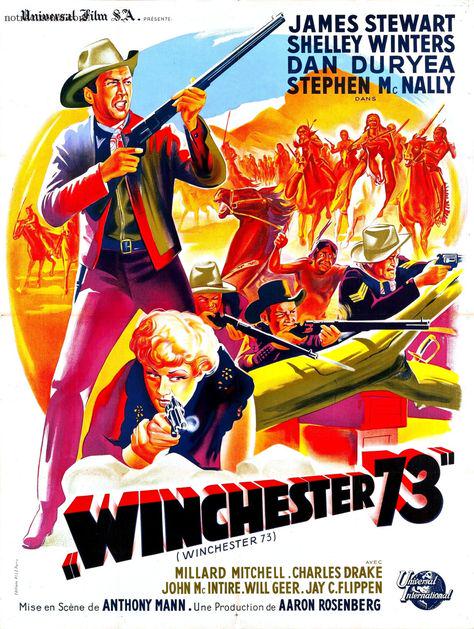
In a marksmanship contest, Lin McAdam wins a prized Winchester rifle, which is immediately stolen by the runner-up, Dutch Henry Brown. This "story of a rifle" then follows McAdams' pursuit, and the rifle as it changes hands, until a final showdown and shoot-out on a rocky mountain precipice.
The Gun That Won The West!
Young Bull: All white men are thieves. In peace, they steal our land; in war, they steal our women. And you are a white man!
Old Tucson - 201 S. Kinney Road, Tucson, Arizona, USA
Saguaro National Park, Arizona, USA
Sonoita, Arizona, USA
(Mustang Mts)
Circle Z Ranch - 1476 Highway 82, Patagonia, Arizona, USA
Mescal, Arizona, USA
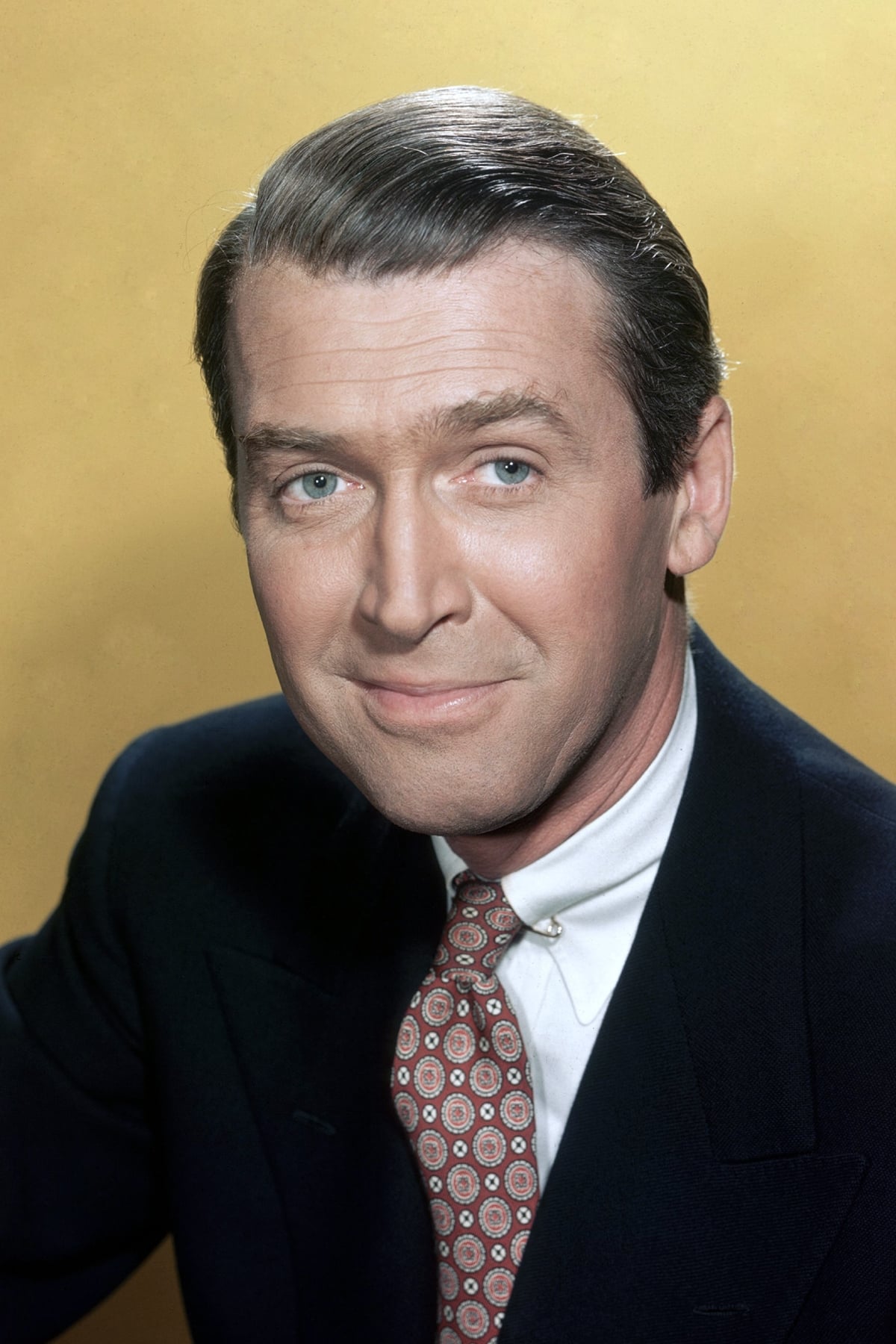
James Stewart credited this film with saving and redefining his career after a series of postwar flops threatened to seriously damage it.
The filmmakers did not have the budget to pay James Stewart his requested fee of $200,000, so he suggested they take the then-unusual step of paying him a cut of the profits instead. This deal, the first of its kind since the advent of talkies, would soon become the norm and change the studio-agent-actor relationship, leading to the demise of the long-term contract and the studio system. Stewart is believed to have made around $600,000 from this film.
At the time of filming, James Stewart was anxious to appear in more challenging roles, as he was worried that the general impression was of him as a limited actor. He found director Anthony Mann very helpful in breaking that perception.
James Stewart was named the winner of the third annual Reno Silver Spurs award as best Western actor of 1951 for his performance. The film was also named best Western film and Anthony Mann was named best Western director.
Authenticity was important to both James Stewart and Anthony Mann, so the actor began preparations well in advance of filming. Stewart had been known to research roles and practice for hours to look convincing in a character's physical task. As Mann later described, "[Stewart] was magnificent walking down a street with a Winchester rifle cradled in his arm. And he was great too actually firing the gun. He studied hard at it. His knuckles were raw with practicing... It was those sorts of things that helped make the film look so authentic, gave it its sense of reality." An expert from the Winchester Company, Herb Parsons, actually did the trick shooting required for the film, and assisted Stewart in his training.
Continuity
As Steve and Lola are are trying to escape in their horse-drawn wagon from pursuit by Young Bull and his Indian tribesmen, a white horse can be seen running tethered to the back of the wagon. When the camera shot changes from the front of the wagon to some distance behind it, there is no sign of the white horse or reins tethered to the back of the wagon. In the next shot, where the camera angle returns to the front of the wagon, the horse and reins reappear.
When Lin and High Spade leave Riker, they are supposed to be riding at night. However, when they are fleeing the pursuing braves, the sun is visible behind the ridge they ride along.
When Sgt. Wilkes welcomes Lola, his neck cloth repeatedly changes between shots.
Near the end, when Lin McAdam rides towards Dutch's cover, Lin's shadow is projected to his right side and in the next shot to his left side.
When Lin and his partner ride into town just before the robbery, the shadows on their horses and buildings are extremely long, suggesting very early morning and not the 3:00 PM that it was supposed to be. Five minutes later when Lin rides out of town after Dutch, there is hardly any shadow from his horse, suggesting mid-day.
Factual errors
When discussing Custer's Last Stand, Lin says that the Indians knew that his command was armed with single-shot Springfield rifles. The Indians sent in a small wave of Indians to draw their fire and, when the cavalrymen were reloading, sent in a second wave that overwhelmed them. Battlefield archaeologists studying the site starting in the 1980's have determined that the battle unfolded in a substantially different way with the command being overwhelmed in mostly small groups, rather than one large stand.
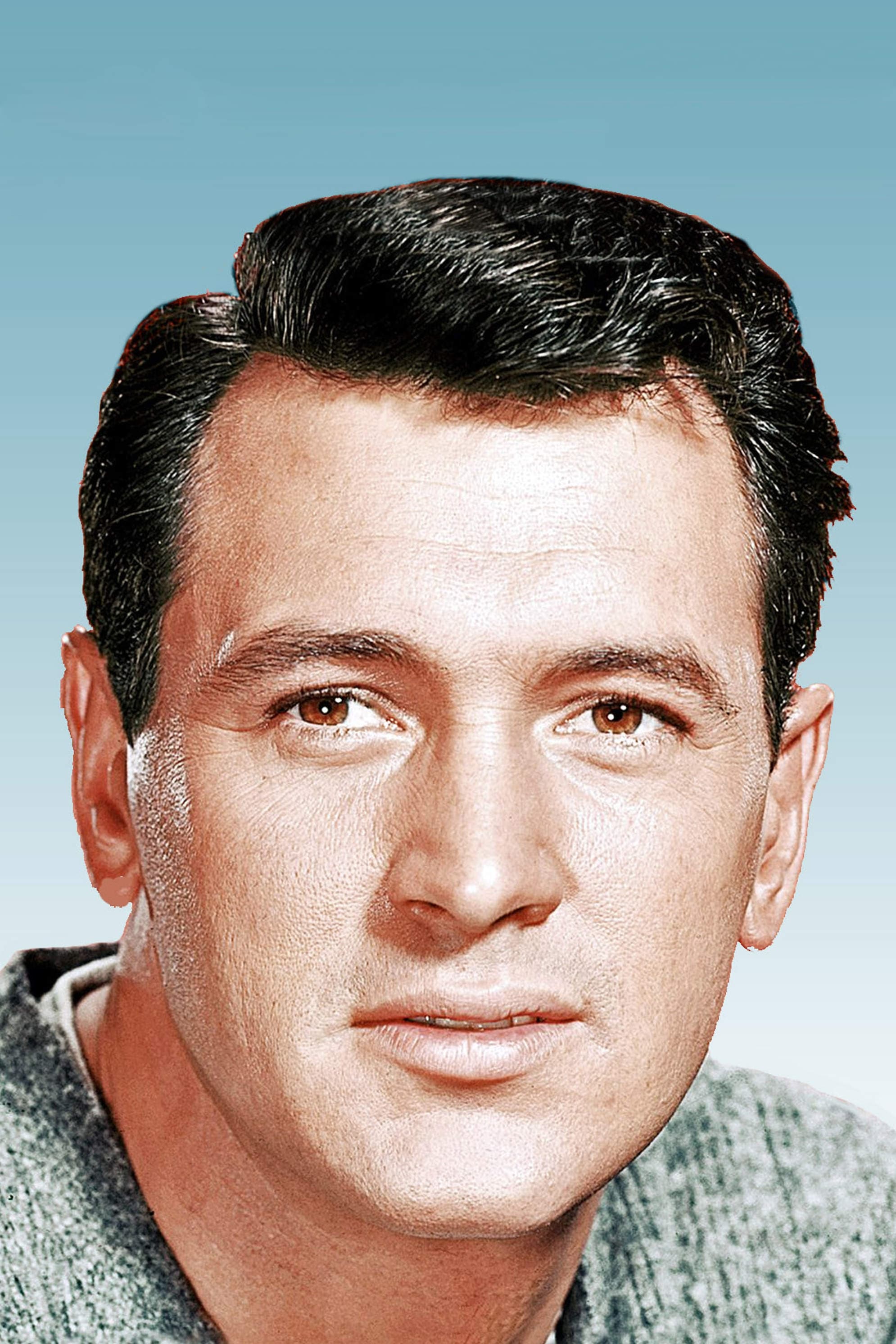
Rock Hudson's character, Young Bull, referred to the "Battle of the Little Big Horn." Area Indians would not have used that term. The Lakota, Dakota, Cheyenne, and most other Plains Indians called it the "Battle of the Greasy Grass."
Two times, a Winchester '66 is mistakenly referred to as a "Henry" rifle. The first time is when Dutch Henry Brown shoots at the "Indian trader" seated at the camp fire. The second time, at the cavalry camp the Indians have surrounded, Steve mistakenly refers to his Winchester '66 as a "Henry" rifle. The Henry predates the Winchester line of 66, 73, 86, 92, and 94. The Henry is distinctive in that it had no wood forearm. In the latter part of the Civil War, the Henry played a small role in battle. Its problem was that the lack of forearm furniture made the weapon very hot to handle after repeated firing. Dutch Henry Brown complains that the Henry "takes too long to kill", implying that the .44 Henry cartridge is inferior. The '73 Winchester, whilst chambered in other calibers, was also chambered in .44-.40. The .44-.40 was often favored by cowboys because their Colt Single Action revolvers could also be chambered in .44-.40. The Henry design was the catalyst for the subsequent Winchester lever actions models.
Sgt. Wilkes refers to he and his men belonging to the "Pennsylvania Ninth," i.e. the 9th Pennsylvania Cavalry. There was such a regiment during the Civil War, but it disbanded July 18, 1865, so it would not be fighting Indians in the West in 1876. Many Civil War veterans fought in the Indian Wars, but Wilkes's character would have transferred into a Regular Army unit, rather than serving in a volunteer state regiment. Wilkes states that his regiment fought at Gettysburg and implies that it was also at (1st) Bull Run and Shiloh. However, the real 9th Pennsylvania Cavalry was not present at any of these battles.
The revolvers used in this movie are, "single action," meaning for each shot fired the hammer must be manually cocked before firing. At 1:23:30 a character fires his revolver three times in rapid succession by simply pulling the trigger, without cocking the hammer, which would have been impossible with this type revolver.
Incorrectly regarded as goofs
This movie is based on a rifle-shooting competition held in Dodge City on 4 July 1876. During a poker game in the movie, Dutch refers to a "Dead Man's Hand". This refers to the poker hand 'Wild Bill' Hickok was holding when he was shot in the back by Jack McCall on 2 August 1876 - less than a month later. It was too soon for the "Dead Man's Hand" to be a famous phrase. However, per IMDb guidelines for Anachronisms, "a good deal of leeway" is allowed; linguistic anachronisms are usually excused (modern words in historical films) - "always bear in mind that it's entertainment not documentary."
Revealing mistakes
During the gunfight in the rocks, gunshots ricochet on the rocks many times in places not even accessible from Dutch's position atop the rocks.
When Lin McAdams walks through the door of his room after winning the rifle and he is jumped by Dutch Henry Brown, as they struggle on the floor, the rifle can be seen to bend, showing that it is just a rubber prop.
In the fight outside the saloon in Tacosa, a modern power pole is seen in the upper right of the frame. Slowed down to a single frame, it is clearly seen.
After Dutch Henry and his gang leave Dodge City with just one empty gun and no ammunition, Dutch Henry takes aim at a "deer" and feigns shooting it. But the "deer" is an obvious animation (Claymation) and not a real deer.
Anachronisms
During the final shootout scene, billboards and a highway are visible in the far distance on the upper left of the screen.
Will Geer, born in 1902, was around 48 when this movie was made. He plays Wyatt Earp, who was born in 1848, and would have been around 28 in 1876 when the movie takes place.
At the very end, Lin hugs Lola. Her bra strap/bra is clearly visible through the top of the dress. Bras were not worn then.
Crew or equipment visible
As Steve and Lola in their wagon drawn by horses try to escape being pursued by Young Bull and his Indian tribesmen, tyre tracks can be seen left by the camera car.
(at around 1h 3 mins) The shadow of the camera moves across Dan Duryea.
Errors in geography
When Lin was chasing Dutch at the end and they had just left Tascosa, they were riding through the desert full of Saguaro cactus which are native to Arizona. Tascosa is in the Texas pan handle near Amarillo.
Plot holes
When Wyatt Earp confiscates the visitors' guns, he adds them to dozens of other guns he is storing, but nothing is done to identify the guns so that the owners can reclaim the correct ones.
In the gunfight at the Jameson house, it is said that that Noonan's posse consisted of 12 men and was down to 9, and then another of them is shot. However, when the burning wagon is pushed into the house, there are 9 men pushing it.
Character error
When Dutch Henry and his two henchmen arrive at Riker's trading post, the name of the henchman played by James Millican is given as "Ben". Later, at the desert hideout, Waco Johnnie Dean calls the same man "Dan".
During the marksmanship contest with the hay bales on the wagons in the street, had it been real, many of the spectators standing at the sides would have been taking their very lives into extreme risks.