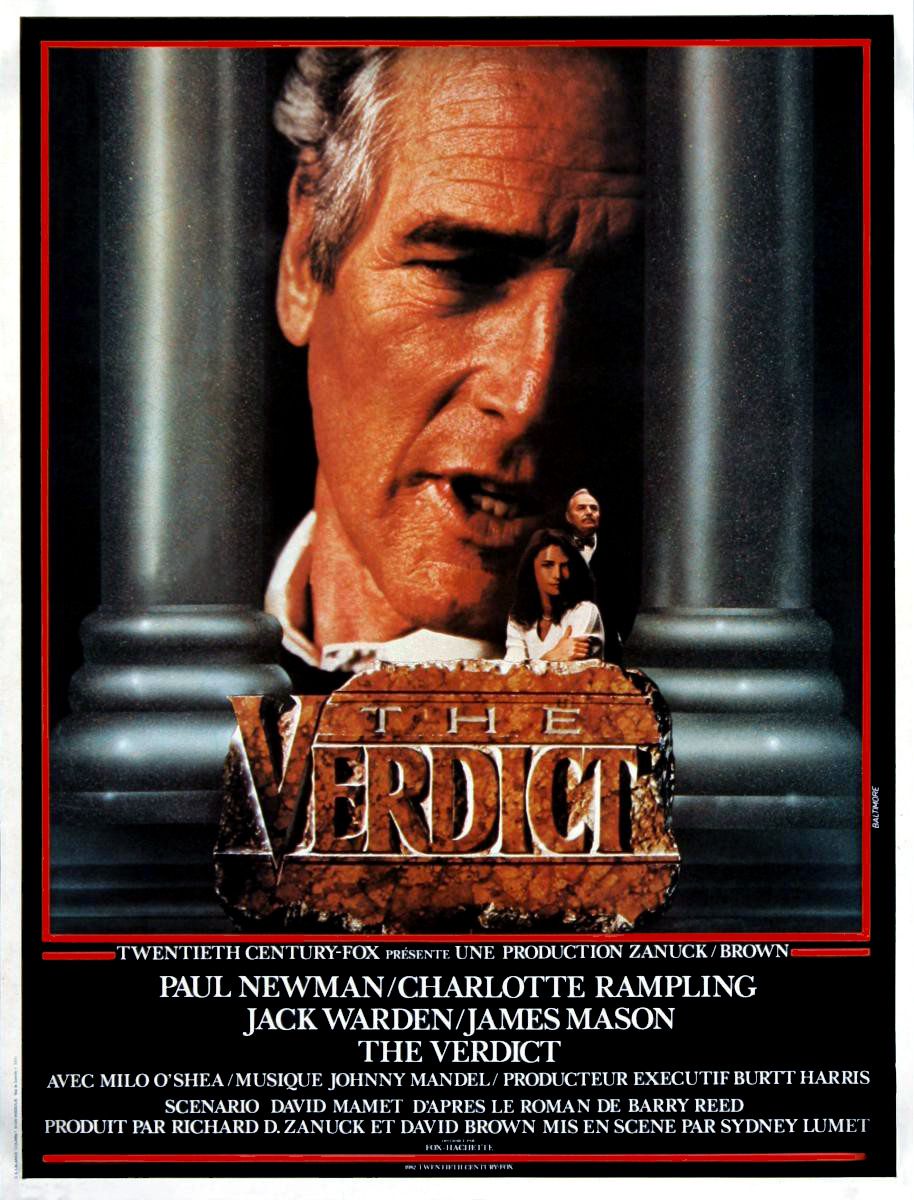
The Verdict (1982)

Frank Galvin was once a promising Boston lawyer with a bright future ahead. An incident early in his career in which he was trying to do the right thing led to him being fired from the prestigious law firm with which he was working, almost being disbarred, and his wife leaving him. Continually drowning his sorrows in booze, he is now an ambulance-chasing lawyer, preying on the weak and vulnerable, and bending the truth whenever necessary to make what few dollars he has, as he has only had a few cases in the last few years, losing the last four. His only friend in the profession is his now retired ex-partner, Mickey Morrissey, who gets Frank a case, his fee solely a percentage of what his clients are awarded. The case should net Frank tens of thousands of dollars by settling out of court, that money which would at least get him back on his feet. It is a negligence suit brought on behalf of Deborah Ann Kaye by her sister and brother-in-law, Sally and Kevin Doneghy, against St. Catherine Labour? Hospital, operated by the Archdiocese of Boston, and Drs. Towler and Marks. Kaye was admitted to the hospital for what should have been a routine delivery, but something that happened while Kaye was on the operating room table led to her brain being deprived of oxygen, resulting in permanent brain damage, and Kaye now being in a totally vegetative state requiring hospitalization for the rest of her life. Frank eventually learns that the cause seems to be that Dr. Towler, the anesthesiologist and an expert in the field, used the incorrect anesthetic for the situation. However, all but one person that was in the operating room that day has provided depositions that nothing improper occurred in the operating room. The one holdout is the operating room head nurse, Maureen Rooney, who is not talking, period, to Frank or the other side. Upon seeing the state Kaye is in, Frank unilaterally decides to do what he believes is the right thing by declining the lucrative out-of-court settlement offered by the Archdiocese and take the case to court. In doing so, he hopes the truth that the hospital and the doctors truly were negligent comes to light. Feeling that this case may be a turning point in his life, Frank has a new spring in his step, enough that he attracts the attention of Laura Fischer, the two who begin a relationship. Despite having whatever the truth is on his side, that truth which he does not know, and having an expert witness of his own, Frank has an uphill battle in that the Archdiocese has retained the services of Ed Concannon, a high-priced lawyer who has a large team of associates whose task is to help Concannon and the Archdiocese win at any cost. Concannon's task seems even easier as Judge Hoyle, the presiding judge, is already biased against Frank for taking the case to court.
Frank Galvin Has One Last Chance At A Big Case.
[Frank is giving his summation to the jury]
Frank Galvin: You know, so much of the time we're just lost. We say, "Please, God, tell us what is right; tell us what is true." And there is no justice: the rich win, the poor are powerless. We become tired of hearing people lie. And after a time, we become dead... a little dead. We think of ourselves as victims... and we become victims. We become... we become weak. We doubt ourselves, we doubt our beliefs. We doubt our institutions. And we doubt the law. But today you are the law. You ARE the law. Not some book... not the lawyers... not the, a marble statue... or the trappings of the court. See those are just symbols of our desire to be just. They are... they are, in fact, a prayer: a fervent and a frightened prayer. In my religion, they say, "Act as if ye had faith... and faith will be given to you." IF... if we are to have faith in justice, we need only to believe in ourselves. And ACT with justice. See, I believe there is justice in our hearts.
[he sits down]
George's Variety - G Street, South Boston, Boston, Massachusetts, USA
Massachusetts State House - Beacon & Park Streets, Boston, Massachusetts, USA
(courthouse corridor/hospital scenes)
William F. Spencer Funeral Home - 575 E. Broadway, South Boston, Boston, Massachusetts, USA
Vazac's Bar - 108 Avenue B, East Village, Manhattan, New York City, New York, USA
Fordham University - 441 E. Fordham Road. Rose Hill, Bronx, New York City, New York, USA



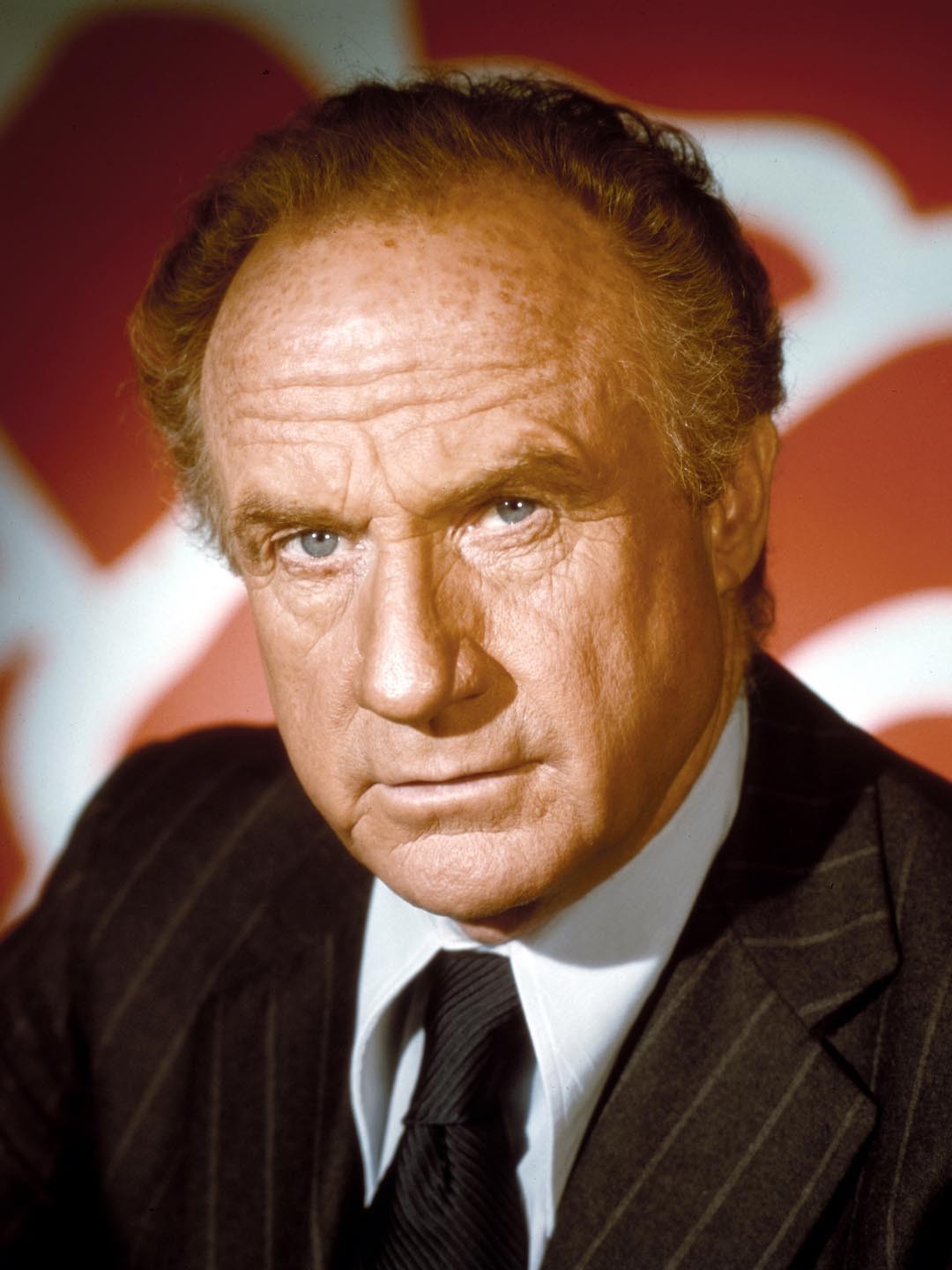
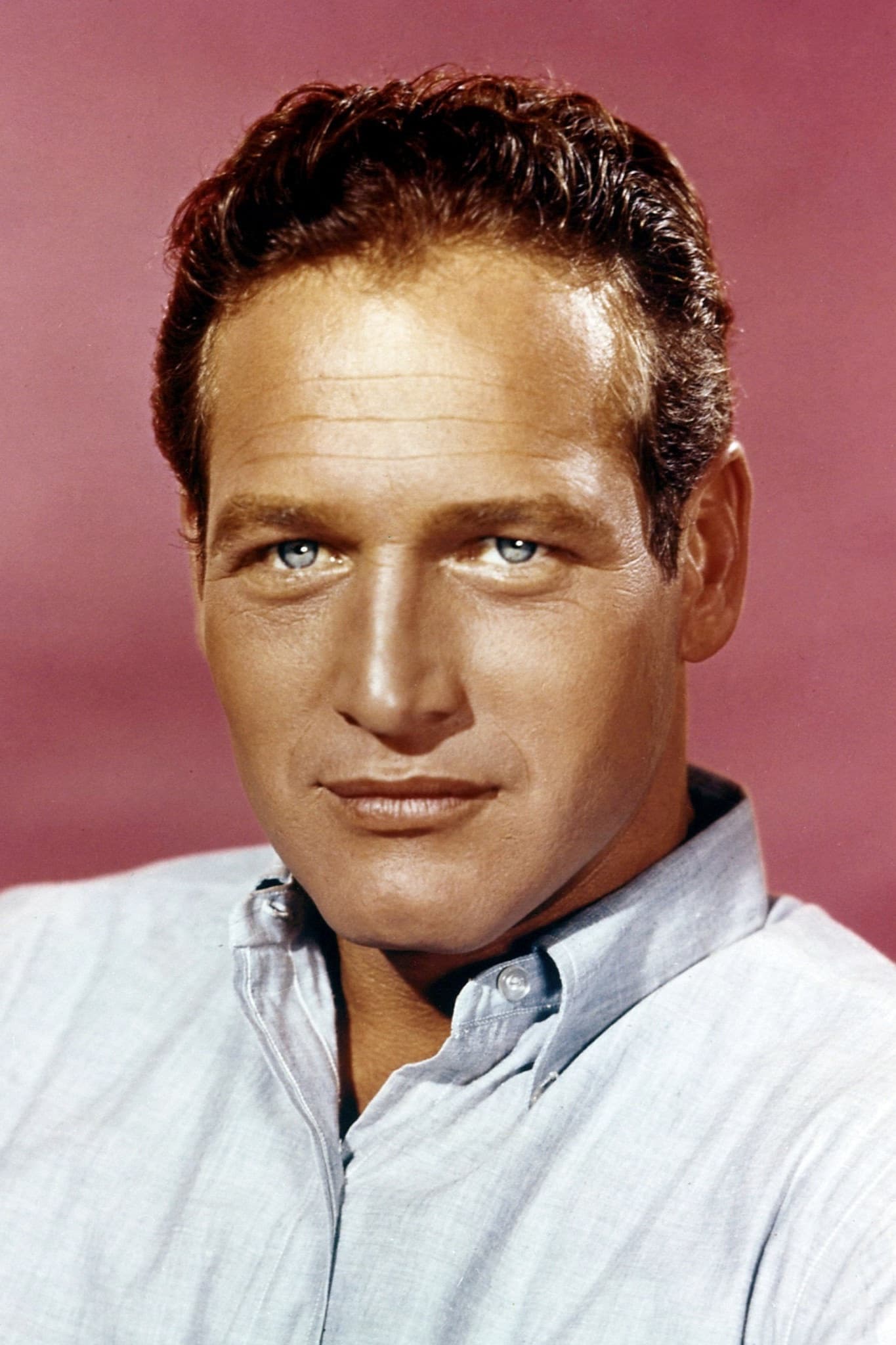
Paul Newman did Frank Galvin's closing statement in one take.
Frank uses eye drops to hide the redness in his eyes caused by alcoholism. According the DVD commentary by Sidney Lumet, this was Paul Newman's own idea.
Robert Redford was originally involved with this film. After writer David Mamet delivered his draft, Redford was uncomfortable with the main character and hired another writer to do another draft, and so on until Redford decided he didn't want to do the film. He was uncomfortable because he did not want to play an alcoholic. Sidney Lumet was offered the project. He read all the drafts and identified the original Mamet version as the one to make. At that point, Paul Newman agreed to star and received a Best Actor Oscar nomination for his performance.
Though entitled "The Verdict", the original final draft of David Mamet's screenplay had no verdict in it. Producer Richard D. Zanuck commented that the title would require a question mark on advertising materials making it "The Verdict?". It was director Sidney Lumet who convinced Mamet to add in a verdict so the film could have a third act denouement.
After the verdict was announced in the film, director Sidney Lumet filmed two versions of the ending. In one version, the final shots seen are of Frank Galvin walking away from the courtroom in a series of long shots, never seeing what happens after he leaves the courthouse. In the version that was used, a sequence after he leaves the courthouse is seen.
Continuity
Throughout the film, the length of time that the woman is said to have been in a coma is 4 years (the confrontation between the husband and Frank Galvin, for example), but during his cross-examination of Kaitlin Price, Galvin gives the date of the operation as May 12, 1976. The date on the check Bishop Brophy offered to Galvin is dated February 13, 1982, making it nearly 6 years since the woman went into the coma.
When Concannon hears that the plaintiff's expert witness is Black, he tells his assistant to have a Black lawyer sit at their table. Then they have the trial, and there's not an African American lawyer in the courtroom.
Frank takes Polaroids of Deborah and lays them on the bed apart from each other, but when seen from an overhead view, they are touching.
When Galvin talks to the nurse, his boarding pass sleeve is sticking out of his jacket pocket almost to his shoulder. He then talks to Mick in the street and the boarding pass is still seen prominently out of the pocket from a distance. Galvin runs from talking to Mick into the bar where Laura is and the boarding pass now barely sticks out and looks more like a pocket square and is nowhere near his shoulder.
Early in the movie Galvin is reading the obituaries in the newspaper. He puts down his pen to take a drink of his whiskey, but in the next shot, when he takes the drink, the pen is back in his hand.
Factual errors
The case Concannon cites at a key moment is described with an incorrect legal form. For the United States legal reporter, the citation should be a whole number followed by "U.S." or "United States" and then another whole number, not a decimal.
Near the end, the bishop wears his ring on his left hand. Bishops wear their episcopal rings only on the right hand.
When Frank enters the hospital chapel to confront Nurse Rooney, he genuflects, with his right knee to the floor and his left knee up, the correct method in the Catholic tradition. While he waits, another nurse enters and genuflects in the same way. When Nurse Rooney turns to face the altar, she takes the opposite knee, incorrectly.
Frank gets a telephone bill at his office with a zip code of 02981. Boston zip codes begin with "021" and "022". The zip code for the real address shown, 124 States St. in Boston is 02109. Also, there is no postage on the envelope and an obviously fake cancellation mark.
When, early in the movie, the viewer learns about Nurse Rooney, it is said that she lives in Arlington. Later in the movie when Galvin visits her and then, later, pilfers her mail, it's clear that she lives on G Street in South Boston.
Revealing mistakes
Early in the film, when Frank leaves a building, a reflection in the window reveals an entire crowd of people across the street watching the scene of Paul Newman being filmed.
(at around 20 mins) When Frank is sitting in his apartment, speaking on the telephone to Sally Doneghy, a copy of the 'Boston Herald American' can be seen on the table in the bottom right of the screen. When Frank closes the paper he is reading and throws it onto the floor, it is clear that this is a second copy of the same newspaper with the same headline. Additionally, a prospective juror is seen days later (at around 45 mins) reading the same paper with the headline "Cops Stalk Terror Gang".
When Frank is playing the pinball machine, he randomly presses the flippers to no effect while the ball is on the board and makes no attempt to flip the ball back into play when it goes down, allowing it to roll off the end of the flipper. Yet he manages to score high.
Early in the film, Frank two-finger-types a note on a manual typewriter to tape on the door of his office suite. When the note is seen, however, the typed letters are perfectly uniform in darkness and thickness, indicating that the note was typed on an electric typewriter.
Anachronisms
The pinball machine Frank Galvin plays at the bar is named Disco Fever, and is an early electronic pinball, with digital sound and gas discharge score displays. The sound effects however, are of mechanical bells and score reels made by an electro-mechanical pinball machine made before 1976.
Crew or equipment visible
Early on when Mickey drags Frank away, there is a low tracking shot. The camera/camera operator's shadow can be seen on the wall.
Plot holes
In the climactic courtroom scene, when Frank calls Kaitlin to the stand, Concannon is flustered and confers with one of his lawyers. The lawyer then leaves the courtroom, presumably having been given some direction by Concannon. Later, after Kaitlin has been questioned by Frank and cross-examined by Concannon, the lawyer returns with a book containing the case Concannon cites to get the judge to disallow the admittance of the photocopy of the hospital admission form as evidence. However, at the point at which Concannon calls the lawyer over and then, presumably, sends him out to "find" this book/case, he doesn't even know about the existence of the photocopy because he hasn't yet questioned Kaitlin; it's during his questioning of Kaitlin that she reveals she has a photocopy of the form. So there's no way the lawyer would have known to go out and find a case regarding the inadmissibility of a photocopy.
In common law, when a lawyer has received an offer from opposing council, your lawyer must present this offer to his client (the sister and brother-in-law), and it is up to them to accept or reject the offer. The lawyer is to take his instructions from his client. The opposing council is not allowed to discuss the case of offers, etc. with the client (sister or brother-in-law). Both of these actions could be grounds for disbarment or sanctions and fines against both lawyers.
The major legal rulings at the climax are actually gross misunderstandings of the rules of evidence as they had existed under common law for centuries at the time of the trial, rather than being obviously legally correct as the characters suggest.
Boom mic visible
A few minutes into the film while Frank is at a bar telling a joke, there is a boom mic visible just behind the counter near the beer taps.
Character error
Concannon states that the trial is due to start on February 19th. The year presumably is 1982, as that is the year written on the check Bishop Brophy offered to Galvin. February 19, 1982 was a Friday. However, when Judge Hoyle is speaking to Concannon and Galvin before the trial, he states the trial will begin "next Thursday".
Laura tells Frank she will meet him in New York City at the Russell Hotel on 38th St. The hotel was actually on 37th St. and Park Avenue. The hotel was built in 1921 and demolished in 2006.