True Grit (1969)

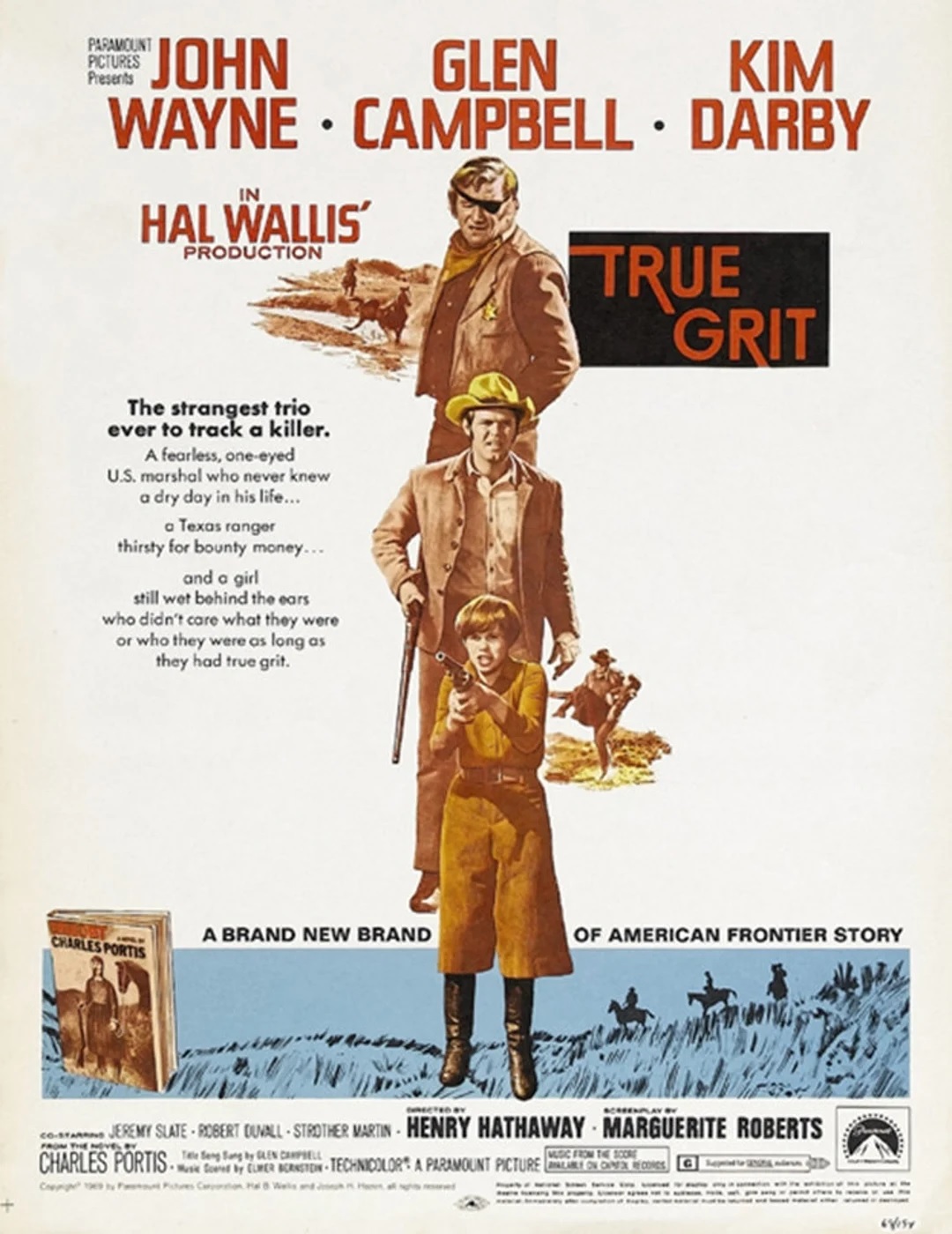
1880 Yell County, Arkansas. With revenge etched on her mind after the murder of her father by a once-trusted, cowardly jackal, plucky Mattie Ross rides to Fort Smith. Now, nothing else matters, and while aching to bring his killer to justice, Mattie enlists the help of the ageing U.S. Marshal Reuben "Rooster" J. Cogburn: a rugged, one-eyed lawman. And before long, La Boeuf, a young Texas Ranger thirsty for bounty money, joins in. However, as the unlikely trio embarks on a dangerous journey into the heart of Indian Territory, the odds are against them. But rabid vengeance keeps determined Mattie going. Is true grit enough to see justice served?
"The strangest trio ever to track a killer."
LaBoeuf: What are you doing?
Rooster Cogburn: Lookin' for sign.
LaBoeuf: You couldn't see it if you saw it.
Bishop, California, USA
Buckskin Joe Frontier Town & Railway - 1193 Fremont County Road 3A, Canon City, Colorado, USA
Castle Rock, Colorado, USA
Durango, Mexico
Gunnison, Colorado, USA
Hot Creek, California, USA
(outlaw cabin)
Montrose, Colorado, USA
Ouray, Colorado, USA
(Courthouse)
Owl Creek Pass, Ridgway, Colorado, USA
Ridgway, Colorado, USA
Sherwin Summit, Inyo National Forest - 351 Pacu Lane, Bishop, California, USA
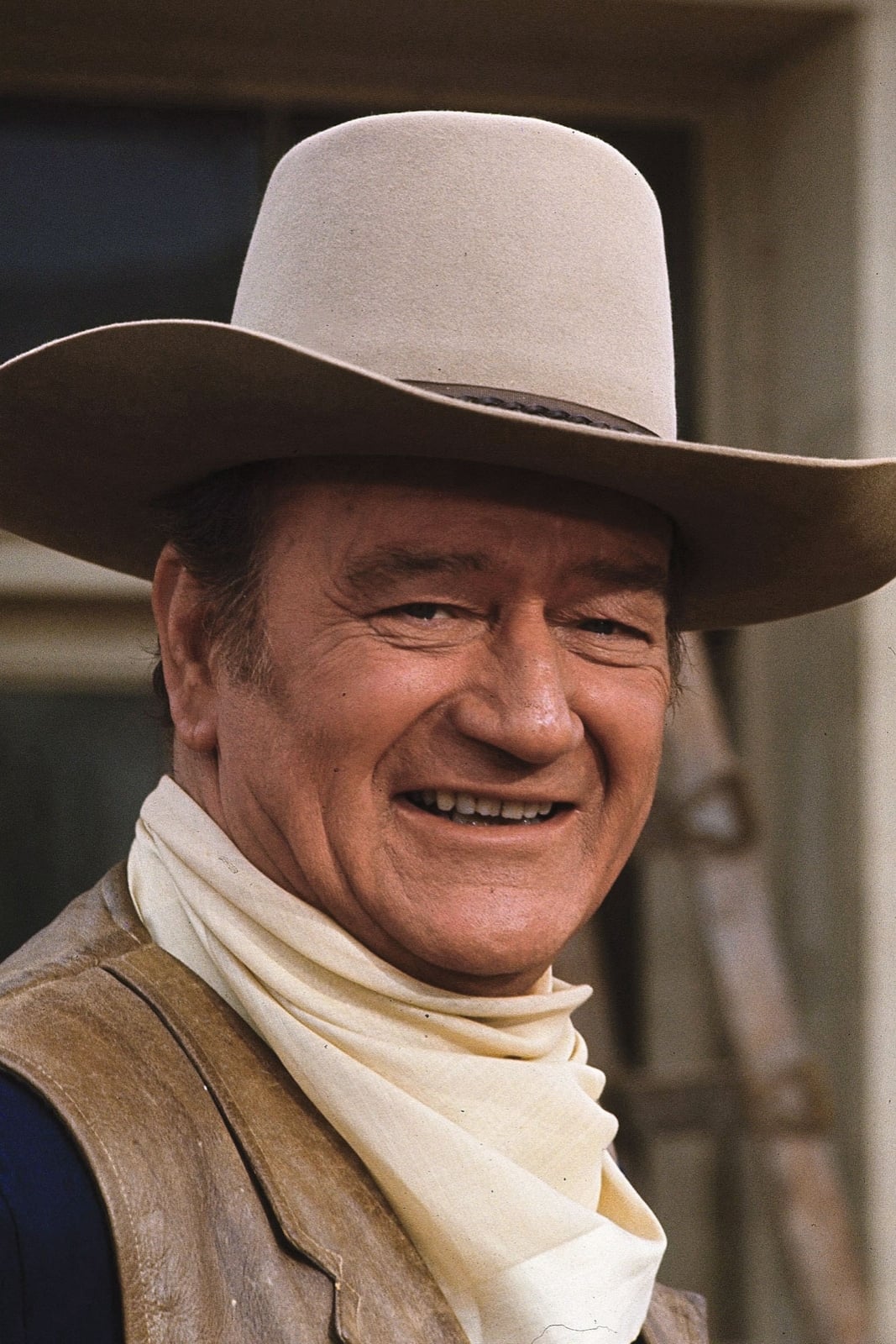
Stunt double Jim Burk performed the entire scene where Rooster Cogburn charged Ned Pepper's gang on horseback. John Wayne was only seen briefly in close-up, and he was riding on a trailer, not a horse.
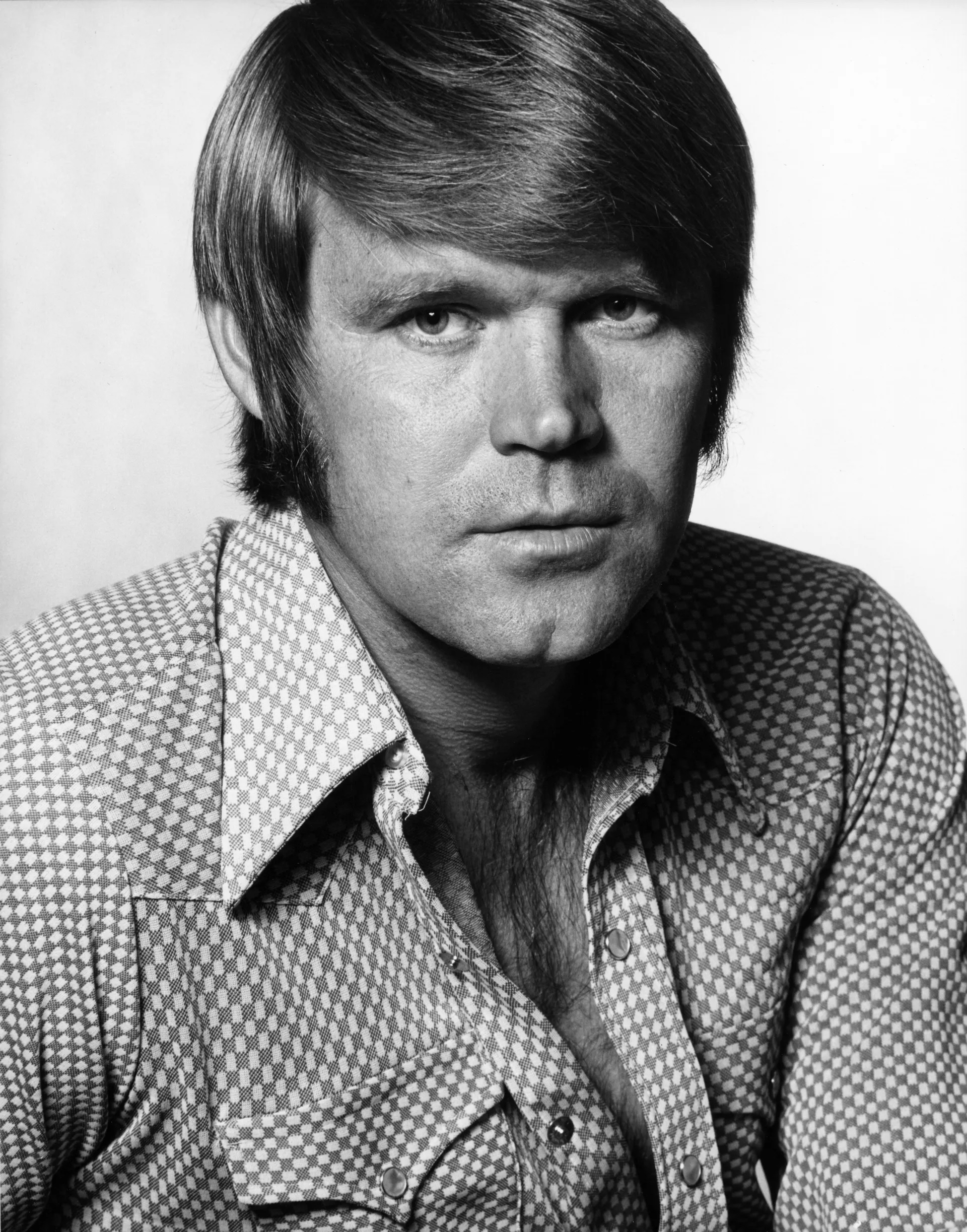
Elvis Presley was considered for the role of La Boeuf, the Texas Ranger. However, "Colonel" Tom Parker, his manager, insisted that Presley should receive top billing. The part was given to Glen Campbell instead.
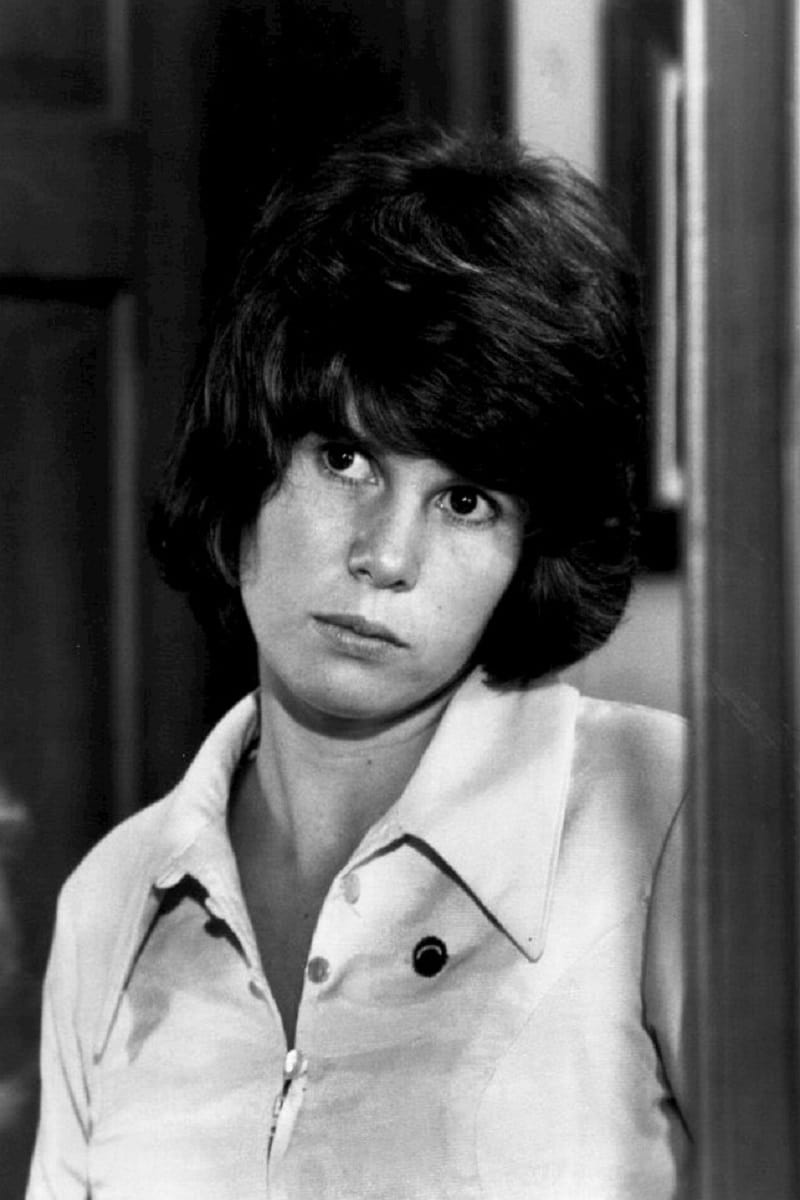
John Wayne had initially promised the role of Mattie Ross to his daughter Aissa Wayne, but director Henry Hathaway refused to cast her.
Despite its commercial success, John Wayne was not pleased with the finished film. He greatly disliked Kim Darby's performance, and while promoting the film for its US release in June 1969, told interviewers that he had starred in much better films, citing Stagecoach (1939) as an example. At the Oscar ceremony on April 9, 1970, Wayne personally told Richard Burton that he felt Burton should have won the Oscar for his portrayal of King Henry VIII in Anne of the Thousand Days (1969).
The character of Rooster Cogburn was supposed to be around 40. John Wayne was 61 when the film was made. Jeff Bridges was 60 when he played Rooster Cogburn in the remake, True Grit (2010).
Continuity
The white markings on Little Blackie's legs and face change throughout the movie.
After Rooster and Le Boeuf won't let her on the ferry and Mattie rides her horse across the river, her clothes are perfectly dry.
At dinner with Mattie & Chen, Rooster angrily tosses his finished plate atop the stew pot and a chunk of bread tumbles off onto the table. Different size chunks of bread reappear and disappear in subsequent shots.
When LaBoeuf and Rooster are discussing the venture at Chen Lee's, Mattie repeatedly changes position between shots.
During the hanging scene, the song "Amazing Grace" is being sung. The scene switches to some kids on swings, and the line "How sweet the sound" is sung in the middle of another verse, then the song goes back to the verse that was being sung.
Factual errors
When Mattie tries unsuccessfully to shoot Tom Chaney, she later says her revolver failed because Rooster Cogburn reloaded it in a state of drunkenness. This only happened in the book when Rooster shot the rat twice with Mattie's gun and tried to reload it, but in the movie, Rooster shoots the rat with his own Colt Single Action Army.
When John Wayne tells that he shot Ned Pepper in the lower lip ,the close up scene of Ned Pepper shows it was his upper lip that looked shot not his lower lip.
When LeBeouf shows up at the hideout after he and Rooster ride out over the hill, his Sharps Buffalo rifle has duct tape around the stock. Duct tape is a twentieth-century innovation.
Incorrectly regarded as goofs
At the cabin, while waiting for Ned Pepper, Rooster tells Mattie he lost his eye in the battle of Lone Jack, Missouri, just outside of Kansas City. Kansas City was not given its present name until 1889. Whilst this is technically true for Kansas City, Kansas (although part of the current city had been known unofficially as Kansas City in the past), Kansas City, Missouri was incorporated in 1853.
Revealing mistakes
When Rooster hits La Boeuf with his rifle right after Mattie is captured, the rifle bends. It is obviously a rubber gun.
In the shootout between Rooster and Pepper's gang, the film inverts for a few seconds. Rooster's eye patch moves to the right eye, the bandana switches sides, and his rifle and pistol change hands.
When Mattie is riding her horse across the river, the water doesn't appear to be flowing, indicating this sequence was shot in a lake or pond.
When Mattie's revolver is pointed toward the camera, one can clearly see the chambers are empty and cannot be fired.
Campbell carried a Sharps Carbine with a short barrel, whereas the Sharps buffalo rifle has a long barrel.
Miscellaneous
When Chaney is waiting for the ranger and Mattie to return from watching Rooster and Ned's gang shoot it out, he picks up a rock and uses it on the ranger. One wonders why he didn't just recover the rifle that had been tossed aside earlier.
When Mattie throws hot water on Chaney and runs, he gives chase. Seen from behind, she's under or almost under the roof of the little corral as he's coming up. Then, when they switch shots to showing it from the front, they are farther back.
Glen Campbell's character, "La Boeuf," carries a Hollywood-esque French surname. "Boeuf" is a French world roughly translated as "beef," more accurately translated as a castrated steer. It's undoubtedly male. French nouns are either masculine or feminine in gender, and the articles and adjectives appended to such nouns must match the gender of the noun. "La Boeuf" is not true French; should this name ever show up in the French language, it would be written as "Le Boeuf."
When La Boeuf shoots at the turkey, there is no detectable recoil from his "big bore" Sharps carbine.
When Rooster's horse is shot while underneath him, the stuntman that falls with the horse uses the reigns to intentionally keep the horse from getting back up, making it appear that he's trapped.
Anachronisms
Rooster reports Lucky Ned Pepper had robbed the KATY Flyer, a train that did not start running until 1896, long after the time in which the story is set.
When Mattie is emerging from her sleeping area when they are close to Lucky Ned Pepper's hideout, it is evident that she is wearing a form of black nylon tights. Not something you would see in the 1870s.
When Mattie receives the money from Stonehill, the money is clearly 20th century issued US currency, and it is both smaller in size and much less intricate than the currency issued by the federal government in the years following the US Civil War.
When Mattie visits Little Blackie at the corral prior to the purchase, electrical power lines can be clearly seen in the background.
Although the date on Frank Ross's grave indicates he died in 1880, the rifle Cogburn carries is a Winchester Model 1892 saddle carbine.
Errors in geography
After the characters in Fort Smith, Arkansas ride into Indian territory, there are many shots of rocky peaks and snow-covered mountains. There are no such mountains within several hours' automobile drive of Fort Smith. Fort Smith is located in the Arkansas River Valley with the Ozark Mountains to the north and the Ouachita Mountains to the south. Both the Ozarks and the Ouachitas extend into eastern Oklahoma. The Boston Mountains north of town, which is part of the Ozarks, are green, tree-covered mountains. The Winding Stair Mountains in Oklahoma, where much of the action takes place, are in the Ouachitas. They are about 70 highway miles from Fort Smith.
Several of the types of pine trees shown in the film only exist in the American West. This is especially noticeable when White Bark Pines are shown. This species are only known to exist in the Western US and Northern Mexico.
The mountains where the movie was filmed were too high to be the Oklahoma and Arkansas areas where the narrative is set. The mountains in those areas top out in the 2-3 thousand foot range. The lowest mountains in the film often visibly exceed that height range.
The movie shows Rooster, Matty and a Beouf riding through stands of Quaking Aspen and Doug Firs, neither of which exist in Oklahoma.
Boom mic visible
(at around 1 min) The boom mic's shadow is clearly seen on La Boeuf as he sits down by the dinner table after taking off his spurs.
Character error
Mattie Ross' gun is a Colt Walker, not a Colt Dragoon as stated by Rooster. (The movie's producers wanted to use the larger Walker to enhance the image of a little girl using such a large gun.)
Rooster mentions that he lived for some years in Cairo, Illinois, but he mispronounces the name of the town. The local pronunciation is KAY-row.
As Moon lies dying on the floor of the hideout, he talks about his brother, George Garrett, "A Methodist circus rider out of Austin, Texas." The correct term is "circuit rider."
Chaney claims to have broken ribs after being shot, but later the same day walks, runs, and even tackles Mattie to the ground with no apparent pain.
When Quincy is killed in the cabin he is lying on the ground and still breathing.