
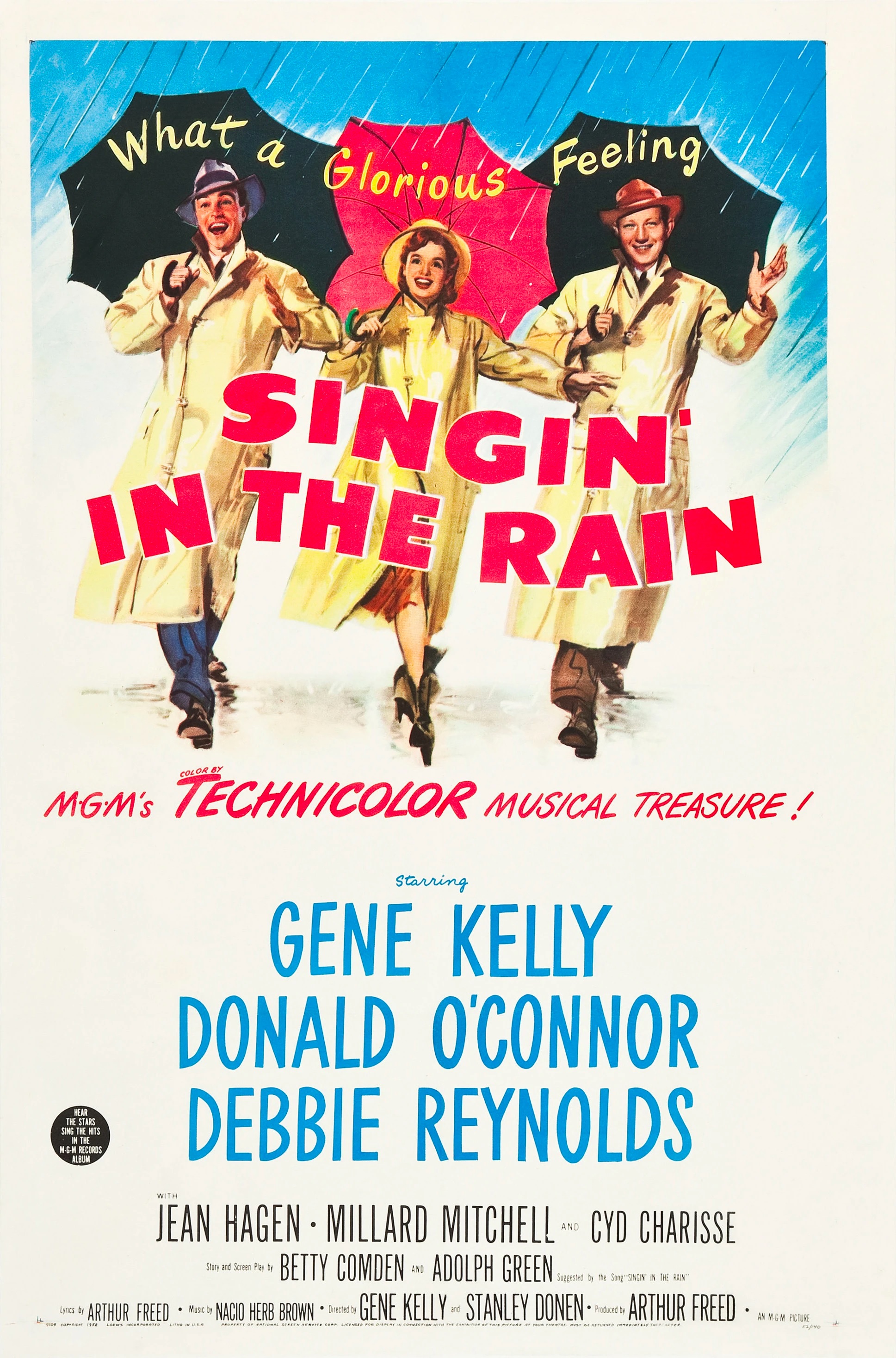
Singin' In The Rain (1952)

1927 Hollywood. Monumental Pictures' biggest stars, glamorous on-screen couple Lina Lamont and Don Lockwood, are also an off-screen couple if the trade papers and gossip columns are to be believed. Both perpetuate the public perception if only to please their adoring fans and bring people into the movie theaters. In reality, Don barely tolerates her, while Lina, despite thinking Don beneath her, simplemindedly believes what she sees on screen in order to bolster her own stardom and sense of self-importance. R.F. Simpson, Monumental's head, dismisses what he thinks is a flash in the pan: talking pictures. It isn't until The Jazz Singer (1927) becomes a bona fide hit which results in all the movie theaters installing sound equipment that R.F. knows Monumental, most specifically in the form of Don and Lina, have to jump on the talking picture bandwagon, despite no one at the studio knowing anything about the technology. Musician Cosmo Brown, Don's best friend, gets hired as Monumental's ideas man and musical director. And by this time, Don has secretly started dating Kathy Selden, a chorus girl who is trying to make it big in pictures herself. Don and Kathy's relationship is despite their less than friendly initial meeting. Cosmo and Kathy help Don, who had worked his way up through the movie ranks to stardom, try make the leap to talking picture stardom, with Kathy following along the way. However, they have to overcome the technological issues. But the bigger problem is Lina, who will do anything to ensure she also makes the successful leap into talking pictures, despite her own inabilities and at anyone and everyone else's expense if they get in her way, especially Kathy as Don's off screen girlfriend and possibly his new talking picture leading lady.
Singin' Swingin' Glorious Feelin' Technicolor Musical
Cosmo Brown: Lina. She can't act, she can't sing, she can't dance. A triple threat.
Metro-Goldwyn-Mayer Studios - 10202 W. Washington Blvd., Culver City, California, USA
(New York City Streets)
Metro-Goldwyn-Mayer Studios - 10202 W. Washington Blvd., Culver City, California, USA
(Studio)
Grauman's Chinese Theater - 6925 Hollywood Blvd., Hollywood, Los Angeles, California, USA
For the "Make 'em Laugh" number, Gene Kelly asked Donald O'Connor to revive a trick he had done as a young dancer: running up a wall and completing a somersault. The number was so physically taxing that O'Connor, who smoked four packs of cigarettes a day at the time, ended up in a hospital bed for a week after its completion. He suffered from exhaustion and painful carpet burns. Unfortunately, an accident ruined all of the initial footage, so after a brief rest O'Connor agreed to do the difficult number all over again.
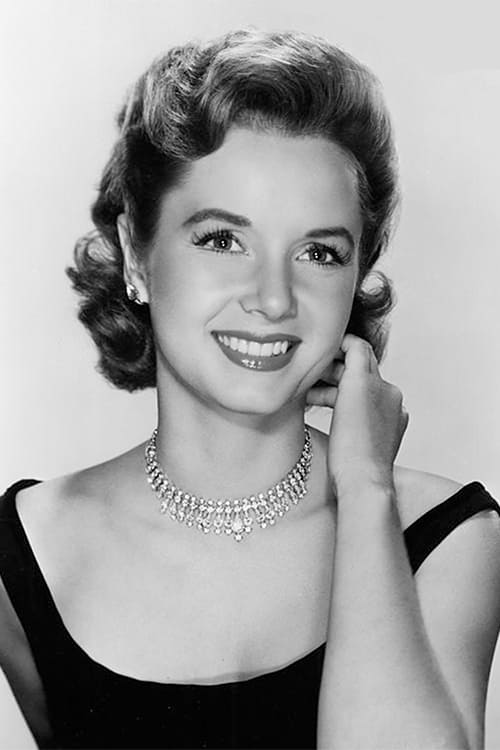
Gene Kelly was a severe taskmaster with 19-year-old Debbie Reynolds, who had never danced to this degree before rehearsals started. "He came to rehearsals and criticized everything I did and never gave me a word of encouragement," Reynolds recalled. Fred Astaire, who was in an adjacent dance studio, found her crying under a piano and reassured her that all of her hard work was worth the effort. Relations between Kelly and Reynolds further deteriorated during their on-screen kiss when Kelly forcibly stuck his tongue in Reynolds' mouth without her consent.
A microphone was hidden in Debbie Reynolds' blouse so her lines could be heard more clearly. During one of the dance numbers, her heartbeat can be heard, mirroring what happens to Lina Lamont in the movie itself.
Donald O'Connor was smoking four packs of cigarettes a day during production. O'Connor stated: "Getting up those walls was murder. They had to bank one wall so I could make it up and then through another wall. We filmed that whole sequence in one day. We did it on a concrete floor. My body just had to absorb this tremendous shock. Things were building to such a crescendo that I thought I'd have to commit suicide for the ending. I came back on the set three days later. All the grips applauded." However, Gene Kelly informed O'Connor that no one had checked the camera's aperture, and the footage was unusable. "So the next day, I did it again!" O'Connor recalled. "By the end, my feet and ankles were a mass of bruises."
Only 19 years old when cast to play Kathy Selden, Debbie Reynolds lived with her parents and commuted to the set. She had to wake up at 4:00 a.m. and ride three different buses to the studio. To avoid the long commute, she often slept on the set. Finding her asleep, an irate Gene Kelly would shake her awake and urge her to resume practicing her dance numbers. Reynolds began sleeping under the piano on the set in order to hide from Kelly.
Continuity
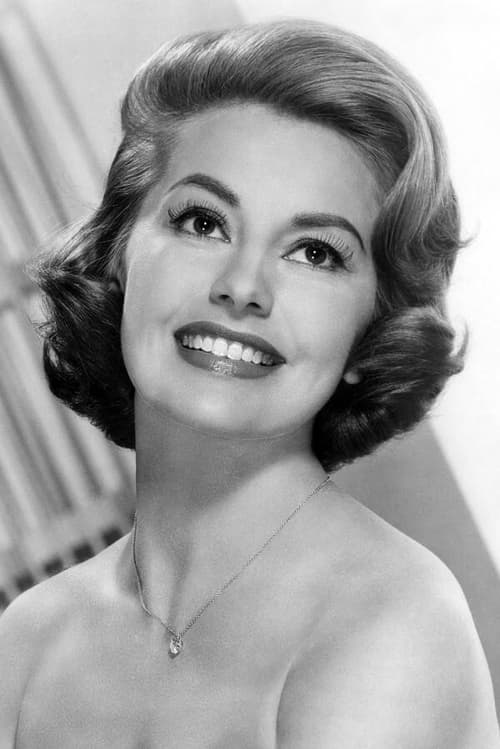
During the Cyd Charisse nightclub dance number, when she's wrapped around Gene Kelly, her body completely changes position between frames due to a clumsy edit. According to commentary on the special edition DVD, this cut of only a few frames' duration dates back to the original release of the film and no one knows why it exists.
When the diction coach is reading "Moses Supposes", Cosmo is making faces behind his back. When the coach catches him in the act, they both flinch. It then cuts to a wider shot and they both flinch again.
Cosmo's violin bow breaks and the hairs can be seen flapping about, yet when they finish the piece the bow is fixed.
The scene with Gene Kelly performing an action sequence from the silent film "The Royal Rascal" uses footage from his earlier film The Three Musketeers (1948). After he throws the guard with the spear over the stairway railing, Lana Turner, who played Lady de Winter in the earlier film, is briefly seen coming through the door on the landing before it cuts to new footage of Jean Hagen hugging Kelly. The discontinuity is made more noticeable because of the drastic difference in hairstyles and dresses worn by the two actresses.
During "Make 'Em Laugh", the green couch slowly changes position. It is in front of the hallway backdrop when Cosmo first enters that part of the scene, but it has moved stage left by the time Cosmo does the back flip off the backdrop.
Factual errors
It shows that every studio started making Talkies after The Jazz Singer (1927) was released, but even the major studios balked at the idea. At the most, studios would release two Talkies a year, but they still released them also as Silents, as most cinemas were not equipped for Talkie films. Talkies were believed to be just a fad. The last Silent film was made in 1936; ten years after The Jazz Singer came out.
Near the beginning of the film, when Don Lockwood flees from his fans outside the Chinese Theater, he jumps via other vehicles to the top of a tramcar. Running along its roof, he holds on to the trolley pole (current collector). This is live, and he would be instantly electrocuted.
Kathy claims that silent movie actors "just make a lot of dumb show," and Don refers to it as "pantomime on the screen." In fact, the actors in silent movies usually were talking, although the technology to record their voices on the film didn't yet exist.
Incorrectly regarded as goofs
As the curtain opens on the preview showing of "The Dueling Cavalier", the title card shown on the screen spells it "Duelling". However, since both spellings are, in fact, correct (from a grammar perspective), it is entirely possible that one was used during production, and the other adopted only at the preview.
Revealing mistakes
When the audience watching the silent film "The Royal Rascal" is shown, they are brightly lit, especially in close-ups, when they are supposedly in a darkened theater.
Near the end of the "Singin' in the Rain" dance number, Don is shown in the street with a large puddle of water behind him with no water drops hitting it in the downpour that is everywhere else.
During the famous Make 'Em Laugh sequence, Donald O'Connor both plays, then later walks on an upright piano's keys which barely move in the process, revealing it is a prop - no doubt created to avoid the risk of damaging a real one.
During some parts of the "Fit as a Fiddle" number, Cosmo and/or Don do not move their fingers while playing the fiddle.
When Don, Cosmo and R.F. are pulling rope to raise the curtain behind Lena to reveal that Kathy is actually singing, their hands don't always grasp the rope and the rope on the other side of the pulley doesn't move. So, they should not be able to raise the curtain, but it rises anyway.
Miscellaneous
The same crowd cheering noise is used twice in the opening scene outside Grauman's Chinese Theatre - first after Don Lockwood says "Not in front of all these people!", and secondly after Dora Bailey presses Don Lockwood to tell his life story.
Anachronisms
As Kathy takes Don to Sunset and Camden, 1950s-era cars can be seen passing in the background.
When Lina meets Don at the R.F. Simpson's party after the big premiere of "The Royal Rascal", she mentions something like "I didn't see you last night at Wally Reid's party". Wallace Reid died in 1923 and the action of the film is set in 1927.
The Police Officer Don meets after singing the title song is seen wearing an oval L.A.P.D. badge. That design wasn't adopted by the L.A.P.D. until 1940 (the film being set in 1927).
The theatre where Vitaphone is playing has a wedge shaped marquee, with milk glass readerboards and blank letters. Trapezoidal Moderne marquees didn't show up until 1935/36, wedge shaped marquees showed up later than trapezoids, and illuminated readerboards with silhouette letters even later than that, so although typical of the early1950s era in which the movie was filmed, it's otherwise at least a decade ahead of the late 1920s era in which the story is taking place.
At the after-premiere party early in the film, guests are dancing to the song "Temptation," which was not published until 1933, six years after the film takes place.
Audio/visual unsynchronized
When Lina Lamont is having problems talking into the microphone hidden in the bush and Roscoe Dexter and the sound man are in the booth, the sound man shakes his head and says, "She's gotta talk into the mic, I can't pick it up." His mouth does not move as he says this.
If you listen carefully to the soundtrack as Gene Kelly tap dances in the rain, (actually Carol Haney tapping) you hear additional taps after Kelly stops dancing.
In the car when Don and Kathy are arguing, she says "At least the stage is a dignified profession" to which Don sarcastically replies "Dignified profession". The word 'profession' was clearly dubbed later as it sounds different from the rest of his dialogue and his lips can be seen to say something else entirely.
Crew or equipment visible
During the fight scene in "The Royal Rascal", Don's character pushes the guard with the spear over the railing on the stairway. As the guard falls, the hands of a crew member are seen reaching out to grab his legs.
When Don jumps off the trolley into Cathy's car, a wire supporting Don is visible.
Don Lockwood, as a stuntman, drives a plane into a shed. Upon impact, two men jump out from behind the shed.
At the beginning of the movie, when the stunt man goes over the balcony a hand can be seen stopping his feet hitting the camera.
Errors in geography
In the montage leading up to "Fit as Fiddle," the final sign reads "Coyoteville, N.M./Elevation 421 feet", but the lowest point in New Mexico is Red Bluff Reservoir at 2,844 feet.
Plot holes
"The Dueling Cavalier" had a variety of audio issues that weren't worked out by the time a finished product was made for the preview. But the studio had other films in production earlier than "The Dueling Cavalier" (such as the musical Kathy was working on when Cosmo saw her) which apparently had fixed any audio problems related to dialogue. Why the studio didn't apply those fixes to "The Dueling Cavalier" before the preview is not explained.
Character error
In Don Lockwood's film "The Royal Rascal", his character is seen pushing a man into a moat. Later when he jumps down to the same spot, it has become a cobblestone street.
R.F. Simpson tells his guests that Warner Brothers is making "a whole movie" using the new talkie system. He is referring to The Jazz Singer (1927), which is mainly a silent movie; only a small proportion of it contains sound.
At the end of "Beautiful Girl", all the models gather, but one of them loses her "Swim Suit Girl" pose as she walks down the steps, almost tripping.
When R.F. Simpson plays a talking picture demo film on a screen at the after-party for "The Royal Rascal", he makes the statement that 'Warner Brothers is making a "whole" talking picture "The Jazz Singer". Although it was the first full feature film to use synchronized sound and dialogue, most of the film was silent and used intertitle cards for the dialogue. However, the few scenes using sound delighted and excited the audiences and heralded the end of silent film era.
When Don Lockwood is trying to create the romantic scene in the empty stage set, he says "We add five hundred thousand kilowatts of starlight" and flicks the switch to turn on the lights. "Five hundred thousand kilowatts" is a gross exaggeration as, even if there had been five hundred lights (highly unlikely), each would have had to produce one megawatt of energy, which would have immediately melted all the bulb filaments (and would have been impossible using 1920s technology anyway).