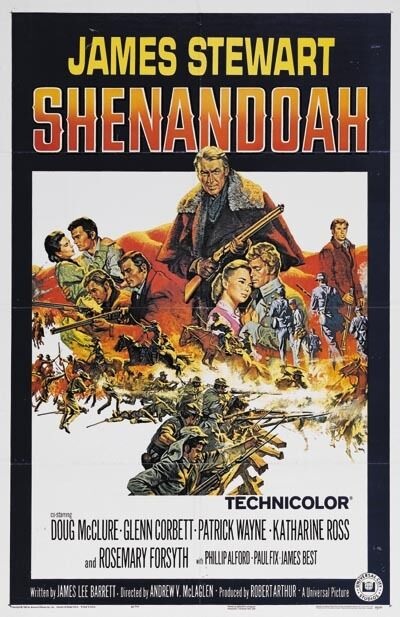
Shenandoah (1965)

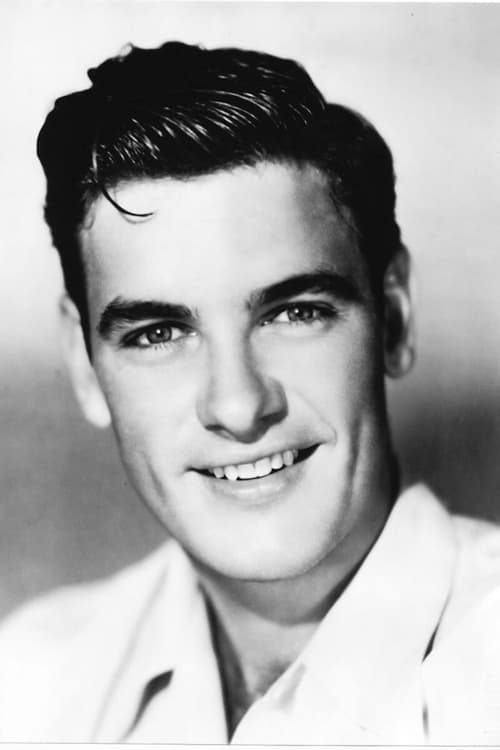
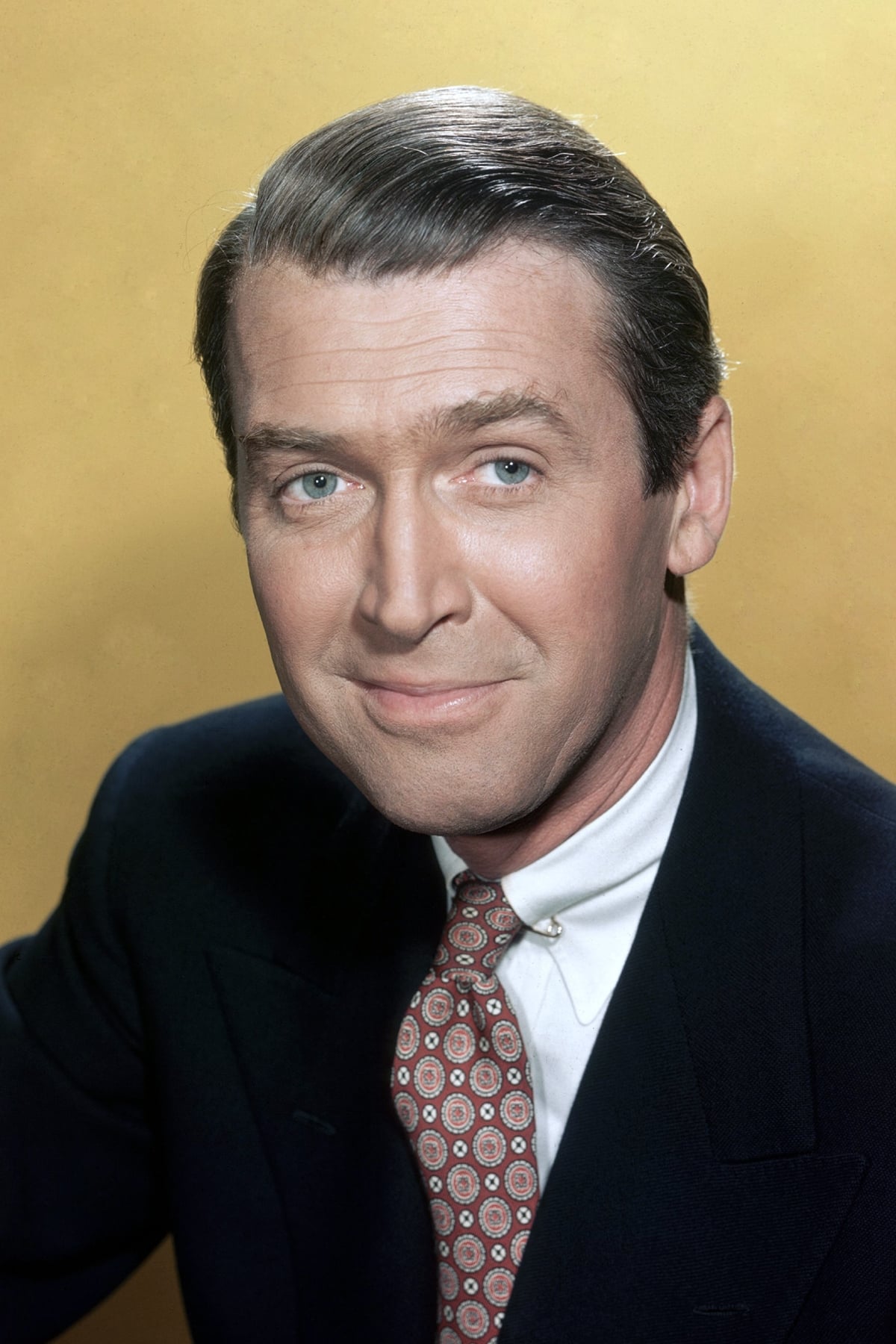
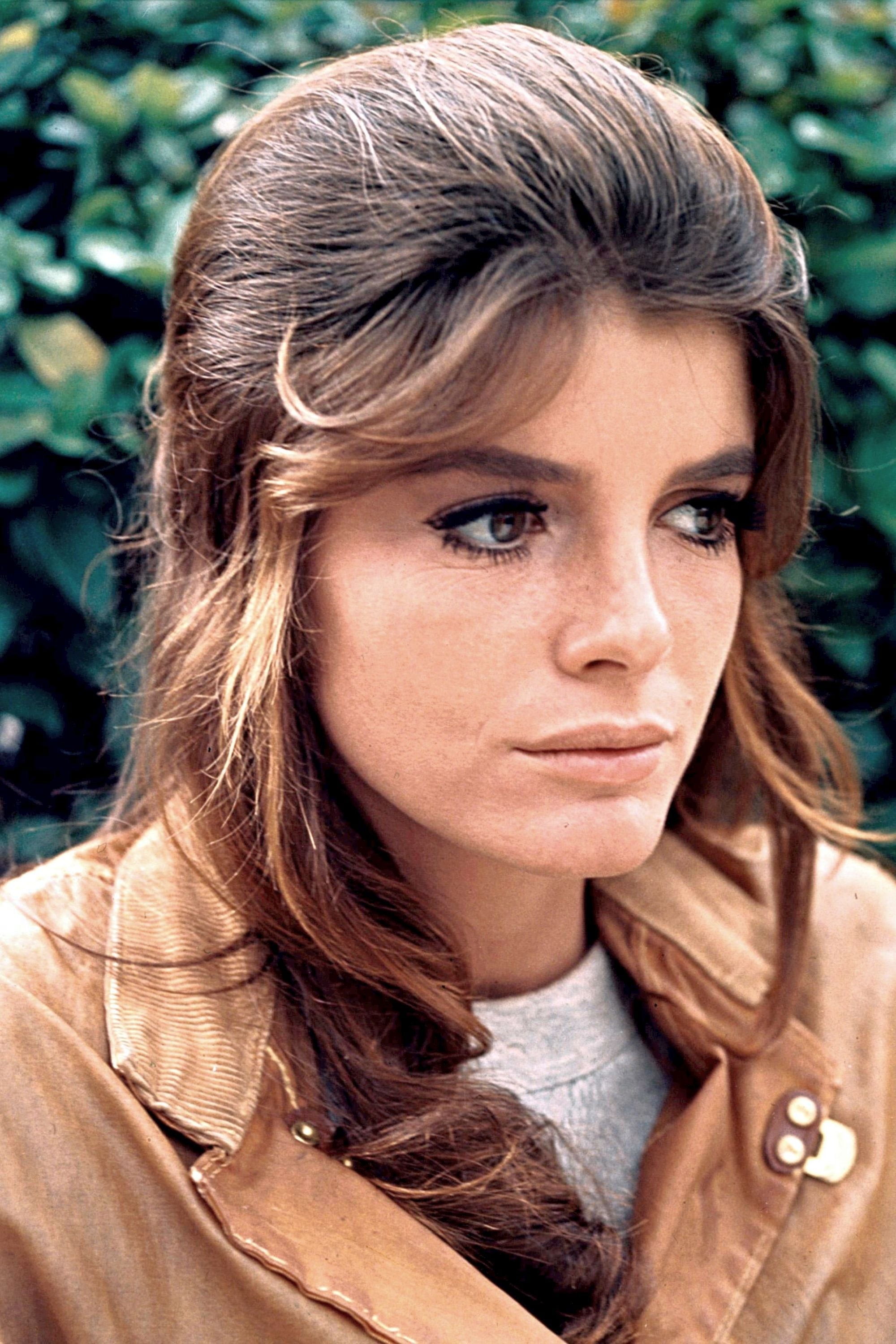
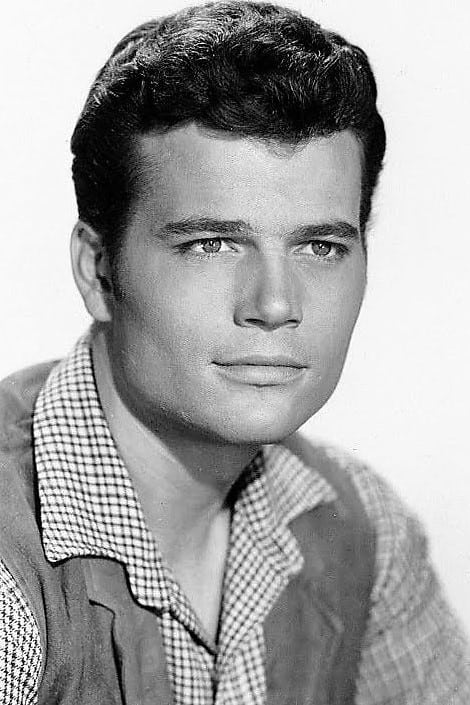
In Shenandoah, Virginia, widower farmer Charlie Anderson lives a peaceful life with his six sons - Jacob, James, Nathan, John, Henry and Boy, his daughter Jennie, and his daughter-in-law and James' wife Ann Anderson. Charlie does not let his sons join the army to fight in the Civil War that he does not consider their war. Jennie marries her beloved Lieutenant Sam, but they do not have a honeymoon since Sam has to return to the front. Charlie's youngest son Boy is mistakenly taken prisoner by soldiers from the North so Charlie rides with his sons to rescue Boy, while James and Ann stay on the farm. It is time of violence and war, and tragedy reaches the Anderson family.
SHAKES THE SCREEN LIKE CANNON THUNDER!
Charlie Anderson: [at the site of his wife's grave] I don't even know what to say to you any more, Martha. There's not much I can tell you about this war. It's like all wars, I guess. The undertakers are winning. And the politicians who talk about the glory of it. And the old men who talk about the need of it. And the soldiers, well, they just wanna go home. I guess you're not so lonely any more, with Ann and James and Jacob. And maybe the boy. You didn't know Ann, did you? Well, you'd like her. You'd like her, Martha. Why, she and James are so much alike, they're just like... no... no... we were never that much alike, were we Martha? We just sorta grew alike through the years. But I wish, I wish I could just know what you're thinking about it all, Martha. And maybe it wouldn't seem so bad to me if I knew what you thought about it.
[He notices the church bells are ringing]
Charlie Anderson: You never give up, do you?
Oregon, USA
Walt Disney's Golden Oak Ranch - 19802 Placerita Canyon Road, Newhall, California, USA
Santa Clarita, California, USA
Wildwood Regional Park, Thousand Oaks, California, USA
Janss Conejo Ranch, Thousand Oaks, California, USA
The opening battle scenes are taken from Raintree County (1957) and are printed as a mirror image of the original footage. The same scenes can also be seen in, amongst other films, How the West Was Won (1962).
In the wedding scene, the Corporal states that "the Yankees have broken through at Winchester." That occurred on Monday, Sep. 19, 1864 (the Third Battle of Winchester).
The first of five films to feature both James Stewart and George Kennedy. The others were The Flight of the Phoenix (1965), Bandolero! (1968), Fools' Parade (1971), and Airport '77 (1977).
At the church, viewers observe Confederate soldiers with different colors of trim on their uniforms. The color red represents an artillery unit, blue represents an infantry unit and yellow represents a cavalry unit. Those same traditional military branch colors are still used in the U.S. Army.
Shenandoah (1965) broke box office records in Virginia, the story's locale.
Factual errors
When Boy and Gabriel are found by the creek there is a young African-American soldier with the Union band. Then later Gabriel, a young African-American boy, is seen fighting alongside Union troops. Free Blacks and former slaves did not integrate into Union regiments, but instead, served in all-Negro regiments.
Dr. Witherspoon tells Charlie Anderson that one of his boys fell at Gettysburg at Little Round Top. No Virginia regiments fought on Little Round Top.
When Boy and other confederate troops are being attacked by union troops, Boy is firing a Trapdoor Springfield rifle, which was not invented until after the civil war.
In the battle where Boy is wounded, the manner in which the Confederate soldier loads his weapon is wrong. He would have used paper cartridges, not separate powder and ball. Unless carrying a personally owned weapon (which he is obviously not), a soldier would not even have a powder flask.
Revealing mistakes
Just as the fight is ending, and Mr. Carroll is about to shoot Pa Anderson with his gun, you see the Boy in the water trough about to make an attempt to grab him. However, the actor pulls back at the last minute, obviously aware that his attempt to grab Carroll is mis-timed when Jenny shoots the gun out of his hand.
During the boy's battle the morning after his escape from prison, you can see the bayonet of a Confederate soldier wobble revealing that it is made of rubber.
About 70 minutes into the film at the Union POW camp, the steamboat in the background is obviously a matte painting as the smoke from its smokestacks is completely stationary.
When Pa Anderson first emerges from the front door of the farmhouse, he casts a shadow in two different directions on the wall behind him.
About two minutes into the film, the house in the distance is clearly a matte painting as the smoke from the chimney does not move at all.
Anachronisms
In the scene in which Charlie Anderson talks to Colonel Fairchild about his mistakenly abducted son in the Union camp, there is clearly a white automobile being driven (from right to left) in the background.
The Andersons carry repeating rifles, which were available in the 1860s, but quite expensive, and also quite rare. However, the rifles carried in the movie are of a type (with a loading gate) not invented until 1866.
The locomotive on the train that gets burned is equipped with air brakes, which were not invented until 1872. Although the locomotive is mostly filmed at such an angle that the air brake equipment is not visible, a connecting air hose can be seen on the front when the train is stopping for the fire on the track, and whenever the train is stopped, hissing noises from the air compressor can be heard.
The Confederate lieutenant who is calling on Mr. Anderson for his boys is wearing gold & black hat cords and similar acorn ends. This is incorrect; a lieutenant's hat cords were silver.
Crew or equipment visible
During much of the farm sequences, you can see the distinct shadow of the camera.
Errors in geography
The bare hills and arid-climate flora in this film obviously indicate that it was shot in Southern California, not the Shenandoah Valley of Virginia, which has a wetter and more temperate climate.