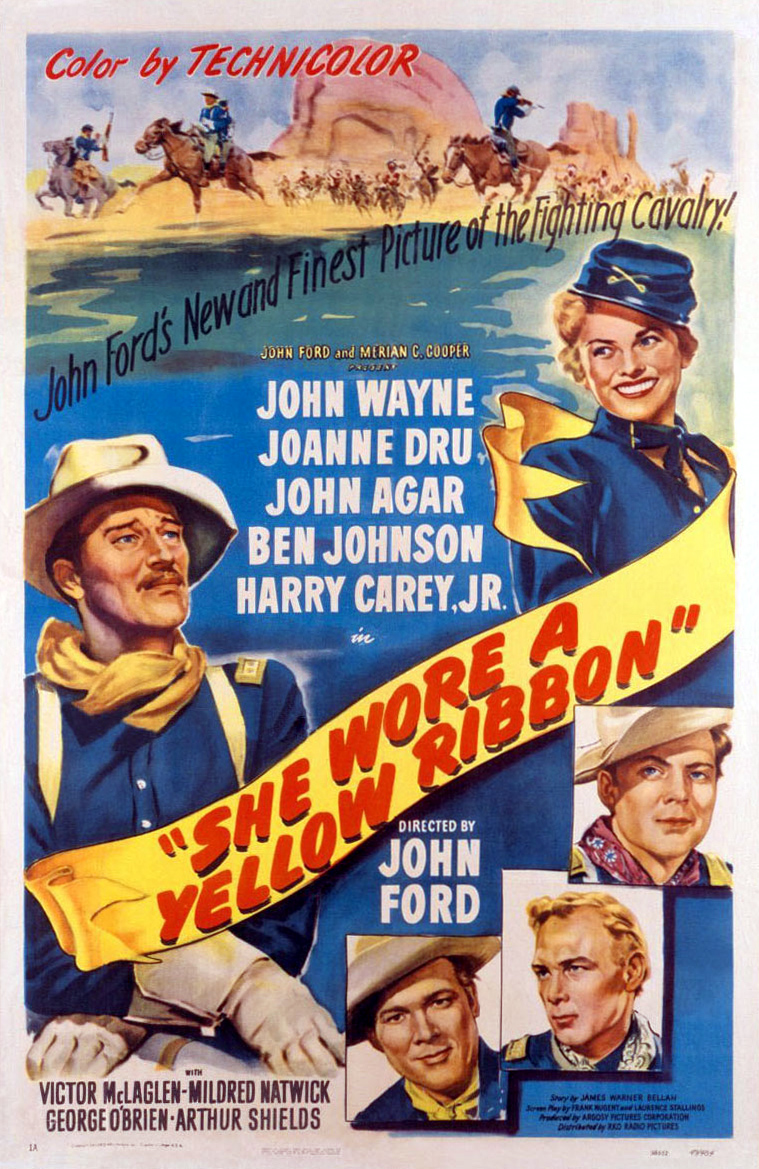
She Wore A Yellow Ribbon (1949)

After Custer and the 7th Cavalry are wiped out by Indians, everyone expects the worst. Capt. Nathan Brittles is ordered out on patrol but he's also required to take along Abby Allshard, wife of the Fort's commanding officer, and her niece, the pretty Olivia Dandridge, who are being evacuated for their own safety. Brittles is only a few days away from retirement and Olivia has caught the eye of two of the young officers in the Company, Lt. Flint Cohill and 2nd Lt. Ross Pennell. She's taken to wearing a yellow ribbon in her hair, a sign that she has a beau in the Cavalry, but refuses to say for whom she is wearing it.
Wayne's greatest role as an Indian fighting Captain!
Captain Nathan Brittles: Never apologize. It's a sign of weakness.
Monument Valley, Arizona, USA
Goulding's Trading Post, Monument Valley, Utah, USA
(was used as part of the army post)
Moab, Utah, USA
Kanab, Utah, USA
Mexican Hat, Utah, USA
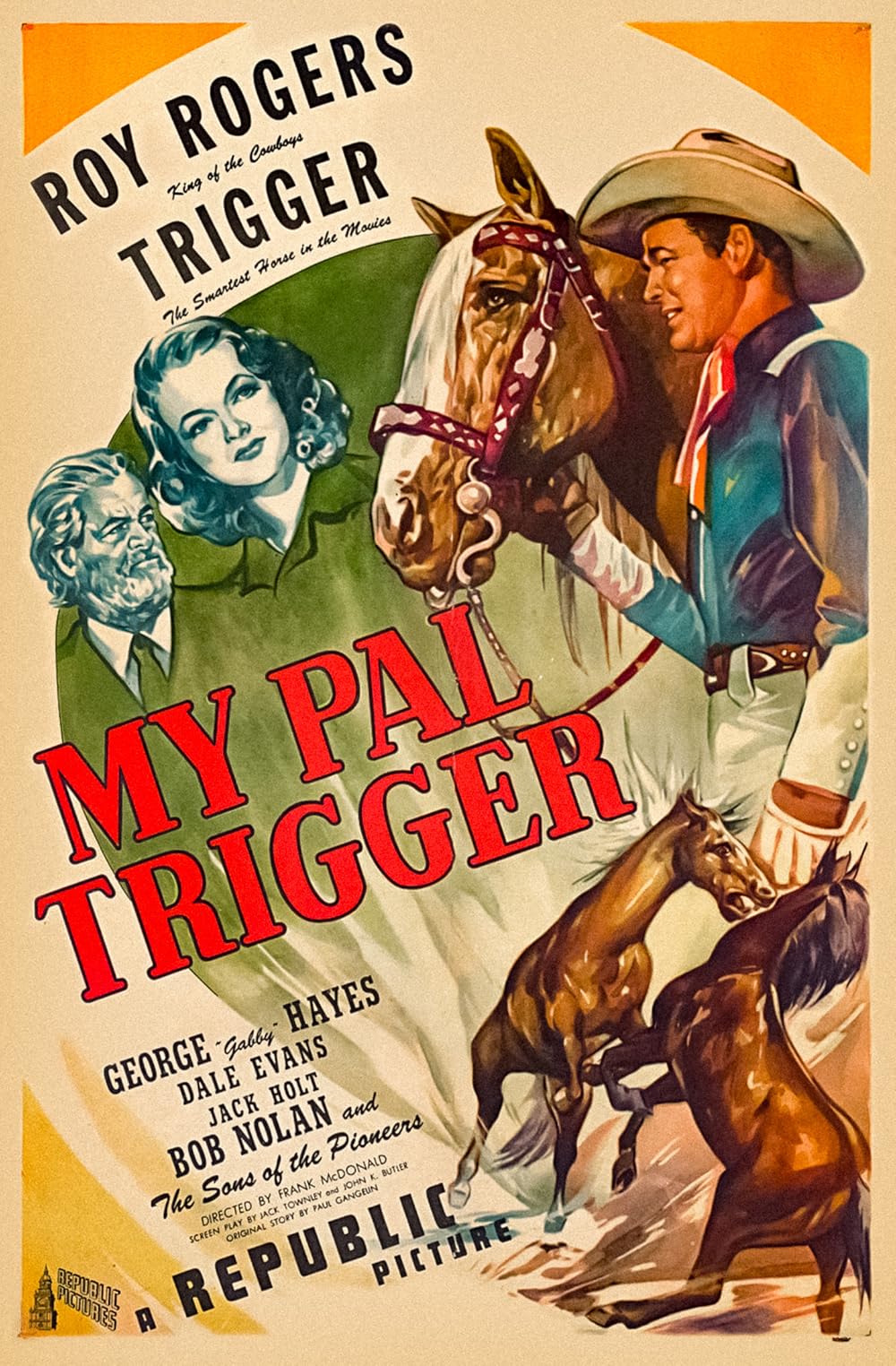
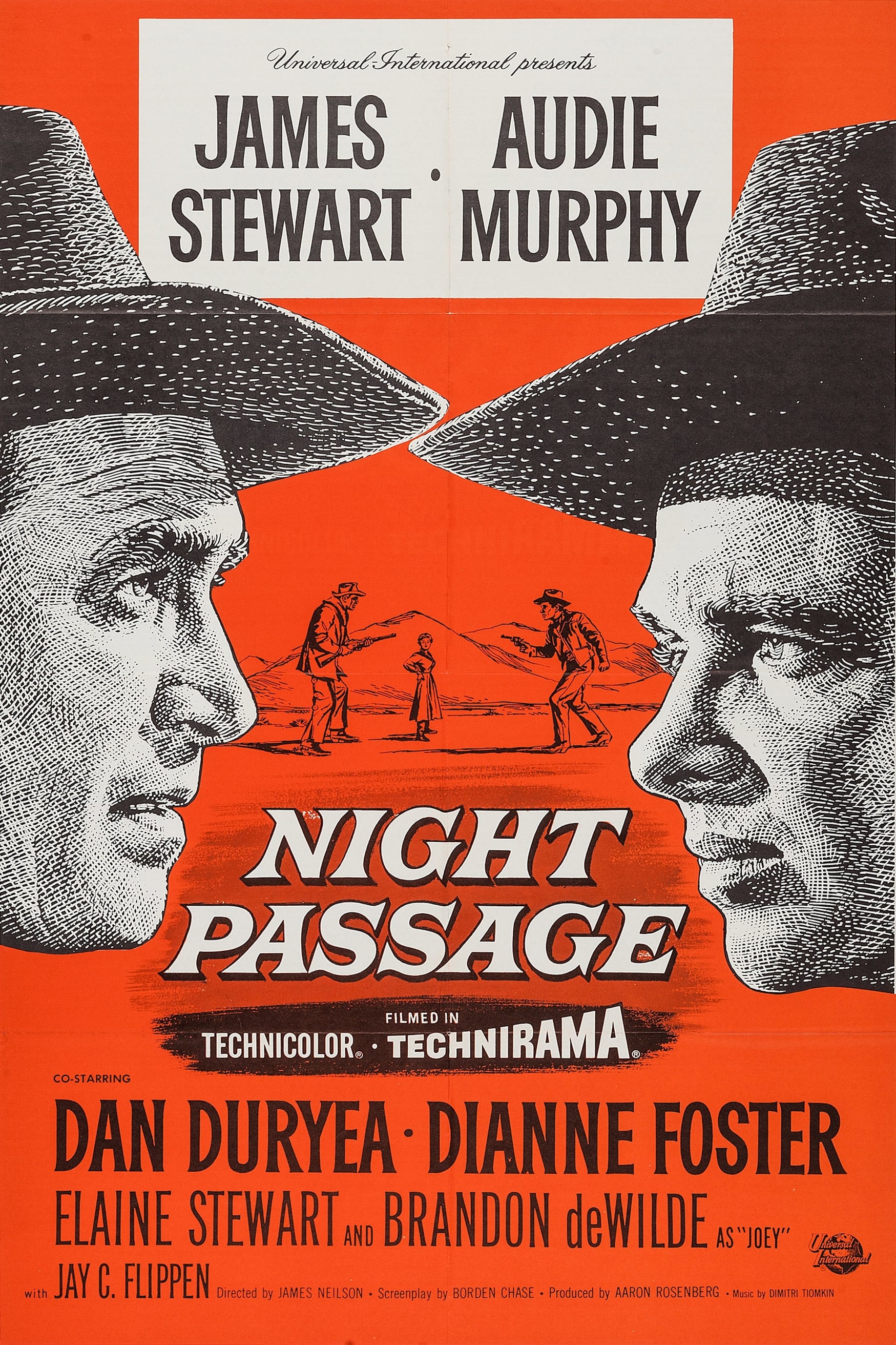
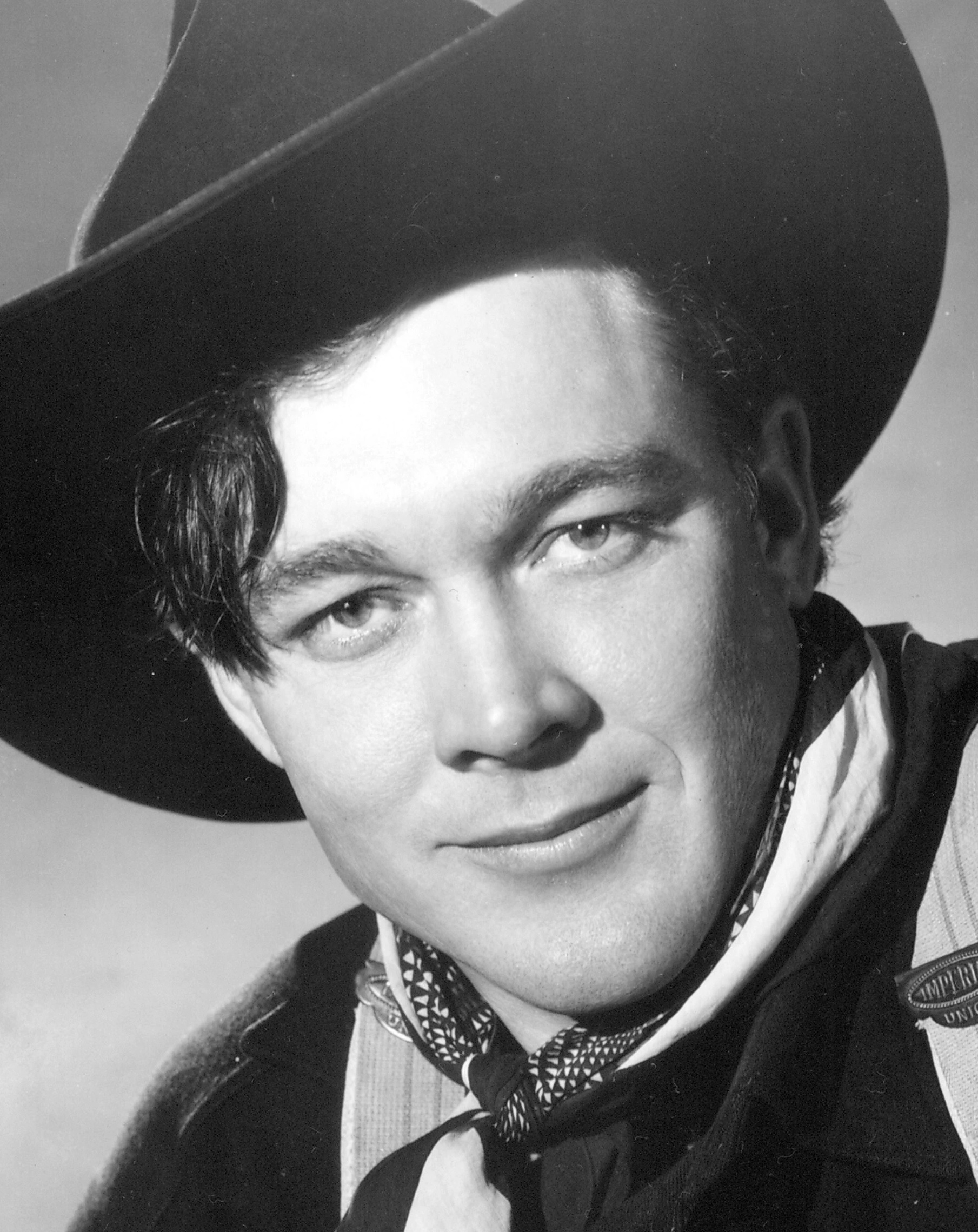
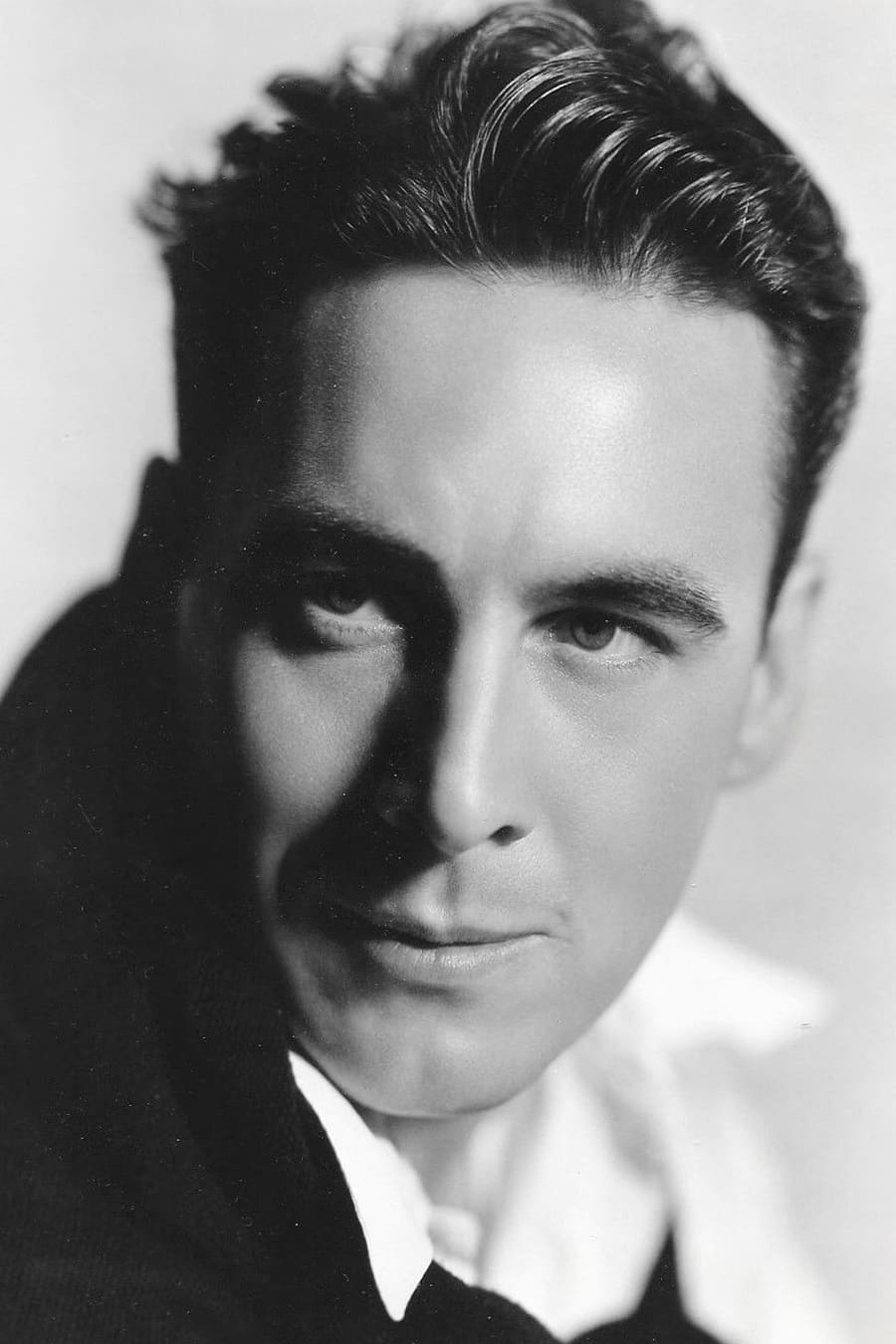
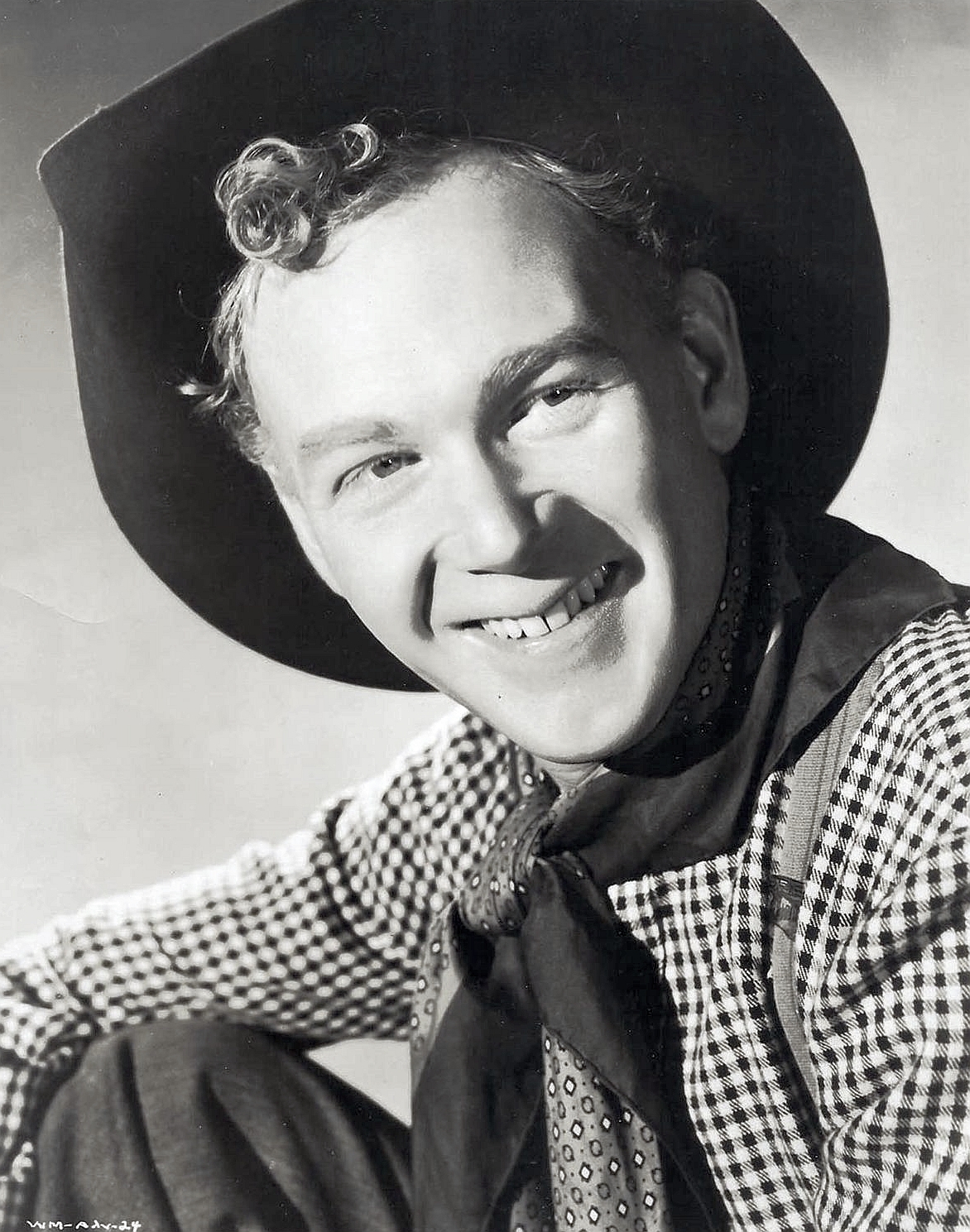
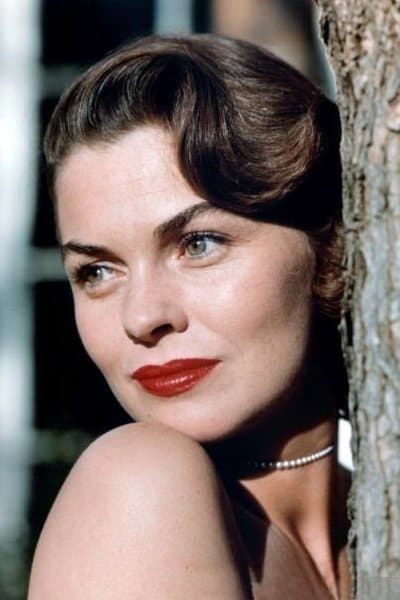
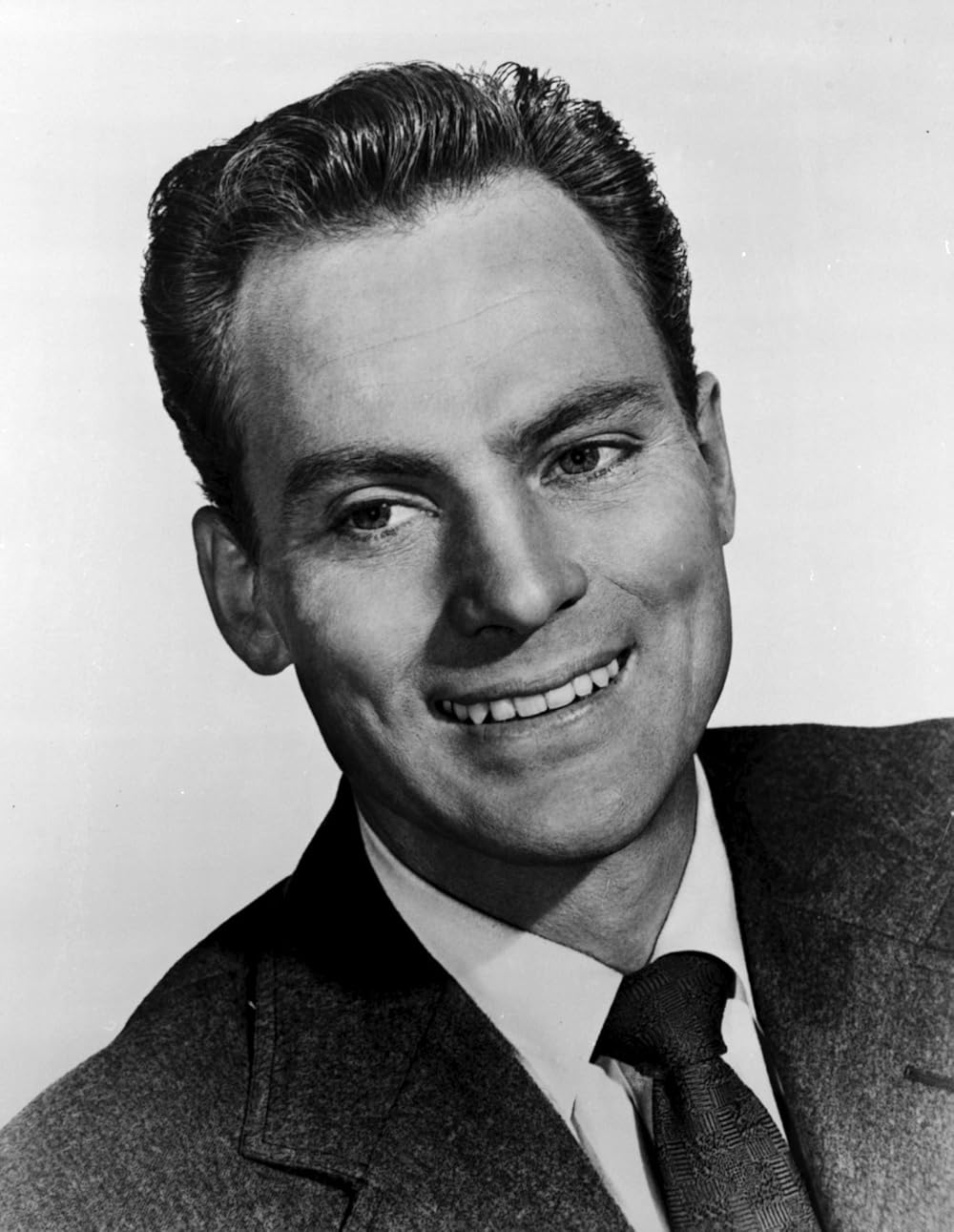
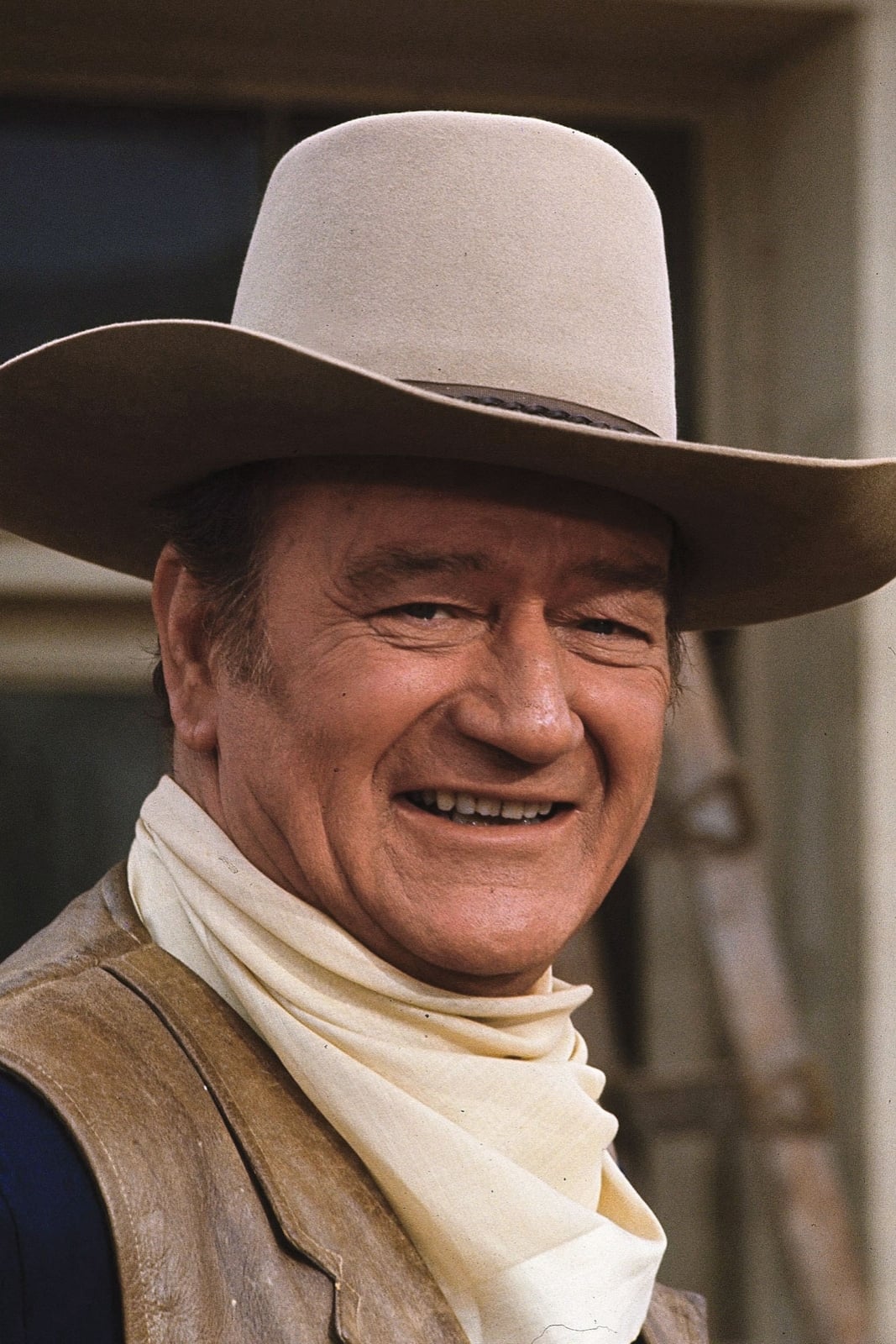
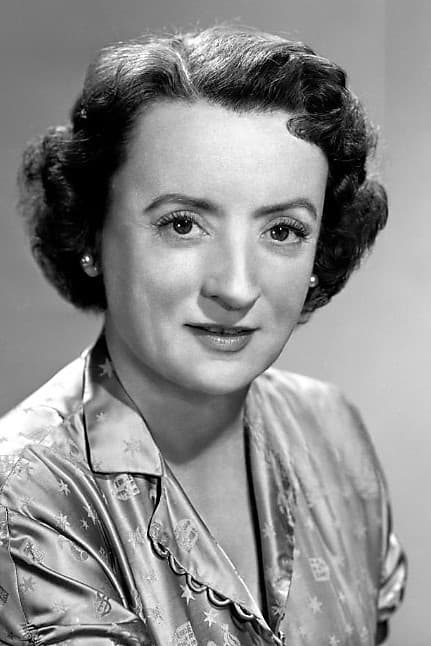
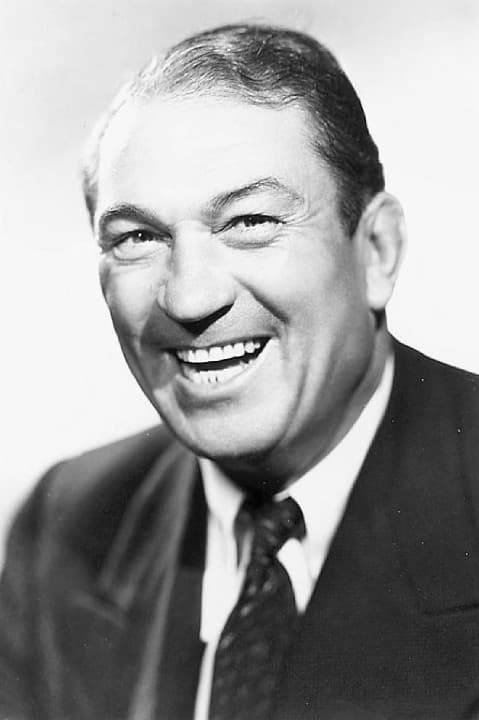
John Wayne, who was 41 when the film was made, won great acclaim for his portrayal of 60-year-old Capt. Nathan Brittles.
John Wayne named Capt. Nathan Brittles as one of his favorite roles.
John Ford initially was uncertain who to cast in the lead role. However, he knew that he did not want John Wayne for the part, taking into account that, among other factors, Wayne would be playing a character over 20 years older than he was at the time. Reportedly, Wayne's performance in Red River (1948) changed Ford's mind, causing him to exclaim, "I didn't know the big son of a bitch could act!" Ford realized Wayne had grown considerably as an actor, and was now capable of playing the character he envisaged for this film. When shooting was completed, Ford presented Wayne with a cake with the message, "You're an actor now."
John Wayne felt his Academy Award nomination for Best Actor of 1949 should have been for this film instead of Sands of Iwo Jima (1949).
The film was budgeted at $1,851,290, $40,000 less than Fort Apache (1948), and because of John Ford's familiarity with the Monument Valley area, it was completed after only 31 days of shooting and was brought in almost $500,000 under budget.
Continuity
Prior to leaving Fort Stock on his last patrol, Captain Brittles writes an objection to having to take a wagon on the mission. He hands the written complaint to Major Allshard, who in turn hands it to Sgt. Hochbauer, who then reads the report upside down. He's not illiterate. He is seen doing paperwork at his desk. He was showing his disregard for Battles. They had a running feud going throughout the movie.
The cork in the bottle hidden in Captain Brittles' quarters is missing when Top Sgt. Quincannon first takes a pull from it, but is in the bottle later when Captain Brittles 'finds' it.
Near the end of the movie, when LCol Bittles is about to leave the dance to visit his wife's grave, the corporal hands him an upholstered footstool. In the graveyard, however, he is carrying a folding camp stool.
When Captain Brittles is talking to Chief Pony That Walks in the Indian encampment, the chief's beaded necklace is around his neck in one shot and over his arm in the next; the camera angle switches numerous times.
When Sgt. Tyree brings in the paymasters stage and the doctor is examining the Paymasters body, we see the doctor?s hat and bag on the ground next to the doctor. In the next shot, the doctor's hat is leaning against the doctor?s bag.
Factual errors
On the morning of his retirement, Capt. Brittles is viewing photos of his family; one of the photographs is the real photo of Elizabeth "Libbey" Custer.
When Lt. Cohill tells Lt. Pinnell that the post is closed, he is Officer of the Day, wearing a red or crimson NCO's sash. As an officer his sash should be a darker maroon.
The 7th Cavalry consisted of twelve companies (700 men). Five of the twelve companies were killed at Little Big Horn after Custer divided his force. At his wife's graveside, Brittles says that Custer's "entire command" was killed, which isn't true. He obviously meant the soldiers that were actually with Custer at Little Big Horn.
Near the end, Nathan Brittles refers to Ulysses S. Grant as Ulysses Simpson Grant. Grant's birth name was Hiram Ulysses Grant (and went by Ulysses), but was mistakenly enrolled at West Point as U. S. Grant, which then became Ulysses S. Grant. So his middle name was never Simpson.
Incorrectly regarded as goofs
Even though Capt. Brittle says he was a boy in blue jeans when he joined the army back in 1836, jeans were not invented by Levi Strauss until 1871. Capt. Brittle likely meant that he was wearing trousers in 1836 made of "jean" or "jeans" material, a wool-cotton blend (not denim) that was very common around the mid-1800s. This "jeans" material was hard-wearing and long-lasting, ideal for farmers and working men. If the woolen threads had been dyed blue the resulting material would be "blue jeans," and this reference can be found in period writings, considerably predating Levi Strauss's invention.
While traveling in southern Utah, the troops come across a traveling band of Arapaho. The Arapaho lived in eastern Colorado and Wyoming and would be an unlikely find in southern Utah. The Arapaho are not just traveling around. They are meeting up with the other tribes for the war on the cavalry.
When they spot the Arapaho column, Captain Brittle has a soldier issue a bugle call, which obviously would have been heard by the Indians. Afterwards he issues an order to give them a wide berth. Considering that the Arapaho would have been alerted by the bugle call, this was a foolish act. It never would have happened in real life. Brittle doesn't care if they hear the bugle. He's not sneaking or stalking. Swinging wide around them is not foolish -it's avoiding potential trouble. Traveling with the women and camp gear meant the Arapaho wouldn't react unless they were feeling threatened.
After Capt. Brittles says goodbye to the troops and rides back to his quarters, he makes a very showy gesture of tying up his horse's reins to the hitching post which the horse then undoes a moment later with a shake of his head. And although seeing it, Capt. Brittles makes no attempt to re-tie the reins. He knew the horse was well trained and wasn't going to run away.
Capt. Brittles sometimes addresses Sergeant Tyree as Captain Tyree. Brittles is alluding to Tyree's former rank in the Confederate army.
Revealing mistakes
Captain Brittles marks off his final days of service on the calendar, crosses off the week, then tears the page off and throws it in the fire. When he does so, the next page is identical (31-day month, starting on Wednesday). They didn't know how many takes the shot would need, so they provided extra pages for throwing in the fire.
During the charge, you hear the same looped recordings of war whoops over and over again. Furthermore, they are the same looped recordings of war whoops that they used the previous year in "Fort Apache".
When Capt. Brittles views the action at Sudrow's Wells through his binoculars, not only does the image get larger, but the sound of gunfire and war whoops get louder.
Anachronisms
The narration refers to the Battle of Little Bighorn, which took place in June of 1876. It also states that one of the ways the news of this was spread was via the Pony Express. The Pony express was founded in April of 1860 and ceased operations a year and a half later, in October of 1861. This was 15 years before the battle.
The word Troop was used throughout the film, it should have been Company as in "Company E" not "E Troop" as the change from Company to Troop didn't happen until around ten years later.
While the film is set in 1876, the cavalrymen wear greatcoats with a yellow lining; a pattern that was not introduced until 1883.
The calendar page that Capt. Brittles uses to mark off the days until his retirement is for the wrong month. The calendar most unusually shows the year but not the month. However, it does show that the month has 31 days and begins on a Wednesday. Therefore, the only month in 1876 that this page would have fit was March. But it cannot be March because the film refers to the Battle of the Little Big Horn as having recently occurred and that battle did not take place until June 1876. Thus, the calendar should show the month of July because John Wayne's character indicates that it is the 5th of the month and news of Custer's death at Little Big Horn on Sunday June 25 would have taken about two weeks to arrive by Pony Express, which actually hasn't existed for 15 years even though the characters make mention of it.
As Dr. O'Laughlin is operating on Cpl. Mike Quayne, exterior views of their wagon include a modern Coleman-type two-mantle lantern, which was not available in 1876.
Audio/visual unsynchronized
When the bugler plays 'Taps' over a burial, his puffed out cheeks are out of sync with the sound of the bugle.
Crew or equipment visible
When Sgt. Tyree stops the paymaster's stage coach, he walks back past the horses to the coach. In the footwell of the driver's seat there are two holes through which the reins pass. The head of the stuntman who was driving the "driverless" coach is visible.
Character error
When the troop is assembled and standing at attention preparing to set out on their expedition to Sudrow's Wells, there's a dog lying down on the ground in front of the ranks. Sergeant Quincannon reaches down to pet the dog, and says, "A fine dog - an Irish setter!" The dog is clearly a German shepherd. There were no German Shepherds in 1876 and "Irish Setter" was likely the only dog the Irish nationalist Quincannon knew the name of.
Custer was a Lieutenant Colonel in charge of the 7th Cavalry Regiment. The newspapers called him General Custer, but that was his brevet (temporary) rank during the Civil War. It isn't likely that soldiers would refer to him as General Custer.