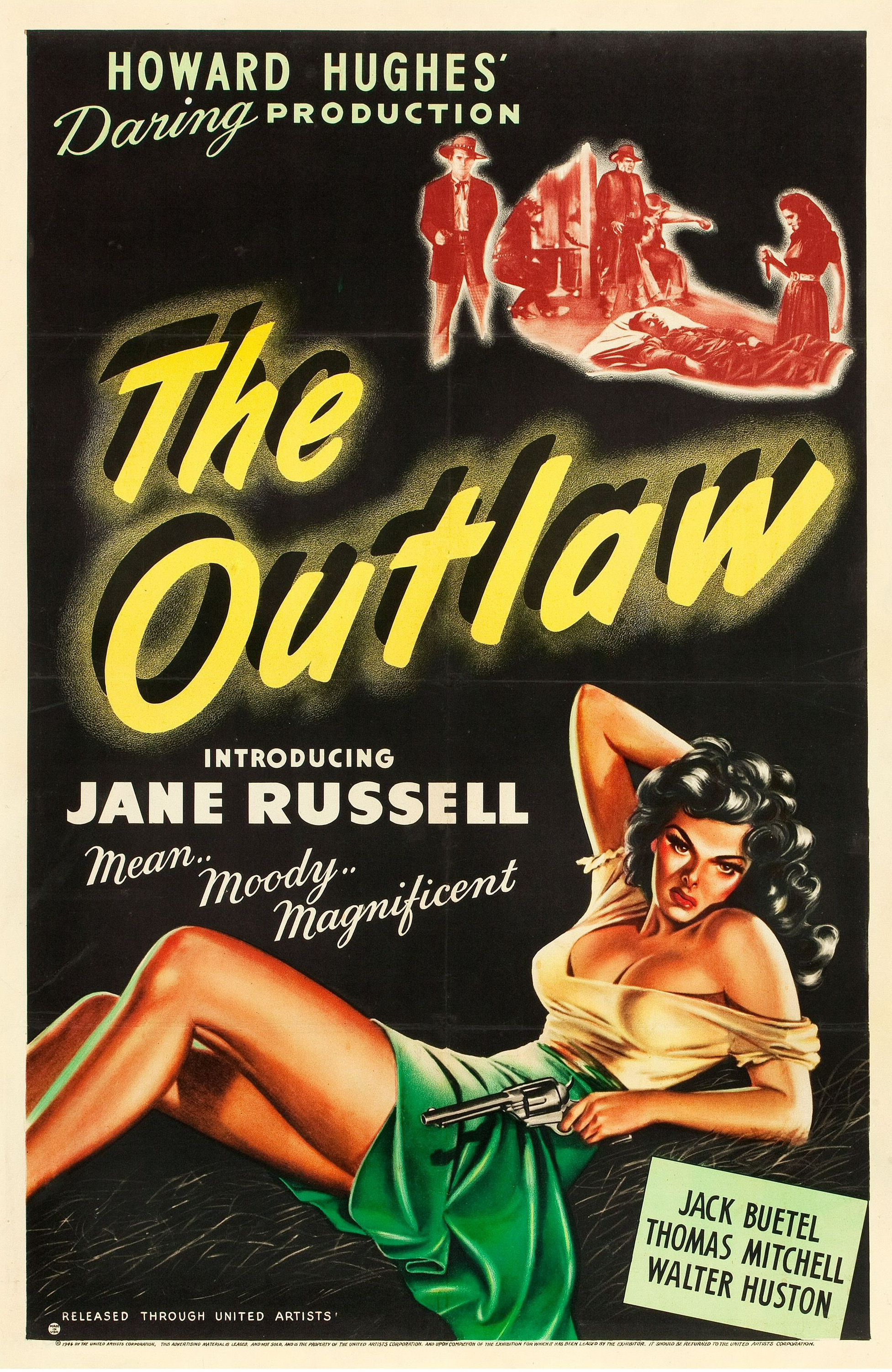
The Outlaw (1943)

Newly appointed sheriff Pat Garrett is pleased when his old friend Doc Holliday arrives in Lincoln, New Mexico on the stage. Doc is trailing his stolen horse, and it is discovered in the possession of Billy the Kid. In a surprising turnaround, Billy and Doc become friends. This causes the friendship between Doc and Pat to cool. The odd relationship between Doc and Billy grows stranger when Doc hides Billy at his girl, Rio's, place after Billy is shot. She falls for Billy, although he treats her very badly. Interaction between these four is played out against an Indian attack before a final showdown reduces the group's number.
TRIGGER-FAST ACTION!
Pat Garrett: It sure is funny, how two or three trails can cross and get all tangled up.
Red Rock Canyon State Park - Highway 14, Cantil, California, USA
Tuba City, Arizona, USA
Yuma, Arizona, USA
General Service Studios - 1040 N. Las Palmas, Hollywood, Los Angeles, California, USA
(Studio)
Socorro, New Mexico, USA
(second unit)
Jane Russell got the role after a nationwide search by Howard Hughes for a busty actress.
Howard Hawks started as director but quit after two weeks, ostensibly to direct Sergeant York (1941). However, Howard Hughes, who had the dailies flown to Los Angeles every day, had complained that Hawks was not spending enough time filming, which probably precipitated his leaving. Hughes took over as director in December 1940 and announced all scenes would be re-shot by Gregg Toland, who replaced the original cinematographer, Lucien Ballard. However, screenwriter Jules Furthman filled in for Hughes as director on 31 December 1940 and often thereafter.
Jack Buetel also made his official screen debut in The Outlaw (1943). This film seriously hampered his career. As a result of his contractual arrangement with producer Howard Hughes, he did not appear in another film for seven years. Though a regular on TV's Judge Roy Bean (1955) and quite a few other roles, he retired from films in 1961 at age 46.
Howard Hughes employed his engineering skills to design a new cantilevered underwire bra to emphasize her figure. Hughes added curved structural steel rods that were sewn into the brassiere under each breast cup and connected to the bra's shoulder straps. This arrangement allowed the breasts to be pushed upward and the bra shoulder straps to be moved away from the neck, exposing more of her bosom. Contrary to many media reports afterward, Jane Russell did not wear the bra during filming; she said in her 1988 autobiography that the bra was so uncomfortable that she secretly discarded it. She wrote that the "ridiculous" contraption hurt so much that she wore it for only a few minutes, and instead wore her own bra. To prevent Hughes from noticing, Russell padded the cups with tissue and tightened the shoulder straps before returning to the set. She later said "I never wore it in The Outlaw, and he never knew. He wasn't going to take my clothes off to check if I had it on. I just told him I did." The famed bra ended up in a Hollywood museum-a false witness to the push-up myth.
Howard Hawks wanted Albert R. Broccoli to work as an assistant director on the film, but when Howard Hughes heard it he said: "I can't give a good friend a job; the studio will be very upset with me!" But Hawks replied: "I want Cubby!" (Albert R "Cubby" Broccoli, who later became famous for the 'James Bond' films).
Continuity
When Doc Holliday shoots Billy the Kid in the hand, we see a bleeding wound. In subsequent scenes, his hand is completely fine.
When Guadalupe (the older woman) first appears in the shack where Rio is tending to Billy, she has two long plaited pig-tails. Things continue in real-time and after a few views of her with pig-tails, she suddenly appears after a cut with her hair up in a bun at the back.
Billy prepares to settle down for the night in a livery stable, goes across to put the lantern out but it goes out before he can blow it out.
Doc Holliday changes position several times between shots during his first conversation with Billy the Kid.
Factual errors
Billy the Kid was killed by Pat Garrett in 1881, but Doc Holliday died in bed of tuberculosis in 1887.
The grave marker at the end of the film gives July 13th as the date Billy was killed. In fact, he died on 14th July.
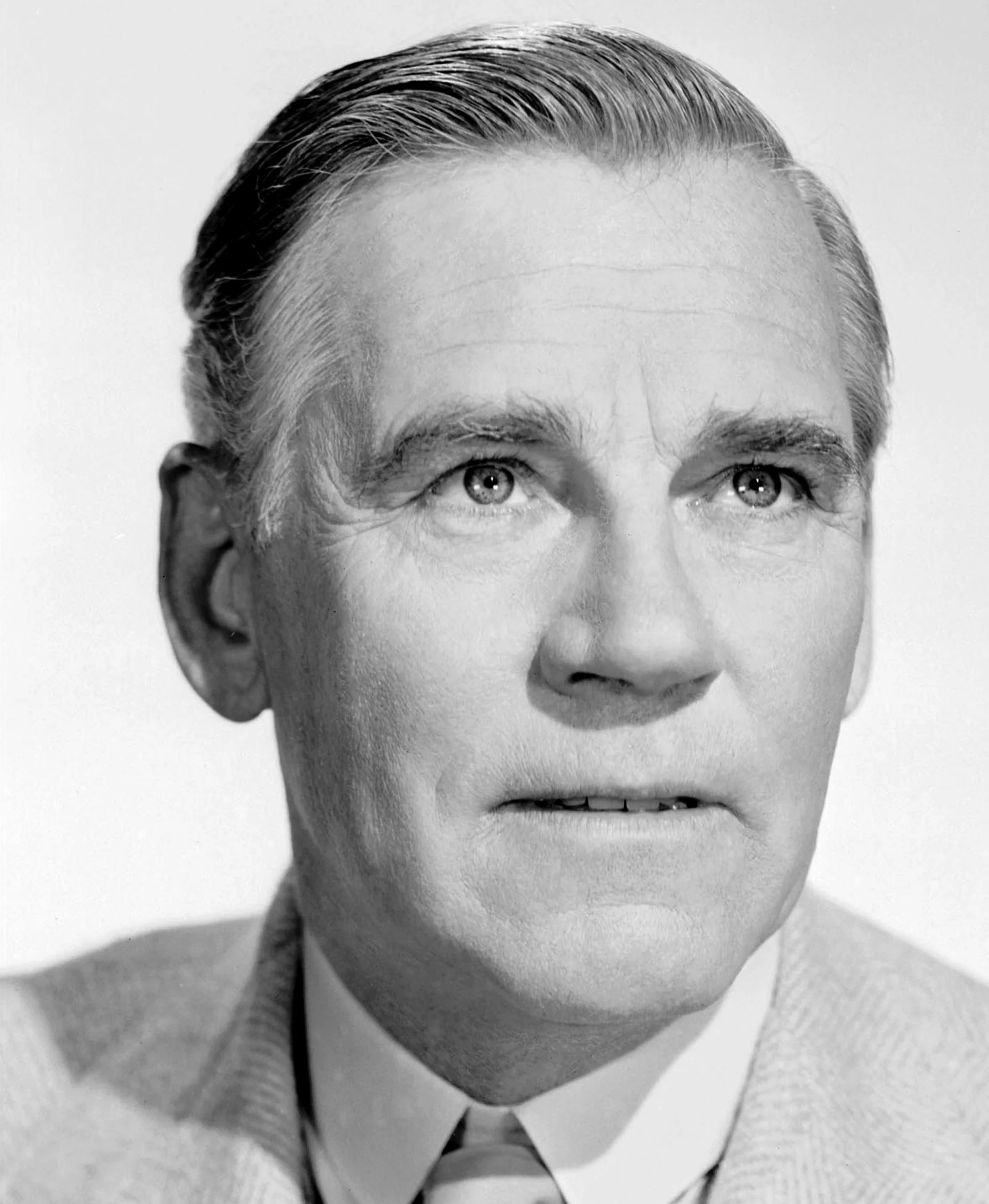
Doc Holliday was only 29 at the time of the events depicted, yet is played by 57-year-old Walter Huston.
The following morning, Billy meets Doc Holiday and go to the saloon where they order breakfast. A cowboy asks to speak to Billy in a back room where he tries to maneuver Billy into a position to kill him but Billy beats him to the draw. A while later, Pat Garrett and his deputies enter the saloon to investigate the shooting and it can be seen by the sky in the background that it is now night.
Miscellaneous
In the final scene, a car can be seen in the distance passing from left to right.
Anachronisms
When Doc takes wounded Billy to Rio's place to recover, at one point Rio removes her shoes in the bedroom, and rolls down and slips off what look like nylon stockings. These didn't exist in 1880 New Mexico, debuting instead at the World's Fair in 1939. This film was made in 1941.
Crew or equipment visible
(at around 1 min) As Doc and The Kid are leaving the stable, they both walk into the camera shadow on the right side of the screen.
Errors in geography
Joshua trees (Yucca brevifolia) appear in several scenes. Joshua tree occurs in southeastern California (mostly, southern Nevada, northwestern Arizona, and extreme southwestern Utah, but not in New Mexico, where the story takes place.