
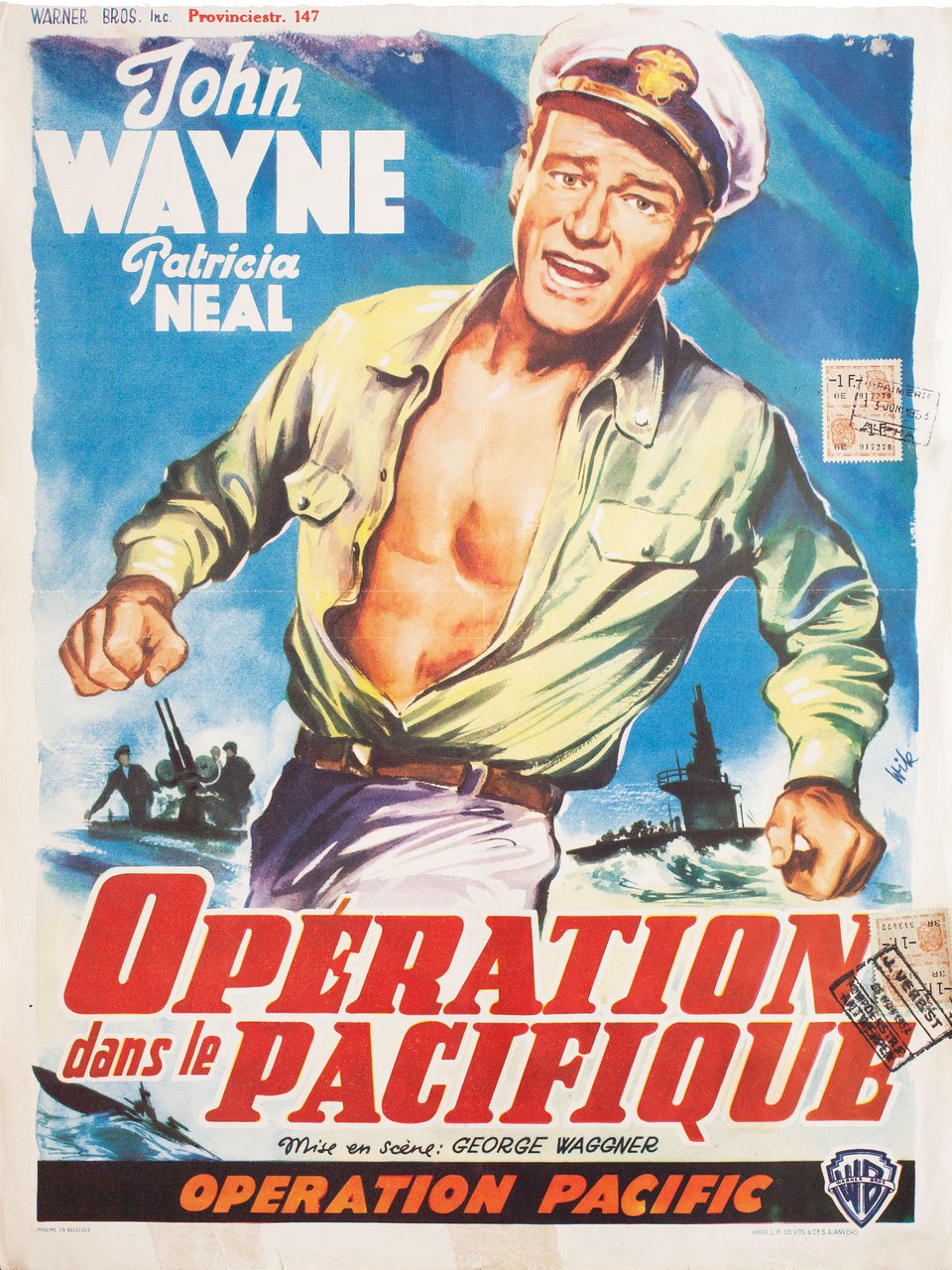
Operation Pacific (1951)

The submarine USS Thunderfish successfully completes a secret mission to rescue a group of orphans on a remote Pacific island. On the way back to Honolulu they encounter a Japanese aircraft carrier but the torpedoes they fire explode about halfway to the target, a recurring problem that has plagued the submarine fleet for some time. The Thunderfish's XO, Duke Gifford runs into his ex-wife and Navy nurse Mary Stuart at the hospital. There's still a spark between them but the boat is sent out on another mission before anything is resolved. When Gifford's good friend and captain, Pop Perry, is killed Gifford believes it's his fault. A inquiry clears him and after he and his men solve the problem of the misfiring torpedoes, they set out to sea.
Sub Raiders Throw an Underwater Uppercut for Uncle Sam!
Duke E. Gifford: Like the ashes of Alexander, I was once Alexander.
Pearl Harbor Naval Station, Pearl Harbor, O'ahu, Hawaii, USA
Stage 22, Warner Brothers Burbank Studios - 4000 Warner Boulevard, Burbank, California, USA
(Studio)





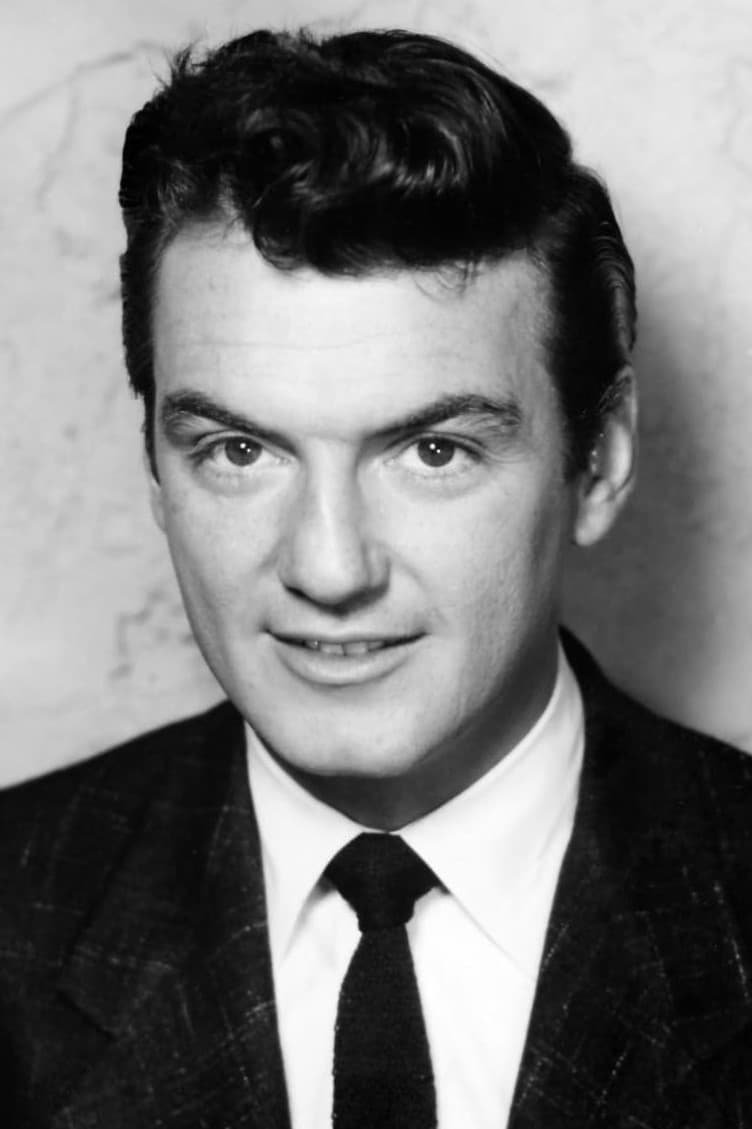
The movie was filmed on a low budget. As a result most of the shots of the submarines, ships and the scenes were either taken from other films or stock footage from World War II.
John Wayne was dissatisfied with the finished film, believing it to be overlong and containing too much romance. He was also opposed from the beginning to the casting of Patricia Neal, whom he felt was too young at 24 for the role of his ex-wife. By the time of their next film together (In Harm's Way (1965) ) he felt that she had matured as an actress and the two got along very well.
During filming Gary Cooper visited the set to persuade his mistress Patricia Neal to abort their unborn baby. Neal acquiesced to his demands and later expressed overwhelming regret at not giving birth. She became an anti-abortion activist in later years, and converted to Catholicism shortly before her death from lung cancer in 2010. Cooper punched Neal in the face after he saw Kirk Douglas attempt to seduce her, the only time he is known to have hit a woman.
John Wayne and Patricia Neal did not get along during filming. She was particularly annoyed by his treatment of a gay publicity man. Nearly fourteen years later, however, they worked together on In Harm's Way (1965) where she noted that he had mellowed a lot, possibly because he was seriously ill with lung cancer at the time.
The problem with the torpedoes depicted in the movie was actually one of several problems the USN experienced with its torpedoes. In addition to the firing pins their magnetic detonators were unreliable as was the torpedo's ability to maintain correct depth. The torpedo was designed to either strike the target directly or pass under the target and detonate under the keel thus breaking the ship's back. If the torpedo ran too shallow it struck the target, and given the firing pin defect, may not detonate. If the torpedo ran too deep the magnetic trigger could not detect the ships magnetic field thus passing under the ship without detonating. The torpedoes were so unreliable that multiple torpedoes were fired at each target in a "spread" such that the ship's stern, bow, and midships were each targeted in the hope that one would find its target AND detonate. Returning from a patrol having fired all 24 torpedoes resulting in 3 or 4 enemy ships sunk was considered a very good patrol, one to be proud of and even brag about. The USN Bureau of Ordnance (BuOrd) was responsible for the development and testing of USN torpedoes. Even though the defects were obvious to everyone who fired the weapon in combat, BuOrd's insistence that the torpedoes were without defect bordered on the criminal. Their pigheadedness resulted in delaying the deployment of reliable torpedoes by at least two years.
Continuity
Toward the end of the film, after Duke kisses Mary Stuart, she holds his right arm to follow him. In the next shot she is turning around the left arm to hold his arm.
While Duke is in the admirals office trying to convince the admiral to allow him to stay aboard the thunder over John Wayne's shoulder is a calendar with the distinctive outline of a C-97 a cargo variant of the B-29. This aircraft didn't see service until 2 years after the end of the war.
At about 1:05 into the movie, when the Brass comes back topside after meeting with the crew John Wayne's Character is seen wearing a very short, very wide tie, as the Brass leave it cuts to him wearing a longer, thinner, more uniform tie.
Duke walks in the hospital corridor holding the cap in his right hand. In the subsequent shot he appears in front of the nursery, holding the cap with both hands.
When Pop gives the order "Cast off for'ard", the person behind him is holding a microphone below his chin with his left hand. In the subsequent shot his left hand holds the left earphone.
Factual errors
Mary Stuart was allowed into the ComSubPac plotting room. It is next to impossible to believe that a highly secret room like that (with location and position of the entire Pacific Fleet) would be accessible to common US Navy Personnel like nurses.
The studio set is much larger than a wartime submarine would have been.
The submarine officers were wearing silver Dolphin pins. Officers wear gold Dolphins.
It is impossible for a sailor to communicate with an airplane by using a sound-powered phone.
The pictures of a large splash immediately after the Thunderfish fires torpedoes are incorrect. These are torpedoes launched by a surface ship. A submarine launched torpedo should never break the surface.
Revealing mistakes
One of the torpedoes fired from the sub is pulled by a visible cable.
During the depth charge attack the sub is supposed to be at a depth of 120 feet yet she is near the sea floor and the surface is obviously only a few feet above her. The area where the action is taking place has a depth of well over 1000 feet. At 120 feet she would be nowhere near the sea floor.
When the dummy torpedo warhead is being hauled up by crane and dropped on a target to test the new firing mechanisms, 3 tests are performed. All 3 tests are the exact same piece of footage. You can tell by the way the warhead bounces when it hits its target, the same 2 seamen are to either side of it in the foreground in all 3 tests, and the left seaman jerks his right arm to the left in exactly the same manner in all 3 tests.
When the Thunder is "depth-charged" near the beginning of the film, it's US Navy sailors who are dropping the cans. Only a few frames are shown, but it's clearly US Naval personnel (possibly stock footage).
The first ship sunk on the second patrol has US Navy numbering on its bow.
Miscellaneous
As the sub is attempting to dive after discovering that the ship they had attacked was a Q-ship. The Captain and the inside of the conning tower is hit by bullets, not bullets that had penetrated the steel that made up the metal of the conning tower. Those bullets would have had to come from behind and above. And the Q-ship was not high enough to fire down on them and hit them behind the nearly chest-high bridge enclosure. The gun would have had to have come from behind, and the Q-ship was in front of them. Also after the captain was hit, a crewman came back up out of the conning tower hatch to attempt to pull the captain below. He too was hit by machine gun fire. Something that would have been impossible by anything but an attacking airplane.
Anachronisms
In the opening scenes the stenciling on the life rafts show the date of manufacture as 8/49 which is approximately four years after the end of the war.
The final attack on the carrier left behind by the Imperial fleet makes no sense. Carriers were the most important vessels in a fleet, and would not be left behind without an escort of more than a single destroyer, especially in the presence of an enemy submarine. If the carrier had been too badly damaged to be saved, it would have been destroyed by its own fleet.
At the Pearl Harbor brig, the Shore Patrol commander complains that the crews of numerous submarines are brawling with his men, naming the Tang and Wahoo among them. These two boats could not have been operating from Pearl at the same time, as the Wahoo was lost in action in October 1943 and the Tang did not enter the war zone until the following January.
The fight with the "decoy vessel" was a complete plot fabrication. The Imperial Japanese Navy is not known to have operated specific submarine decoy vessels (commonly called Q-Ships). These were used by the Allied Powers, primarily by the British Royal Navy and the United States Navy as well as the German Navy in the Atlantic. Had this been an actual depiction of a fight between a Q-Ship and a submarine, the submarine would not have surfaced, as that is exactly what a Q-Ship would have wanted. Also, even rammed, a decoy ship would be extremely hard to sink, as they were usually filled with extra flotation (typically wood) to keep them afloat after taking damage.
In the attack on "the whole Imperial fleet", the vessel actually shown to be hit is a merchant ship, something which would not be present in a group of warships.
Crew or equipment visible
When the Thunderfish dives under to come up astern of the Japanese decoy ship, it's clear both ships are in a diving tank.
Boom mic visible
When the lookout spots the oil slick and debris field, the boom mic shadow is visible on the sailor standing on the port side of the bridge (opposite Gifford).