Memphis Belle (1990)

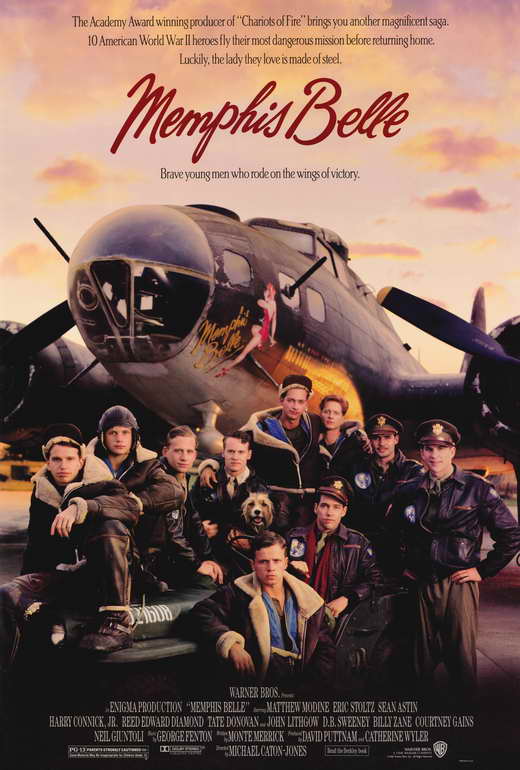
It's May 1943 at a US Army Air Corps base in England. The four officers and six enlisted men of the Memphis Belle - a B-17 bomber so nicknamed for the girlfriend of its stern and stoic captain, Dennis Dearborn - will soon start their twenty-fifth mission, having completed their previous twenty-four successfully with nary an incident, while fewer and fewer other planes are coming back from their missions at all. If they complete their next mission successfully, they will be the first Army Air Corps B-17 Crew to complete their tour of duty. Visiting communications officer Lt. Col. Bruce Derringer wants to publicize and highly tout their accomplishment, even before it happens, as a long term good news campaign at a time when there is little good news to report. Derringer's plan is against the wishes of the base commander, Col. Craig Harriman, who would prefer to treat the ten as any of his other hard working men. The previous success of the Memphis Belle is despite the disparate natures of the ten men, whose personalities and backgrounds could not be more different. Each of the ten has a differing view of Derringer's publicity campaign as well as to the probable success or failure of what will be their last mission regardless, a dangerous one into enemy territory over the skies of Bremen, Germany.
Brave young men who rode on the wings of victory.
Sgt. Virgil Hoogesteger: [the cockpit is covered in blood and the pilots are shouting] Sir!, It's Tomato Soup!
RAF Binbrook, Lincolnshire, England, UK
IWM Duxford, Cambridgeshire, UK
London, England, UK
Pinewood Studios, Iver Heath, Buckinghamshire, England, UK
(Studio)
RAF Little Rissington, Gloucestershire, England, UK



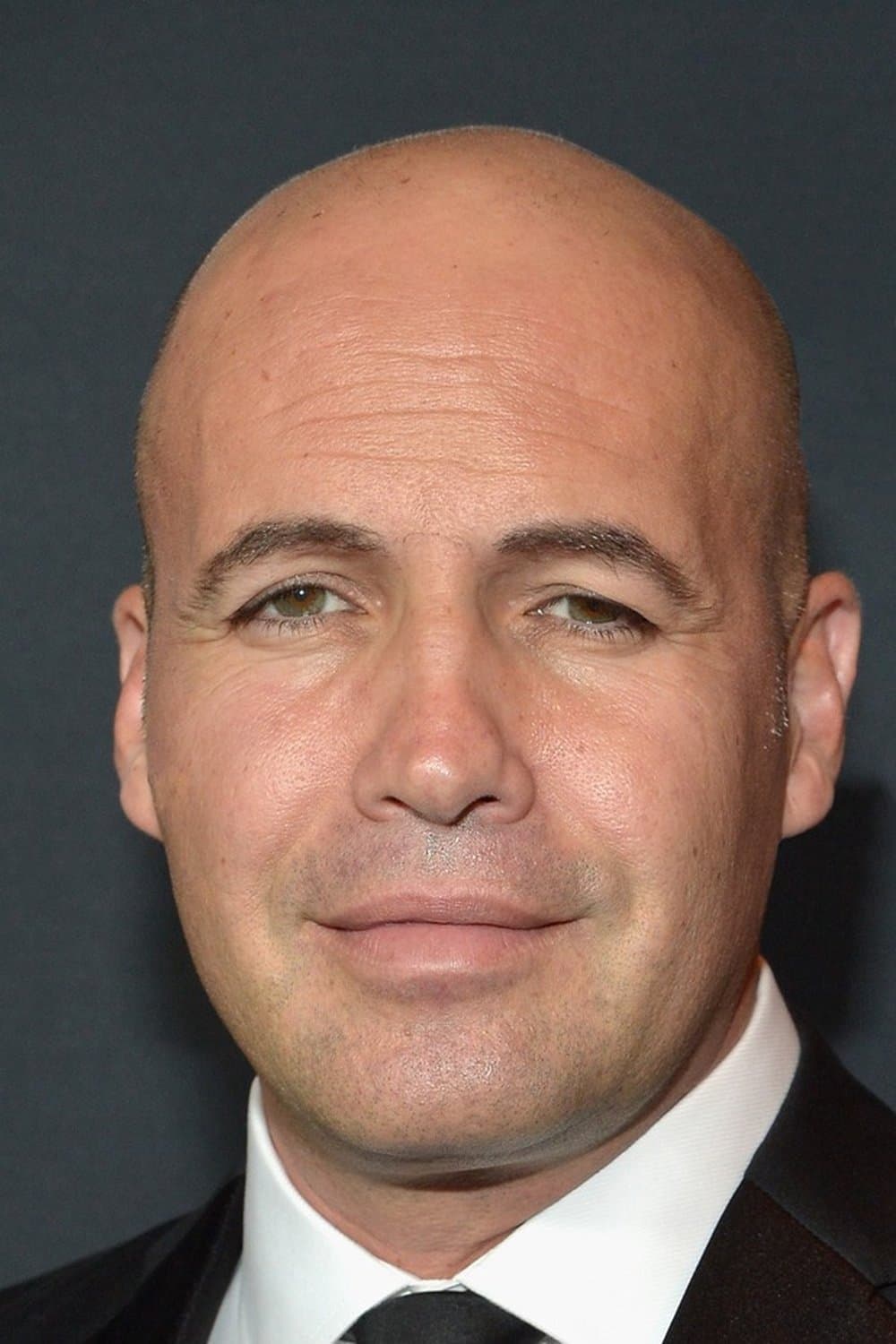


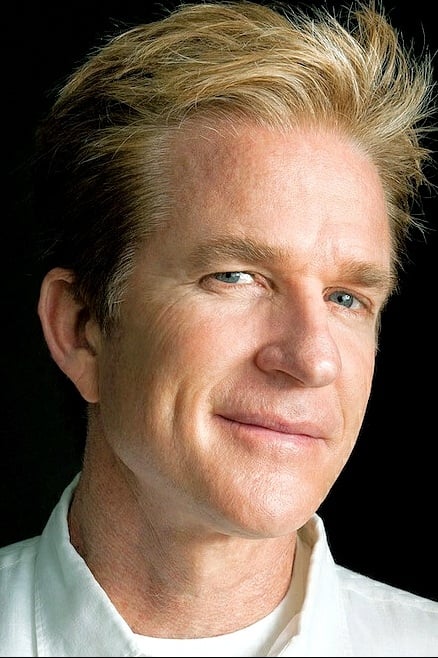


The navigator of the real Memphis Belle was Charles Leighton. From Flint Michigan, he retired as a teacher and counselor. He saved the Belle and other B-17s after identifying false German radio beacons designed to lure unwary B-17s into harm's way.
Actor Matthew Modine's uncle Wylder Modine was an actual B-17 pilot during WWII. Matthew wore his uncle's uniform and bomber jacket in the film and later donated it to the Wounded Warrior Project.
The Sally B, one of two B-17s portraying the Belle in the film, is the last airworthy B-17 in the UK. She is based at RAF Duxford, Europe's premier aviation museum, and is part of the USAAF WWII Memorial Flight making dozens of appearances across the UK and North Europe. She is maintained and run by volunteers and relies solely upon donations.
During the second squadron landing one of the B-17s fires a red flare. In 1943 this would have been done to let the ambulance crews know that that particular plane had wounded on-board.
The Memphis Belle was named for Margaret K. Polk of Memphis, TN. Although she and Robert K. Morgan broke off their engagement after his returning to the US, they remained friends for life. Polk died April 5, 1990. Her obituary, titled "The Memphis Belle, Margaret Polk, dies", appeared April 6, 1990 in the (Memphis) Commercial Appeal. It runs almost 23 column-inches.
Continuity
When the Belle is landing at the end of the film, its ball turret is quite clearly intact and positioned correctly for landing. Earlier it had been completely shot off.
When the crash-landed B-17 slides to a stop, the name and artwork is visible on the nose. When the view changes to just before the plane explodes, the nose is unmarked.
Jack realizes that Eugene had put a sign on his back, and takes it off. In the next shot, he still has it taped to his back.
When the B-17 crash-lands near the beginning of the movie, each propeller on the left wing loses a blade and the two remaining blades are shown pointing down and unbent. When the airplane is shown sliding along and coming to a stop, the propellers have all three blades, but each blade is partially broken off and has been bent back. This is the damage that would be expected in the first shot, especially with the outboard engine.
When Dennis is starting the Memphis Belle's engines, he flips the same switch on twice to start different engines (the far right switch).
Factual errors
In Memphis Belle the bomber force is ordered to circle back to the Initial Point when the Primary Target is obscured by smoke or cloud cover. In reality, this would NOT have happened. First, it is VERY hard to have a formation of 300-plus Forts make a 180 degree turn. Second, such a maneuver would alert all flak batteries as to the actual target. Third, such a maneuver would keep the force under fighter attack longer than need be. In actuality, bomber crews were briefed on a primary, a secondary, a tertiary and targets of opportunity. If the primary target was unable to be hit, the primary became the IP to set up on the secondary. If the secondary were unable to be hit, it became the IP for the tertiary, and if that were unable to be hit, the force commander (NOT the pilot of the lead aircraft) would issue an order to go after targets of opportunity. Failing that, the mission would be aborted and the crews would dump their ordnance in either the North Sea or the English Channel. The mission would count toward tour completion, as the crews would have been in combat, and were over enemy territory.
The Norden bombsight is depicted in the film as a simple vector bombsight, with the ground moving past the sight due to the forward motion of the airplane, and the bombardier toggling the bomb release switch when the target moves through the crosshairs. In reality, the Norden bombsight was a tachometric bombsight, which continually tracked and automatically released the bombs when the precomputed bomb release point was reached. The job of the bombardier was to make the adjustments necessary to keep the crosshairs stationary on the target. Any forward motion of the crosshairs relative to the target would indicate an error in the ground speed estimate, which would cause an error in the calculated bomb release point.
Several times during the mission, two crew members (pilot and co-pilot, bombardier and navigator, the two waist gunners) talk to each other with slightly-raised voices without using the intercom. This would have been impossible in real life. The B-17 was a combat aircraft with no soundproofing insulation. To be heard, one crewman would have to place their mouth next to the ear of the other crewman and shout at the top of their voice in order to be heard over the noise of the engines.
Navigator Phil Lowenthal mistakenly calls out that the Belle is at the 'Rally point' on their arrival near the target. In fact it's actually the 'Initial Point.' The 'Rally point' as the name suggests is where the group flies to after the bombs are dropped to reassemble the formation before heading home.
In Memphis Belle the bomber force is ordered to circle back to the Initial Point when the Primary Target is obscured by smoke or cloud cover. In reality, this would not have happened. First, it is very hard to have a formation of 300-plus Forts make a 360 degree turn. Second, such a maneuver would alert all flak batteries as to the actual target. Third, such a maneuver would keep the force under fighter attack longer than need be. In actuality, bomber crews were briefed on a primary, a secondary, a tertiary and targets of opportunity. If the primary target was unable to be hit, the primary became the IP to set up on the secondary. If the secondary were unable to be hit, it became the IP for the tertiary, and if that were unable to be hit, the force commander (NOT the pilot of the lead aircraft) would issue an order to go after targets of opportunity. Failing that, the mission would be aborted and the crews would dump their ordnance in either the North Sea or the English Channel. The mission would count toward tour completion, as the crews would have been in combat, and were over enemy territory.
Revealing mistakes
Due to a shortage of aircraft, the B-17s assembled for the film had two sets of marking, one on the right side and one on the left. During the take-off scene, several shots reveal that the bombers have two different names and mascots.
Miscellaneous
Had this been true, this crew would have definitely been blown out of the sky immediately. You have the navigator drunk with a hangover, two gunners fighting over a medal and lack of dates and the copilot not focusing on flying a dangerous mission.
There were errors after the Belle landed. First, many ground crew raced and crowded around the damaged and burnt aircraft. If it exploded, there would be death and injuries. Second, Dennis sprayed champagne which no pilot would ever do near a damaged aircraft.
Anachronisms
The film is set in May 1943. However, in a closeup shot of the bombardier's position, there is a data book dated 12 Oct 1944 on top of the bomb sight.
During the pre-flight, Sgt. Danny "Danny Boy" Daly, the radio operator, conducts a radio-check saying, "Charlie, Victor, Uncle, Tango". He is using the modern NATO Phonetic alphabet. During WWII, he would have used a different phonetic alphabet and said, "Charlie, Victor, Uncle, Tare".
On the return flight, Val administers closed chest compressions with his hands. This type of Cardiopulmonary Resuscitation was not advanced until the 1960s and would not have been used in 1943.
Features P-51 Mustangs in May 1943, several months before they were introduced into the European theatre.
(at around 1h 35 mins) When flying over a field, a modern white car can be seen running on the road on the upper left corner.
Audio/visual unsynchronized
Just prior to the mission when Clay is discussing the odds of a successful trip with the crew, he closes with the line "Basically we're finished". However he appears to mouth the word "f
ed".
Character error
The captain states that he wants to drop the bombs "right in the pickle barrel" to avoid hitting a school that is right next door to the factory, resulting in the deaths of innocent Germans. However, since the air formation always carpet bombs their target (the formation spans a few hundred yards across), this would always result in civilians being hit. Even so, only about 20% of the bombs aimed at precision targets fell within the target area. So, regardless of what the captain was trying to avoid, civilians would still be killed.
During the scene where Danny pulls out the liquor bottle, and Rascal sneaks up behind him to grab it, for a split-second, you can see Danny grin. Eric Stoltz probably happened to see Sean Astin coming in the reflection on the bottle, and without doubt it looked kind of funny to him.
Captain. Dennis Dearborn was extremely strict on procedures and safety of his crew. If so, he should have checked on them properly before takeoff. Phil, having a hungover and having thoughts of dying, should never be allowed to fly. Val lying about being trained as a doctor should have admitted it. His co-pilot Luke wanting to handle guns is against regulations.