
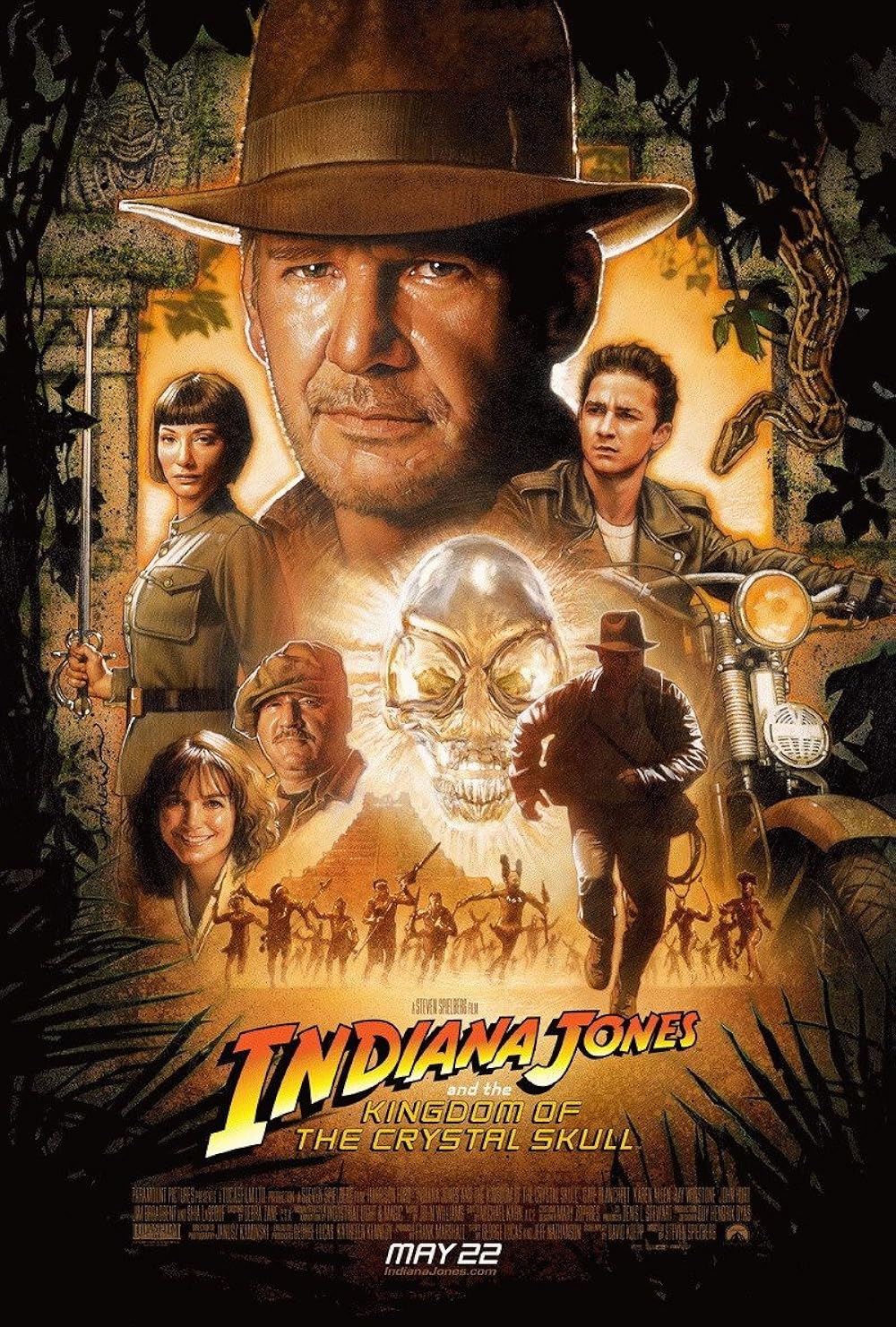
Indiana Jones And The Kingdom Of The Crystal Skull (2008)

During the Cold War, Soviet Agents watch Professor Henry "Indiana" Jones, Jr., when a young man brings him a coded message from an aged, demented colleague, Professor Harold Oxley. Led by the brilliant Irina Spalko, the Soviets tail Jones and the young man, Mutt Williams, to Peru. With Oxley's code, they find a legendary skull made of a single piece of quartz. If Jones can deliver the skull to its rightful place, all may be well. But if Irina takes it to its origin, she'll gain powers that could endanger the West. Aging professor and young buck join forces with a woman from Jones' past, Marion Ravenwood, to face the dangers of the jungle, Russia, and the supernatural.
"In May, the adventure continues."
Col. Dr. Irina Spalko: Do svidanya, Dr. Jones.
Backlot, Universal Studios - 100 Universal City Plaza, Universal City, California, USA
(pyramid and Peruvian street scenes)
Bridgeport, Connecticut, USA
Chihuahuan Desert, New Mexico, USA
Deming, New Mexico, USA
Downey Studios - 12214 Lakewood Boulevard, Downey, California, USA
(studio)
Eagle Field - 11163 N. Eagle Avenue, Firebaugh, California, USA
Essex, Connecticut, USA
Falls Lake, Backlot, Universal Studios - 100 Universal City Plaza, Universal City, California, USA
Firebaugh, California, USA
Fresno Chandler Downtown Airport, Fresno, California, USA
(airport scenes)
Fresno, California, USA
Ghost Ranch, Abiquiu, New Mexico, USA
Hamakua Coast, Hawaii, USA
Hilo, Hawai`i, Hawaii, USA
Igua?u Falls, Argentina
Igua?u Falls, Foz do Igua?u, Paran?, Brazil
Los Angeles, California, USA
New Haven, Connecticut, USA
Pasadena, California, USA
Universal Studios - 100 Universal City Plaza, Universal City, California, USA
(studio)
University of the Pacific, Stockton, California, USA
(school)
W.H. Shipman Estate, Kea'au, Hawaii, USA
Warner Brothers Burbank Studios - 4000 Warner Boulevard, Burbank, California, USA
(studio)
Yale University, New Haven, Connecticut, USA
(Marshall College)

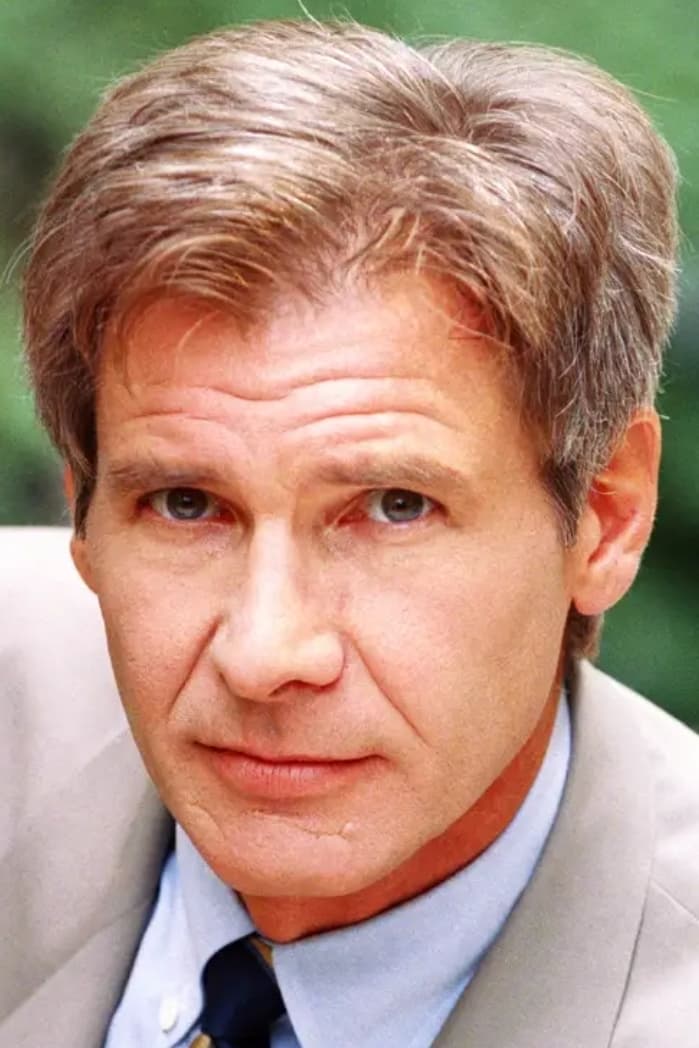
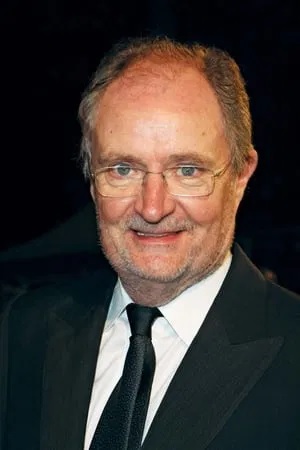
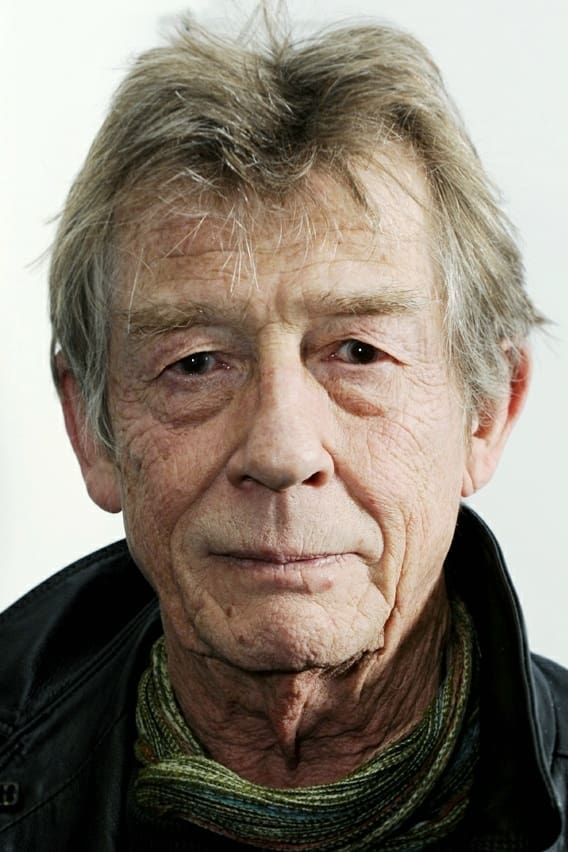

Producer Frank Marshall stated that the film would be shot the same way as the previous three - with stunt men, and using CGI only when necessary. Before the film entered production Spielberg corroborated these claims, but during filming the decision was made to employ more CGI than had originally been anticipated. (Spielberg estimated at the time that about 30% of VFX would have to be CGI.
M. Night Shyamalan and Tom Stoppard were each asked to pen a draft of the screenplay.
In 2002, high profile screenwriter Frank Darabont, who'd penned several episodes of The Young Indiana Jones Chronicles, was brought on board the project during what was probably the most publicized of the many failed attempts to find a screenplay for a fourth Indiana Jones film. Darabont collaborated closely with Steven Spielberg for over a year, resulting in a script entitled "Indiana Jones and the City of Gods." While Spielberg reportedly loved the script (according to Darabont he called it the greatest script he'd read since Raiders of the Lost Ark), George Lucas rejected the draft for reasons that were never disclosed, and the film was sent back to the drawing board once more.
Steven Spielberg brought on Janusz Kaminski, who's shot all Spielberg's films since Schindler's List (1993), to replace the now-retired cinematographer Douglas Slocombe, who had worked on all three of the previous Indy films. Spielberg refused to modernize the photography and wanted to retain the comic book style from the previous films; thus Kaminski had to watch all the three previous films repeatedly to study Slocombe's techniques. Spielberg later commented that both he and Janusz had to swallow their pride: "Janusz had to learn another cinematographer's look, and I had to acquire this younger director's look which I thought I had moved away from after almost two decades."
Stunt coordinator Vic Armstrong, who worked in all three of the previous Indy films, could not work in this film, as he was committed to The Mummy: Tomb of the Dragon Emperor (2008), so he was replaced with Dan Bradley. However, Steven Spielberg was able to meet Armstrong during War of the Worlds (2005) and talk about three action sequences he had conceived.
Steven Spielberg and Dan Bradley drew traditional storyboards to plan all the film's action sequences. However, the motorcycle chase was improvised after the animators had completed their work.
Sean Connery was approached for a cameo appearance as Henry Jones Sr., Indiana's father, but he turned it down, finding retirement too enjoyable. George Lucas later stated that in retrospect it was good that Jones Sr. did not appear, as it would disappoint the audience when he would not come along for the adventure. Harrison Ford also joked that he was getting old enough to play his own father, so Sean wasn't needed anymore.
Before ?The Kingdom of the Crystal Skull? was chosen as the title, several other titles were considered and even registered with the MPAA in August 2007, including ?The City of Gods?, ?The Destroyer of Worlds?, ?The Fourth Corner of the Earth?, ?The Lost City of Gold?, and finally, ?The Quest for the Covenant?.
Shia LaBeouf revealed the movie's official title during his appearance at the MTV Video Music Awards 2007 (2007) (TV).
This is the first Indiana Jones film without actor Pat Roach, who had a role in all the first three films. Roach died in 2004.
Shia LaBeouf signed on for the film in April 2007, so excited about doing an Indy film that he didn't even read the script. To prepare for his role as the greaser Mutt Williams, LeBeouf repeatedly watched the previous three Indiana Jones films and gained fifteen pounds of muscle.
To reprise his role as the legendary explorer Indiana Jones, the 64-year-old Harrison Ford spent three hours a day at the gym, and subsisted on a high-protein diet of fish and vegetables, thus building his body into a condition where he could perform his own stunts.
Continuity
During the warehouse treasure hunt at the beginning of the movie, Indy uses handfuls of gunpowder and shotgun pellets to try and locate the highly magnetic item the Soviets are after. However, as soon as the box is discovered and moved, all of the light fittings within ten yards start leaning towards it. Given that wood is non-magnetic and hence would not have interfered with the magnetism of the item, the lights would have been leaning towards it even before it was taken out of the box, making the search a lot easier.
After the third waterfall, Marion's hair is wet, dry and wet again.
Indy uses small pieces of ammunition to locate the crate holding the alien remains, because the crate is "highly magnetized." As expected, the crate exerts a magnetic attraction to these tiny objects, at a distance, even when buried under other crates. But it has no magnetic effect on the overhead lights, eyeglasses, crowbars or weapons until it is opened, even though these objects are all much bigger.
In the atomic bomb test scene Indy opens the refrigerator and pulls out the shelves before he climbs in. There is a small freezer compartment visible inside. After the blast that propels him and the refrigerator out into the desert the fridge door opens and he rolls out. In the first shot of roll the freezer compartment is still there and the edge of it is visible for about eight frames before being obscured by Indy's body, but in the close-up it has gone.
When Indy and Ox first meet Irina Spalko at the warehouse, she introduces herself formally and later, Indy even calls her by name when threatening her life attempting to escape. But during his debriefing by the CIA, Indy does not know her name and they are only able to identify her when Indy recalls that she carried a rapier.
Factual errors
When Indiana Jones is sinking into the sand pit, Mutt tosses him a snake and Jones uses it as a rope to pull himself out. Even a very large snake has a fragile spinal column. In reality Jones' weight should have torn the snake in half.
The rocket sled on which Indiana and the Russian soldier escape from the warehouse was used to see how many Gs the human body could survive. This was to see if man could live through the acceleration necessary for going into space. Depending on the test it accelerated at up to 8 Gs, then was slowed and finally stopped by hitting a pit filled with water. The G forces during deceleration could briefly be as high as 10 Gs. Indiana and the Russian are lying against the protective screen but behind the test subject's chair. Since they are not strapped down they should have been violently ejected from the front of the sled when it hit the braking pit.
At various times during the movie, metal objects are seen sliding toward the skulls due to "magnetic" attraction. However, those objects never seem to actually finish their journey and reach the skull. This violates the laws of physics, because a large force is required to overcome the inertia of a body at rest. Once movement has begun, less force is required to maintain the movement, and the objects would accelerate toward the skull until they reach it.
The countdown before the bomb test includes, "ten, niner, eight, seven, six, fiver..." but numeral nine is only spoken as "niner" to make it sound distinct from "five" over bad circuits or in noisy conditions. There is no "fiver" in communications manuals because that would just make it sound like "niner" again, defeating the purpose of adding the extra syllable in the first place.
Despite popular belief, it is impossible to ride liana vines in jungles and/or rain forests by swinging and jumping from one to another, because they all grow from the ground clinging up - not at all in a dangling downwards way.
Incorrectly regarded as goofs
In Indiana Jones and the Last Crusade (1989), Henry Jones drank from the cup of Christ, which was reported to give eternal life. In this movie he is said to have died. This is because he passed the seal on the floor where the grail was located. Once you cross the seal, you are no longer immortal.
Leipzig, the city Indiana says he will go searching for a teaching position, was part of the Eastern Bloc in 1957, and it would not have been likely he could have been given access to a Communist country at this time. However, Indiana is joking, since he's accused of being a Communist.
Jones refers to the amphibious vehicles in the South American jungle as "ducks" (DUKWs) when they are actually Soviet GAZ 46 MAVs, copy of the Ford GPAs, or "Seep," for "sea-going Jeep." However, from WWII forward in the vernacular, "DUKW" has been a common term used for all unarmored amphibious military vehicles, whether this is accurate or not.
The movie places Orellana buried in a somewhat Nazcan fashion and in what supposedly is a Nazcan tomb. The Nazca culture was already extinct (aprox. 800 AD) when the Spanish Conquistadors arrived to Peru (1532 AD). However, Orellana was only looking for the city the Nazcas built, not the Nazcas themselves, and it is stated that he vanished while doing so. The movie is supposing that the Nazcas are not actually extinct, and that Orellana did find them and their city.
In the opening scenes when the Soviet infiltrators, dressed as US Army troops, gun down the guards, if you look at the Soviet on the lower left side, he's raking his machine gun back and forth even though he doesn't appear to be firing the gun (he's not pulling the trigger, no shell casings are ejected, and there's no muzzle flare). However, this is not necessarily a mistake. It is perfectly reasonable "cover" someone with a firearm, choosing to fire only when it's most advantageous to do so. Changing point of aim while assessing potential targets is likely consistent with his training.
Revealing mistakes
At the warehouse scene, the Soviet soldiers carry the box that is supposed to be highly magnetic. Yet the (metal) guns they have shouldered are not attracted by it.
It is shown that the Soviets use a large tree-chopping machine to go through the dense Amazon rainforest, however after the tree-chopper is destroyed the chase scene takes place on not one, but two very clear parallel roads out in the middle of the jungle.
During the car chase through the campus, the flower pots start exploding before Indy and Mutt's pursuers' car ever hit them.
In the opening scenes the sun is high in the sky. When the convoy turns off the highway to the right, the sun is very low, either daybreak or sunset. The next scene is back to high sun.
When the tribal person is about to shoot Mutt with a blow dart, Indiana Jones comes from in front and blows the dart the other way through the pipe, killing the person. It would have been the blunt end and would have had no poison on it.
Miscellaneous
During the lecture in The Last Crusade, Indy tells his students that, "70% of archaeology is done in the library. Research, reading, we can't afford to take mythology at face value." In this movie however, when he is riding out of the library he tells the students, "If you want to be a good archaeologist you've got to get out of the library" which contradicts what he said in the other movie.
Anachronisms
On the map to show the journey taken to get to Peru, "Belize" is shown rather than British Honduras. The film is set in 1957, but the name wasn't adopted until 1973.
In the atomic test town, one front yard shows dummy children playing on a Slip 'n Slide. Wham-O introduced this product in 1961 but at the checkpoint it says they are in "Nevada 1957".
(at around 16 mins) In the rocket sled control room, the large timer has a display which looks like a modern LED display. No such display type existed in 1957, and did not become practical until the early 1970s. A timer from that era would have been a a mechanical seven-segment display, or possibly a "nixie tube" unit which came into use in 1955.
Mutt's Harley sports a hydraulic master cylinder on the handlebar for the front disc brake. Neither appeared on H-D motorcycles until 1972. The "Softail" chassis like Mutt's came out in 1984. At least one of the bikes used is also equipped with an engine not released by H-D until 1999. It's clearly a modern bike with some window dressing attached.
This movie is set in 1957. The gas masks used by the bio-hazard crew, while decontaminating Indy of radiation, are M-17 Gas Masks, which were not developed and used until 1959. Additionally, the M-17 mask is not designed for protection against radiation, making its use for radiation clean up incorrect, and dangerous.
Audio/visual unsynchronised
The refrigerator which Indy hides for protection from the atomic blast has the older type of door latch which cannot be opened from the inside. Later in the movie, one character calls refrigerators "death traps" for this reason. The shock of the blast rolls the refrigerator down into a gully, but the door remains latched until it stops moving. Then there's a click as though the latch is being opened, but there's no interior latch.
Crew or equipment visible
Light rig visible behind the Soviet jeep just after crashing into the ant hill.
Obvious floodlights in the ceiling in the underground tomb/grave scene just before Indiana and Mutt find the Crystal Skull.
During the opening sequence with the car chase, the camera/camera vehicle is visible in the reflection on the non-army car's bumper.
During the A bomb neighborhood scene, after Indy trips over the bicycle, the camera tracks in on him, the reflection of a walking crew member can be seen in the house windows.
In the first shot of Mutt's motorcycle in Peru, there is a reflection of a camera and cameraman in the bike's reflective surface.
Errors in geography
Jones and the Soviets encounter siafu in the Amazon. Siafu, also known as driver ants, live in Africa, not South America.
The scenes in supposedly Peruvian towns feature Mexican music, dialect, and iconography, although Peru and Mexico are 3000 miles apart and have little in common besides the Spanish language. We even see a Mexican flag at the airport.
The nuclear blast in the dry Nevada desert produces a Wilson Cloud (ice crystals condensing behind the shock wave), which would only occur in a humid environment like the South Pacific.
The distance between the Amazon region in Brazil and the Iguazu waterfalls Indiana and company go over is about 2000 miles.
Prairie dogs don't live in Nevada. There are rodents in Nevada called ground squirrels that do have a similar appearance to prairie dogs, but are smaller in size.
Plot holes
When putting the magnetized box into the jeep at the warehouse the jeep does not seem to attract the box (or the other way round).
At the beginning of the movie, when the Russian soldiers stack up behind their commander, this would only be a surprise if the person was stood directly in front of the officer. Anyone off to the side would see the soldiers lining up. A clever camera angle, but not realistic.
When the gold coins are "magnetically" attracted to Orellenas body from Indys hand, they first land on Orellenas metal armor suit and then gravitate" over the suit to the skull. The skulls "magnetic" properties apparently does not affect the metal suit so the coins do not magnetically bond to it. Then, when Indy moves the suit and uncovers the skull, the coins are not there, nor are they drawn to it when Indy holds the skull up.
Marion complains that Indiana left her. But Marion never tried to contact him when Mutt was born, even though he was a well-known professor of archaeology.
In the Akator tunnels, when Indy and co descend a large shaft, its steps retract and disappear into the walls, leaving no way up or down. However, Spalko manages to catch them up a few minutes later, despite having no way of descending the same shaft.
Character error
When Indiana crashes the motorcycle in the Library he tells some students to look up Vere Gordon Childe because he spent most of his life in the field. Childe was not a fieldwork archaeologist, he worked out of museums. He did very little fieldwork in his entire career, he analyzed and cataloged the collections of various museums and was able to generate new revelations and discoveries because of his access to collections from around the globe. Given that Indiana has recently been accused of being a Soviet agent and is currently fleeing the KGB, this is an even stranger comment. Childe was a Marxist archaeologist and a Soviet sympathizer.
The portrait of Orellana shown by Indy is not Orellana's. It is Francisco Pizarro, Peru's conquistador.
In the scene where Indy teaches his students, he tells them Skara Brae is off the west coast of Scotland. It is in fact off the north coast of mainland Scotland.
In the Area 51 warehouse scene Jones uses shotgun pellets to find a box with "highly magnetic" contents. All military issue buckshot pellets are made out of lead, and lead has no magnetic properties. Although Jones later finds out that the skeletons of the aliens attract non-magnetic metals, namely gold, it is unlikely that he would have tried to use lead to find a magnetic object before knowing this.
Spalko states that the skull was removed from the city "in the 15th century." Columbus arrived in the Bahamas 8 years before the close of the 15th century, in 1492. Cortez invaded the Aztec kingdom in 1516 (16 years into the 16th century), and this was the first significant European incursion into even Central America, much less the daunting southern continent. It is thus likely that she meant to say either "16th century," or "1500's."