
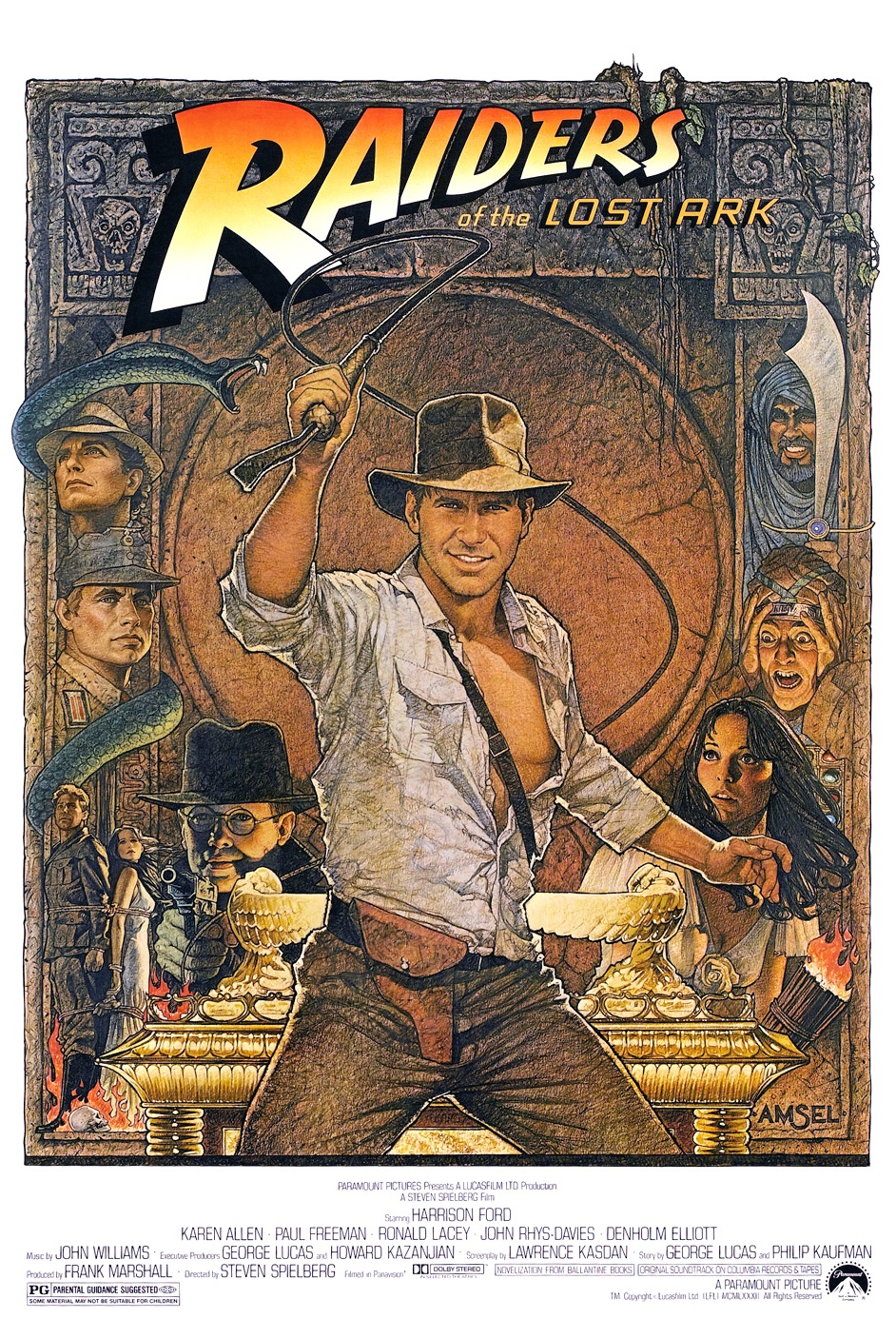
Indiana Jones And The Raiders Of The Lost Ark (1981)

The year is 1936. An archeology professor named Indiana Jones is venturing in the jungles of South America searching for a golden statue. Unfortunately, he sets off a deadly trap but miraculously escapes. Then, Jones hears from a museum curator named Marcus Brody about a biblical artifact called The Ark of the Covenant, which can hold the key to human existence. Jones has to venture to vast places such as Nepal and Egypt to find this artifact. However, he will have to fight his enemy Rene Belloq and a band of Nazis in order to reach it.
Indiana Jones - the new hero from the creators of JAWS and STAR WARS.
[first lines]
Satipo: [picking up poison dart] The Hovitos are near. The poison is still fresh, three days. They're following us.
Barranca: If they knew we were here, they would've killed us already.
Bushey, Hertfordshire, England, UK
EMI Elstree Studios, Borehamwood, Hertfordshire, England, UK
(studio)
Kaua`i, Hawaii, USA
La Pallice, La Rochelle, Charente-Maritime, France
(WW2 German submarine base)
Rickmansworth Masonic School for Girls, Chorleywood Road, Rickmansworth, Hertfordshire, England, UK
(school)
Sidi Bouhlel, Tozeur, Tunisia
Sousse, Tunisia
University of the Pacific, Stockton, California, USA

Tom Selleck was originally cast as Indiana Jones, but was not able to take the role because he was committed to "Magnum, P.I." (1980). "Magnum" did an episode that parodied "Raiders", complete with hat, whip, booby traps, etc.
Nick Nolte, Steve Martin, Chevy Chase and Jack Nicholson all turned down the role of Indiana Jones.
Although Tom Selleck had to give up the role of Indiana Jones to film "Magnum, P.I." (1980), the series didn't go into production until filming had already wrapped. Selleck was in fact in Hawaii waiting for the series to start as the final scenes to be filmed (the opening sequence) were being shot in Hawaii.
The scene where Indy threatens to blow up the Ark with a bazooka as it is being carried through a canyon was filmed in the same canyon in Tunisia used in Star Wars (1977) when R2-D2 was zapped and stolen by Jawas.
Harrison Ford badly bruised his ribs during the scene where he is dragged behind the truck.
When Indy is dragged under and then out behind a moving truck, it's a tribute to Yakima Canutt's similar famous stunt in John Ford's Stagecoach (1939). In fact, it was a stunt that stuntman Terry Leonard had tried to pull off the year before, and failed to do so, on The Legend of the Lone Ranger (1981). He was thrilled at the chance of having another shot at it.
A sheet of glass separates Harrison Ford and the arched (and highly dangerous) cobra when he falls into the Well of Souls. The snake actually did spray venom onto the glass.
For the DVD release, over 970,000 frames were cleaned up by Lowry Digital Images, the same company that cleaned up Snow White and the Seven Dwarfs (1937), North by Northwest (1959) and Sunset Blvd. (1950) for DVD.
To achieve the sound of thousands of snakes slithering, sound designer Ben Burtt stuck his fingers into a cheese casserole. This was augmented by applying wet sponges to the rubber on a skateboard.
Originally intended as a small low-budget adventure, production costs tripled to $22 million.
1981's biggest grossing film.
George Lucas first dreamed up the idea of an adventurous archaeologist about the same time he came up with the idea for the Flash Gordon-type space story which became Star Wars (1977).
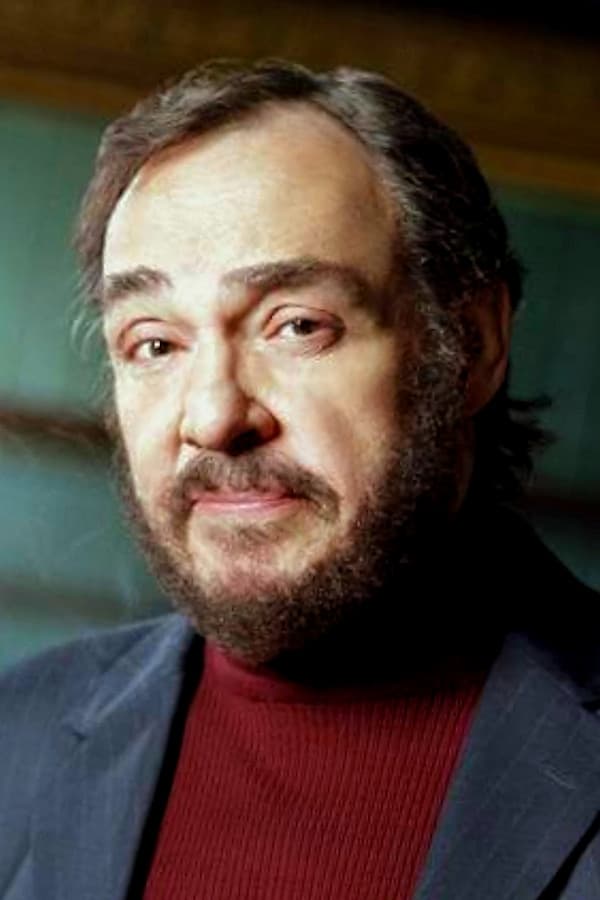
On the Bonus Features DVD, John Rhys-Davies talks about how when he auditioned for the role of Sallah, he was concerned since the script originally described Sallah as a "5-foot-2, skinny, Egyptian digger". Steven Spielberg mentioned that when he first heard Rhys-Davies speak, he reminded him of the Shakespearean character Falstaff. Spielberg then told Rhys-Davies that for his performance as Sallah, to combine his earlier role as "Vasco Rodrigues" from the miniseries "Shogun" (1980) with the character of Falstaff.
The opening scene in the lost South American temple is partly based on a classic Disney Ducks adventure helmed by the legendary artist Carl Barks, many of whose comic books have inspired George Lucas and Steven Spielberg. Exploring a lost temple, Donald Duck, his nephews, and Scrooge McDuck must evade a succession of booby traps, like flying darts, a decapitating blade, a huge boulder, a tunnel flooded with a torrent of gushing water, etc., in the story "The Prize of Pizarro" ("Uncle $crooge" no. 26, June-August 1959), which hit the newsstands when Lucas and Spielberg were respectively 15 and 12 years old. Both men are avowed fans of the Barks comic books.
George Lucas did some second unit work on the film.
Philip Kaufman shares story credit with George Lucas because they originally dreamed up the film together in the 1970's. Reportedly, it was Kaufman's idea to pursue the Lost Ark of the Covenant. Originally, Kaufman was going to direct.
Indy's battered leather jacket was actually brand new and had to be artificially aged by the costume department. There were 10 jackets for general wear and tear and stunt purposes.
Indiana Jones's hat came from the famous Herbert Johnson hat shop in Saville Row, London. The hat was the shop's Australian model.
The famous scene in which Indy shoots a marauding and flamboyant swordsman was not in the original script. Harrison Ford was supposed to use his whip to get the sword out of his attacker's hands, but the food poisoning he and the rest of the crew had gotten made him too sick to perform the stunt. After several unsuccessful tries, Ford suggested "shooting the sucker." Steven Spielberg immediately took him up on the idea, and the scene was successfully filmed.
The out-of-control airplane actually ran over Harrison Ford's knee, tearing a ligament in his left leg. Lucky for him, the heat had turned the rubber tire's soft, so it did not crush the bone. Rather than submit to Tunisian health care, Ford had his knee wrapped in ice and carried on.
When Brody first goes to Indy's house to discuss the mission, Jones is dressed the way he is because he is entertaining a young woman in his bedroom. The script originally planned to show her before moving to the next scene, to give Indy a more worldly persona (like James Bond). However, her appearance was cut, as Steven Spielberg thought that being a playboy did not fit Indy's character. (This also helps explain why several of the co-eds fawn over Jones and why one girl wrote "love you" on her eyelids).
During filming in Tunisia, nearly everyone in the cast and crew got sick except director Steven Spielberg. It is thought that he avoided illness by eating only the food he'd brought with him: a lot of cans of Spaghetti-O's.
Traditionally when one of his films is about to open, George Lucas goes on vacation to get away from all the hoopla. As Star Wars: Episode IV - A New Hope (1977) was just about to open, Lucas went to Hawaii where he was joined by Steven Spielberg. When the grosses for Lucas's film came in and it was clear it was going to be a hit, Lucas relaxed and was able to discuss other topics with his friend. It was at this point that Spielberg confessed he always wanted to direct a James Bond film, to which Lucas replied he had a much better idea, an adventure movie called "Raiders of the Lost Ark." The conversation happened while the two were making a sand castle. After their trip, they got together and developed the script with Lawrence Kasdan.
Continuity
When Toht grabs the red-hot medallion, his fingers are burned. Later in the movie, the burns on are all squarely in the center of his palm, and upside down compared to the position in which he palmed the medallion.
The staff is supposed to be 60 inches tall (6 kadams = 72 inches, minus 1 kadam). The pole that Indy inserts into the hole in the map room towers over his head, indicating (incorrectly) that Indy is less than five feet tall. The laserdisc edition disproves any claim that he's standing on a lower step.
When Indy and Marion exit the Well of Souls, an unidentified man is clearly seen lying against the rock face but is missing a few moments later during a medium shot that shows the same exit - the wheels of the "Flying Wing" are in the foreground. (A deleted fight scene shows Indy knocking out the man after escaping from the Well of Souls.)
The students in Indy's lecture hall change positions in various shots. The student with the apple, seen coming down the far aisle when the lecture ends, is clearly sitting in the middle of the front row earlier in the scene. The girl who has written on her eyelids is in the middle of the room when Indy first sees her but in the row by the windows later.
During the gunfight in Marion's bar, when Indiana ducks behind a corner, it appears that the type of pistol he is shooting changes with every cut. This is because one shot of Indy shooting the semi-auto appears out of sequence. After his revolver is out of ammo and he reaches for his holster, the semi-auto reappears and Indy keeps it for the rest of the scene. Evidently the semi-auto is his backup weapon; it appears later on the Bantu Wind.
Factual errors
The stone cover over the ark would have weighed many hundreds of pounds, far too heavy for just Indy and Sallah.
For the headstone crystal to use the sun's beams to properly show the location of the Well of the Souls in the map room, it's not just enough to hold it in "a certain place at a certain time of day." It also has to be the correct time of year, as the sun's position in the sky changes depending on the time of year. Indy never seems to take this into account.
In the beginning of the film, the city of Tanis in Egypt is described as having been destroyed in a sandstorm and recently discovered by the Nazis. In reality, the city was probably abandoned when its water supply was silted in. Archaeological digs had been conducted at the site beginning in the 1800s, so the location of Tanis was well-known within the archaeology community in 1936.
In 1936, Egypt was not under British rule but there was a British military presence, primarily to guard the Suez Canal. It would've been impossible for German troops to operate there without the express permission of the Egyptian government or indeed the British government, e. g. to force Egyptians to work on the excavation site. For the same reason, there was no need for the US government to send Indy to stop the Nazis' search for the Ark. Simply asking their 'cousins' to end the excavation would've done the trick.
Indy flies from Nepal to Cairo on-board a Douglas DC-3 which makes stopovers at Karachi (Pakistan - part of India in 1936), Baghdad (Iraq) and finally arriving in Cairo. With the exception of the Baghdad-Cairo stretch (about 800 miles), all of these flight stretches (which range from 1200-1500 miles) are way too long for the DC-3's maximum range of approximately 1000 miles.
Incorrectly regarded as goofs
The Golden Gate Bridge is shown; which was not completed until May, 1937, a year after the movie takes place. The Bridge itself began construction in 1933 (three years prior to the movie date), but not open to the driving public until April 1937, so it is easily feasible that the bridge could appear close to completion from a distance (as shown in the shot) even though it wasn't finished yet.
Toht would need more than the imprint in his hand to replicate an approximate of the amulet. He would need to know the dimensions and properties of the crystal, including the cuttings on the surface, otherwise it would not refract and focus a beam of sunlight on exactly the right place (assuming he had the correct length of the staff). Since they were digging in the wrong spot anyway, having an incorrect approximate of the amulet would further give them an incorrect location.
There are several Nazi officers seen smoking. Smoking was discouraged in Nazi Germany. However, it wasn't until 1939 that the German Wehrmacht and SS restricted officers from smoking while on duty. The film takes place in 1936, when smoking was still permitted.
If the idol is made of pure gold and is solid ( it would weigh about twice the same volume of lead and ) Indy would not be able to carry it so easily. It would also have consumed far more of a precious resource than necessary. Indy's difficulty was estimating how hollow it was, based on his knowledge of similar artifacts ; but he overestimated the weight, the plinth sank, and the boulder fell down.
In the Cairo diner, Belloq refers to a watch as "worthless, $10 from a local vendor." However, while $10 in 1936 had the spending power of $164 in 2012, Belloq was comparing it to ancient artifacts worth millions.
Revealing mistakes
Immediately after the truck chase, Indy pulls into a market square and the peasants help him thwart the Nazis. In this scene, the character of Toht, sitting in the passenger seat of a Mercedes, can be seen in the wide shot played by the actor, Ronald Lacey. But in close-up, it appears as if his hat is just propped up on top of his coat as though the actor was not available, and no stand-in could be found; so they just propped his costume up in the seat and hoped nobody would notice.
German soldiers fall from the truck (which is traveling forward at 40 mph) and roll backward - in violation of physics. When you jump from a moving vehicle you actually roll in the direction the vehicle was moving.
During the desert truck chase, Indy pushes a Nazi Jeep off the side of the mountain. However, every shot immediately before and after that indicates that Indy is driving on level ground, with plenty of road on either side of him.
When Indy pushes the large heavy stone block away so he and Marion can escape from the pit, you can see the shadow of it bouncing weightlessly on the ground below.
When Marion is shooting at the German soldiers from the gunner's seat in the German plane, the bullets clearly hit the ground at the soldiers' feet, yet they react as if they have sustained hits above the waist.
Miscellaneous
During the montage of the submarine traveling to the Nazi base, the captain is seen looking through the periscope. If the submarine had submerged to periscope depth, Indy, riding outside on the sub's bridge, would have drowned.
It been stated by Archeologists that although there has been some booby traps found on excavations and other archaeological sites. Most booby traps were not that intricate but rather more crude in design. However most booby traps were not dangerous due over the amount decay that has happened over the years.
As Indy and Marian enter the Cairo marketplace, after the monkey returns to the eye-patched spy, an unattended shovel in a pile of sand inexplicably falls over.
When Indy arrives at the cargo ship's bridge and sees the U-boat, the German boarding party is seen paddling their skiff towards the ship. Indy runs off to find Marion, but by the time he gets to their cabin, the soldiers have already boarded the ship, found the cabin, and taken her prisoner in just a few seconds time.
When the monkey first appears, it jumps on Marion's shoulders and starts grabbing her hair, cheeks, etc and is a bit too excited, almost angry. You can see that Karen Allen repeatedly looks at a point high above behind the camera. Presumably she's looking at director Steven Spielberg, to see whether he wants to cut because of the monkey's overexcited manner.
Anachronisms
In the flying scenes, the map lists several countries by their modern names instead of their 1936 names. Siam did not become Thailand until 1939. Transjordan did not become Jordan until 1949.
There is a globe on the desk in the classroom. The globe depicts various countries of Africa that didn't exist in 1936.
The Afrika Korps didn't exist until 1941.
When Indy ambushes Nazis in the mountain pass on the island, he is uses what it is a modified Chinese Type 56 copy of the RPG-2 - Soviet-made shoulder-fired rocket launcher. Anti-tank rocket launchers weren't even being developed at the story's time line of 1936, and nobody came with such idea at that time (there was no need for anti-tank rocket launchers with HEAT shaped charge warheads against relatively weakly armoured tanks from interwar period).
The uniforms worn by the German soldiers are the tropical models, intended for use by the Deutsches Afrika Korps (DAK), and not introduced until 1940. In 1936, they would have worn either the standard wool uniforms, or, more likely given the hot weather, model 33 cotton work uniforms.
Audio/visual unsynchronised
In the car chase scene, when Indiana pushes a car off the road into the trees, the driver curses in German. However, his mouth forms the English form of the word.
When the German officer tells Gobler that he wants "plenty of protection" for the Ark, we hear Gobler answer "Jawohl, Herr Oberst!" but his lips don't move.
After Indy and Sallah have discovered the Ark within the Well of the Souls, they pack it in a crate and it is hauled out by the workers. As it is being lifted up, Indy says, "Alright, take it up. Easy!" yet his lips don't move.
After the group of kids save Indy from the bar, grown-up characters are talking in front of an open truck. While Sala speaks, there clearly is a boy playing a flute. But no flute sounds can be heard.
When Belloq pours a drink for himself in the tent with Marion, the sound of ice cubes chinking can be heard. There are no ice cubes visible in the bottle or glasses.
Crew or equipment visible
When Indy is holding onto the front of the truck with the wheel between his legs after being thrown out of the window, a shot of his back reveals the small wooden seat he is sitting on.
When Indy and the monkey are getting drunk after the truck carrying Marion has been blown up, a young man in a T-shirt and jeans walks past in the background on the left side of the screen (all the other people are wearing robes).
After Indy kills the driver of the truck in Cairo and it explodes, you can see a camera angled directly across from the burning truck.
During the shot in the plane cockpit where Marion shouts "Indy!", you can see on the right side of the window, the reflections of various crew members and their vehicles of which would not be in the year 1936.
Why does the floor move? When Indy throws the torch down the 'Well Of Souls' that reveals the snakes, obvious fake snakes (screen left) can be seen being pushed (not slithering) into the scene along with the many real snakes.
Errors in geography
The cobra that Indy lands in front of in the Well of the Souls is a monocled cobra, noted for its distinct pattern on the back of its hood. This snake is native to South and Southeast Asia, and would not be found in Egypt. There is an Egyptian cobra, but it looks quite different.
Several of the snakes used in the Well of the Souls scene are Burmese pythons and Reticulated pythons - neither of which are native to any part of Africa.
The tarantulas at the beginning of the movie are Mexican Red-Knees that are native to Mexico only.
At the 23 minute mark, a background image of the Golden Gate Bridge is seen as the Pan America seaplane is theoretically taking off from San Francisco to go west to Hawaii. Except that the GG Bridge image shows the seaplane going EAST as the arch under the bridge roadbed protecting Fort Point is seen to the right, which marks the south end of the bridge. Also, we know that the flight's earliest date is November 30th, 1936 due to the LIFE magazine that Toht is carrying. If that is the case, the Golden Gate Bridge image is incorrect as the northern and southern sections of the roadbed had not yet been joined. If the flight is in January of 1937 (with Toht carrying a 2 month old copy of LIFE - not likely for someone trying to be inconspicuous with such a famous magazine), then the GG Bridge image would be correct as the roadbed(s) were linked up at this time and only needed another 4 months of reinforcement and laying the asphalt to complete the bridge.
The ark is opened on an island in the Aegean Sea that, on approach, is clearly composed of igneous rock, which is consistent with the geology of the area. However, upon entering the island, the interior features sandstone canyons, which is geologically improbable for the area and impossible given the rocks shown in the previous view of the island.
Plot holes
The flying wing doesn't have any storage space to carry the ark in its crate and there isn't a way to carry it underneath it either.
The old man interpreting the headpiece says the staff is six kadams high. Indy says that is roughly 72 inches. That makes one kadam equal to one foot (in reality, one kadam is closer to 10 inches). The old man then says take back one kadam, making the prescribed height of the staff five feet. When Indy enters the Map Room, he uses a staff that towers over his head, well over five feet.
There are many flaws with the U-boat sequence. The class of boat is wrong - U-26 was a Type IA, but that shown is a Type VIIC (this is because the film reused the replica of U-96 from Das Boot (1981)). Neither the Type IA nor VIIC - nor any of the principal classes - would have been capable of carrying the Ark, due to limited storage space and access hatches that were too small. The Captain clearly orders the U-boat to dive ("Tauchen"); however, a lack of a constant air supply, much reduced speed and limited capacity for the electric motor batteries meant that U-boats only submerged for defense, attack or in heavy weather - none of these apply here. Nor did U-boats sound a 'diving' klaxon. A cut scene shows Indy hiding aboard the boat by clinging to the periscope. However, as explained the boat would not in reality have dived, and even when it did it would not have run at a sufficiently shallow 'periscope depth' the whole time. On the surface, at least four men would have been on watch at all times. Even if he could have remained hidden while the submarine remained above water he would have died from exposure. The trip would have taken many days to reach its target and he would have died of thirst long before then. Thus, however Indy tried to smuggle himself aboard the boat, he would have either been spotted or drowned.
When trapped in the Well of Souls, Jones clubs a large 30ft stone statue and rocks it back and forth in an attempt to escape. In reality, this statue would have weighed many tons and it would be impossible for one single human to topple it using only his body. If this were the case, earthquakes would have caused it to fall down thousands of years ago.
In the beginning Indy says he has no idea where Abner (or Marion) are but the Nazi cable states he is in the United States and possibly has the headpiece/medallion. Yet Indy gets on a plane and flies to Tibet/Nepal without attempting to locate Abner Ravenwood in the States. He immediately finds Marion in a mountain top bar that she owns. She tells him Abner is dead and Indy asks her for the headpiece.
Character error
Marcus Brody mentions that "The Bible speaks of the Ark leveling mountains and laying waste to entire regions. An army which carries the Ark before it... is invincible." Nowhere in the Bible does it say the Ark itself has any power whatsoever, let alone making a human army invincible. If anything, in 1 Samuel 4, it tells how the Hebrews brought the Ark into battle with them.
The trained German soldiers hold the MP40s incorrectly, holding the magazine instead of the forward stock. Surprisingly, the untrained street thug holds the weapon correctly.
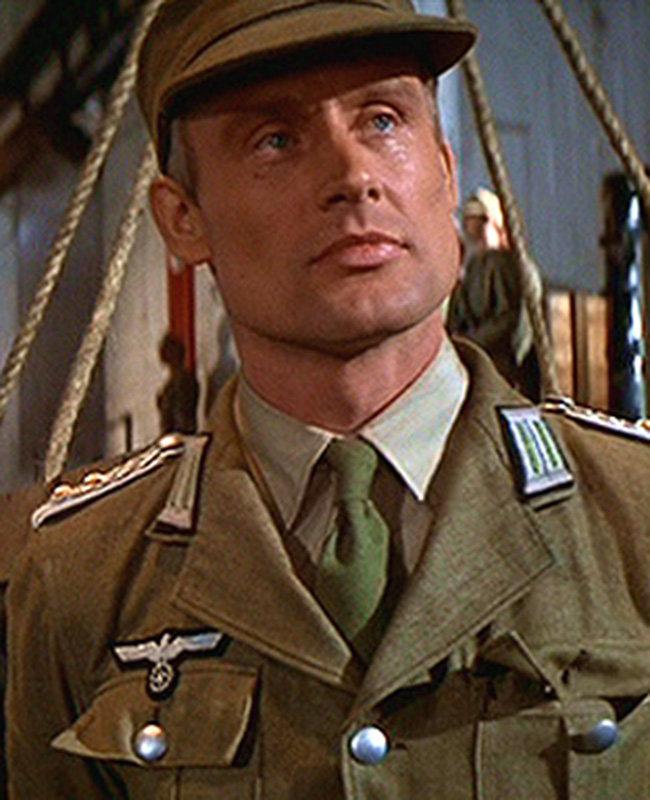
Before the airplane fight, Gobler addresses Dietrich in German as "Herr Major", indicating Dietrich's rank equivalent to Major. After the airplane fight, his voice has changed (see above unsynchronized goof), and he changes Dietrich's rank to "Oberst" (equivalent to Colonel). This also matches his rank insignia which marks him as an Oberst.
During Indy's lecture to his students on the Neolithic, Dr. Jones talks about a "cist", which is a chest-shaped burial. Dr. Jones pronounces the word "cist" wrong - Archaeologists pronounce "cist" with a hard "k" sound at the beginning, whereas Dr. Jones pronounces it like "cyst" with a soft "s" sound. A genuine Archaeologist who knew about the Neolithic would not make this mistake.
While discussing the history of the Ark, Indy refers to Mount Horeb as "Herob."