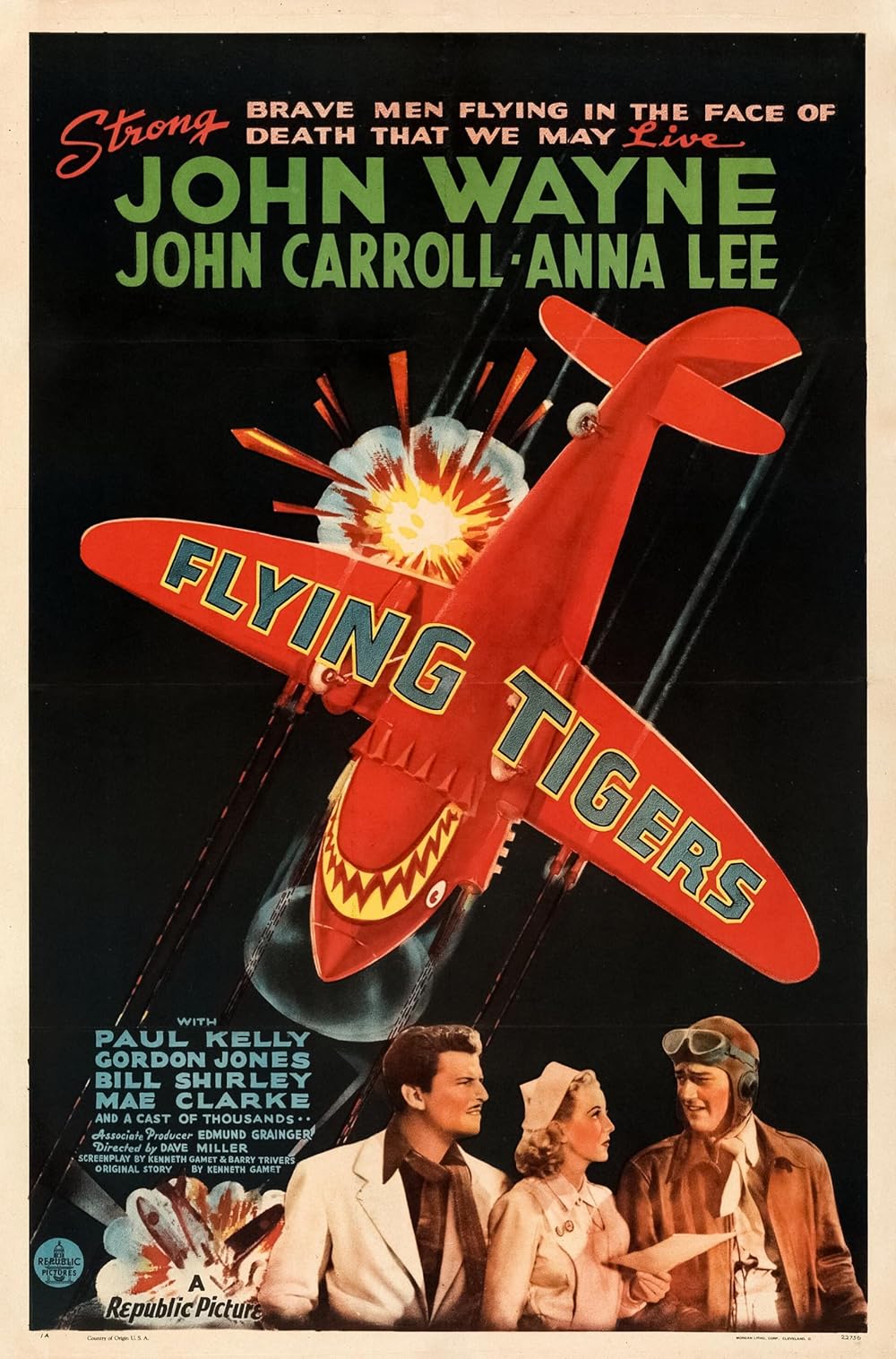
Flying Tigers (1942)

Jim Gordon commands a unit of the famed Flying Tigers, the American Volunteer Group which fought the Japanese in China before America's entry into World War II. Gordon must send his outnumbered band of fighter pilots out against overwhelming odds while juggling the disparate personalities and problems of his fellow flyers. In particular, he must handle the difficulties created by a reckless hot-shot pilot named Woody Jason, who not only wants to fight a one-man war but to waltz off with Gordon's girlfriend.
Fighters for Freedom Eager for Adventure and a Whap at the Japs!
Jim Gordon: I hope you two had a good time, 'cause Hap paid the check.
Russell Ranch - Triunfo Canyon Road, Thousand Oaks, California, USA
Santa Fe, New Mexico, USA
(flying sequences)
Curtiss-Wright Aircraft Co., Buffalo, New York, USA
(aircraft sequences)
Flagstaff, Arizona, USA
(action and plane footage)
Coolidge Army Air Field, Coolidge, Arizona, USA
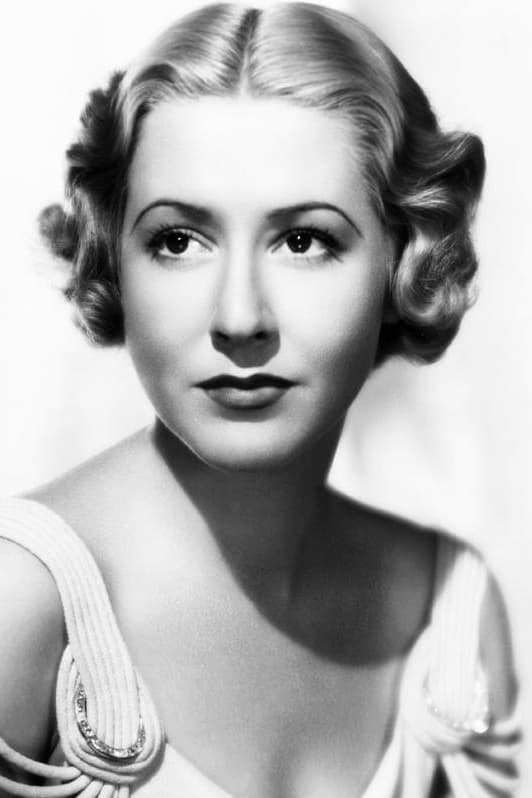
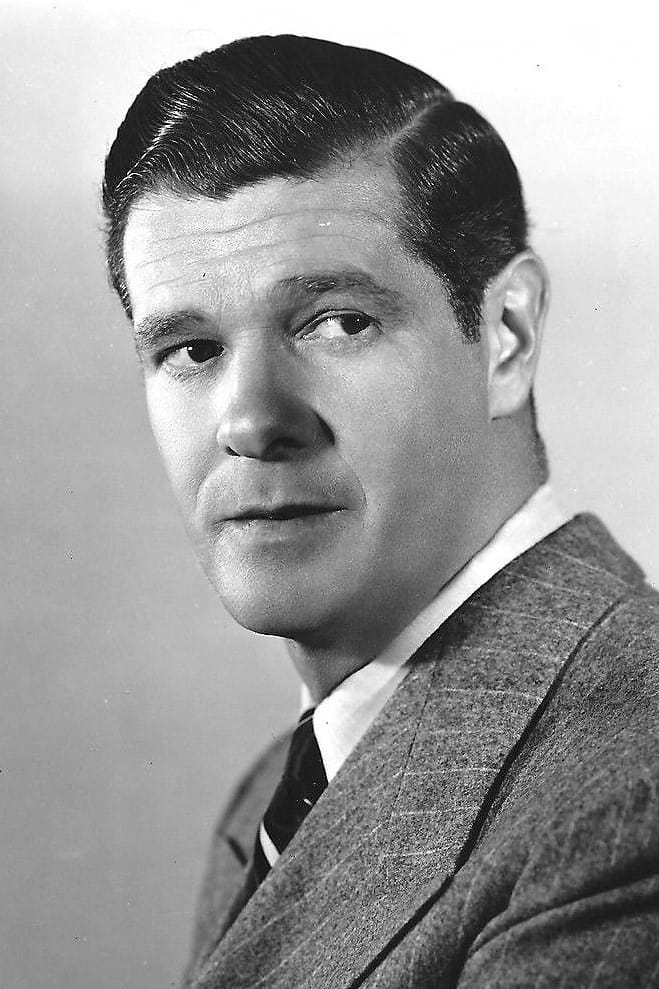
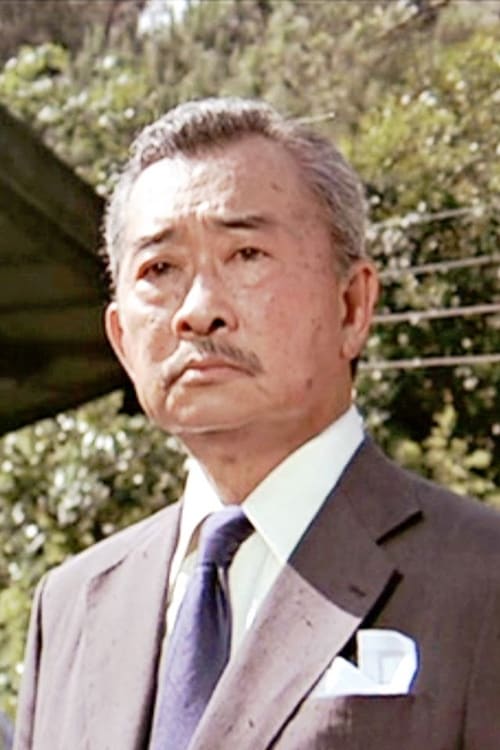
The "Tiger Shark" teeth and eyes painted on the noses of the planes were there for psychological reasons. It was believed that the Japanese, coming from a seafaring nation, would be frightened of being attacked by sharks. There is no word on whether it had any effect.
The opening scene shows a Japanese air raid and in the aftermath a crying child is sitting alone amid debris. This scene virtually duplicates a famous photo taken in 1937 and published in Life magazine following a Japanese air raid on Shanghai. (Located in the National Archives, ARC Identifier: 535557)
Some clips of the dogfights and Japanese ack-ack guns were from confiscated Japanese newsreels.
The Flying Tigers' planes were full-size mock-ups made mostly of plywood and balsa wood, not - as has often been thought - real aircraft. The "engine" noises were sound effects added after production.
John Wayne's first modern war film and first role as a pilot.
Continuity
Noticeable air scoops on the P-40's top cowling are shown in scenes of the aircraft parked on the ground and during taxi. Up-close engine starting and flying sequences show a clean cowling, without the air scoops.
During the night fighting sequence, the aircraft shown passing in "vic" formation and later shown peeling off to the left are spitfires not P-40s.
When Woody is bringing in a burning two engine airliner, the right landing gear would not lower and close in shots which show only the left gear lowered and then raised, but the shot flying over the hanger clearly shows the right landing gear down.
When Woody crashes the airplane he took up without permission, we hear the engine running and see it running (you can't see the propeller) as it passes the camera several times on the way down, but just before he touches down in the crash, the engine is not running and the propeller is clearly stopped.
When Capt. Jim Gordon releases the three containers of nitroglycerin (over the bridge) he looks back into the cargo area of the plane and we see all three of them release simultaneously. Then we cut to the right side of the cargo plane and we see them drop through the bottom of the aircraft one after the other.
Factual errors
The AVG did not engage in any combat prior to the attack on Pearl Harbor. Their first combat mission against the Japanese was December 20, 1941.
The Japanese fighters that the Flying Tigers meet in combat are Nakajima Ki.27 'Nates', which were the most common Japanese Army fighters over China in the early part of the war. Whilst some aspects of the Ki.27 are correctly replicated, its wing is not the right shape and, most of all, it fires four wing guns. The Ki.27, like all early Japanese Army fighters, carried only a nose mounted armament of two 7.7mm machine guns. This lightweight armament, plus the type's non-armored construction and low-powered engine, was typical of Japanese Army fighters until quite late in WW2. The P-40 was superior in almost every department, apart from maneuverability, which the Flying Tigers compensated for by developing tactics such as diving down from a high altitude, shooting and then continuing the dive to avoid dogfighting.
One of the scenes of the "Japanese" anti-aircraft gunners firing actually shows Chinese Troops (recognizable due to their wearing German style helmets.)
Revealing mistakes
When Woody is taxiing the cargo plane and taking off down the runway, he keeps turning the control wheel left and right, as if he were driving a car. The first lesson of one's first flight is that one does not touch the wheel or stick whilst on the ground. The rudder, controlled by foot pedals, is used to steer the plane on the ground. Turning the wheel left and right would cause the wingtips to dig into the ground.
During the night patrol, Jim (John Wayne) orders Hap back to base over the radio when he finds that he replaced Woody. Hap replies, "Too late" and points to the left of his plane. Jim immediately looks to the left to notice the Japanese planes, as though he saw Hap's gesture - however they are in different planes, flying at night and there is no way Jim would see Hap pointing.
Miscellaneous
In the first close-up of a Japanese pilot, his leather flying helmet has a star embossed on the front. The actor was wearing an American helmet.
Whenever the pilots begin to fire their on-board weapons at opposing aircraft, they react as if the recoil is transmitted to the controls. The firing switches are electronic, and have no direct contact with the guns, therefore there would be no sensation transmitted to the trigger of the guns being fired.
Character error
When Woody goes into a spin with the unarmed plane , he spends most of the time fighting the "stick ". Students are taught in flight school that spin recovery is attained by bringing the ailerons (the stick) to a neutral position and using opposing rudder. An experienced pilot would certainly know this.