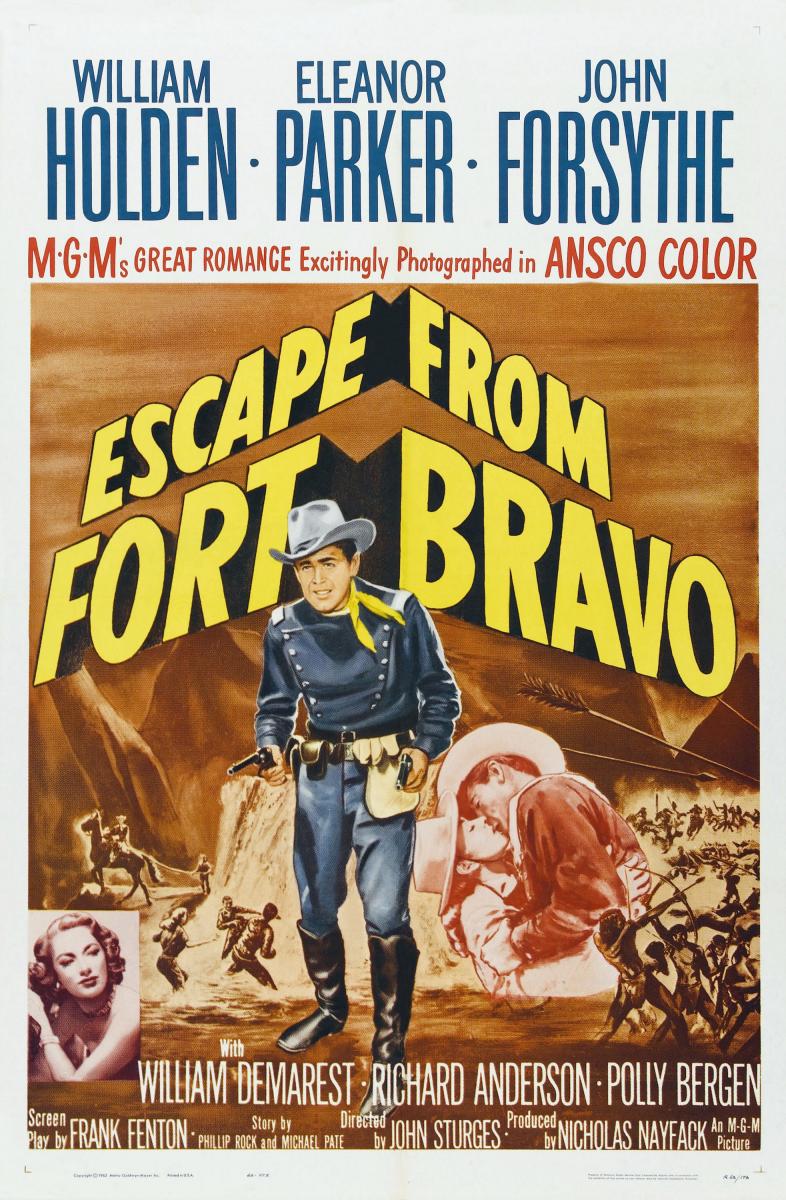
Escape From Fort Bravo (1953)

A ruthless Union captain is renowned throughout his prison fort as the toughest soldier in the business, capable of capturing every escaped convict under his supervision. However, when he falls in love with a visiting woman some of the prisoners seize the advantage and try to escape while he is in a more "mellow" mood.
M.G.M.s Great Romance Excitingly photographed in Ansco Color.
Cabot Young: One of these days I'm gonna' take that little gray cap and knock it right off'n your head.
Campbell: And you know somethin', Cabot? From that day on I'll be wearin' yours.
Corriganville, Ray Corrigan Ranch, Simi Valley, California, USA
Death Valley National Park, California, USA
Gallup, New Mexico, USA
Ford Butte, New Mexico, USA
Rattlesnake, New Mexico, USA
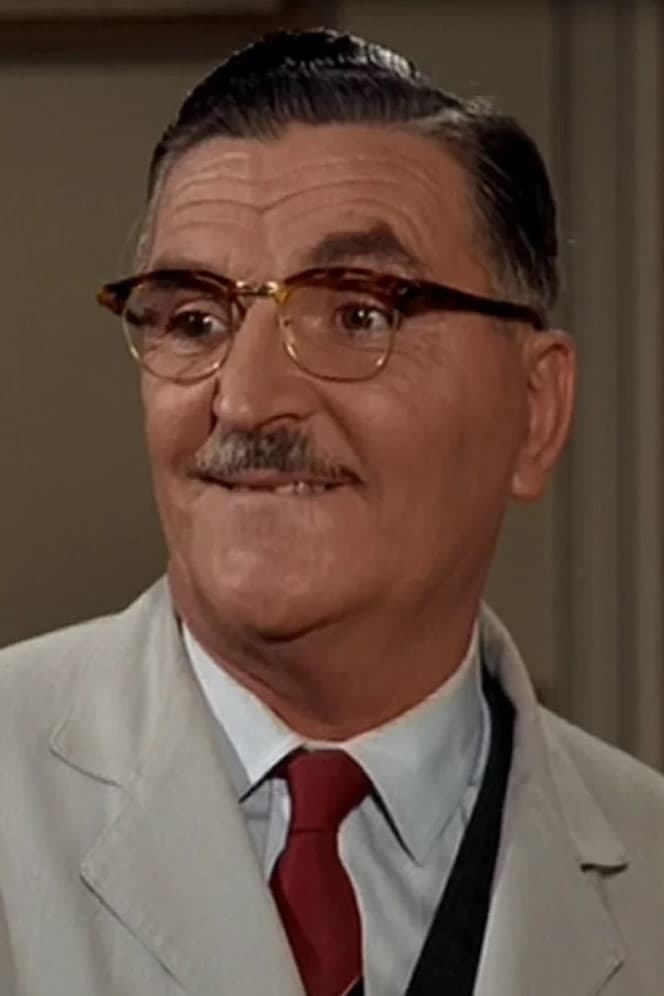
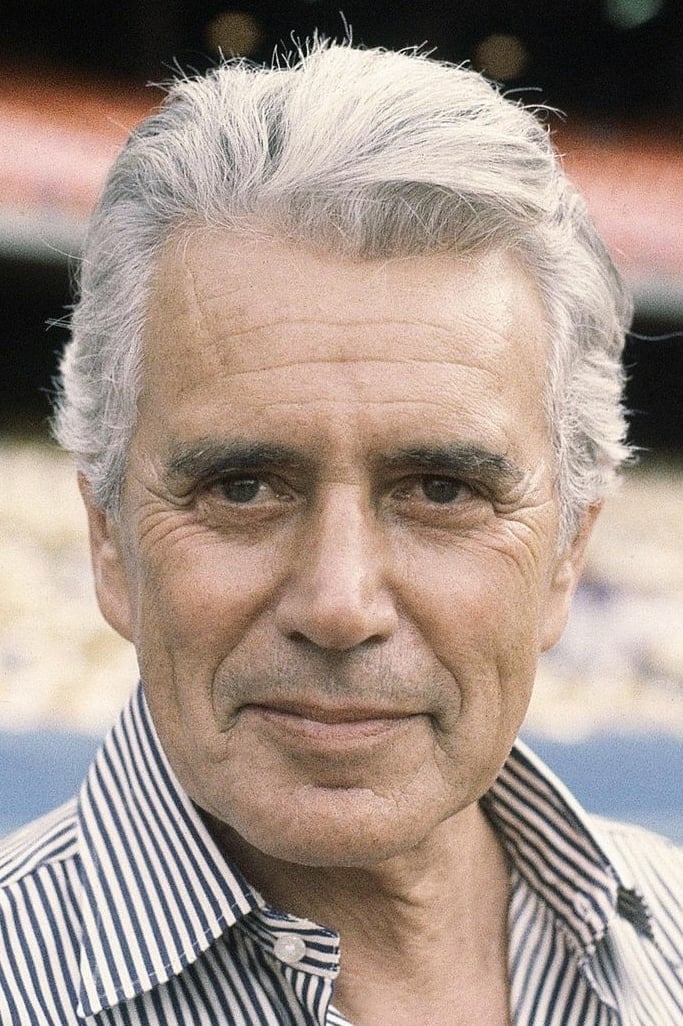
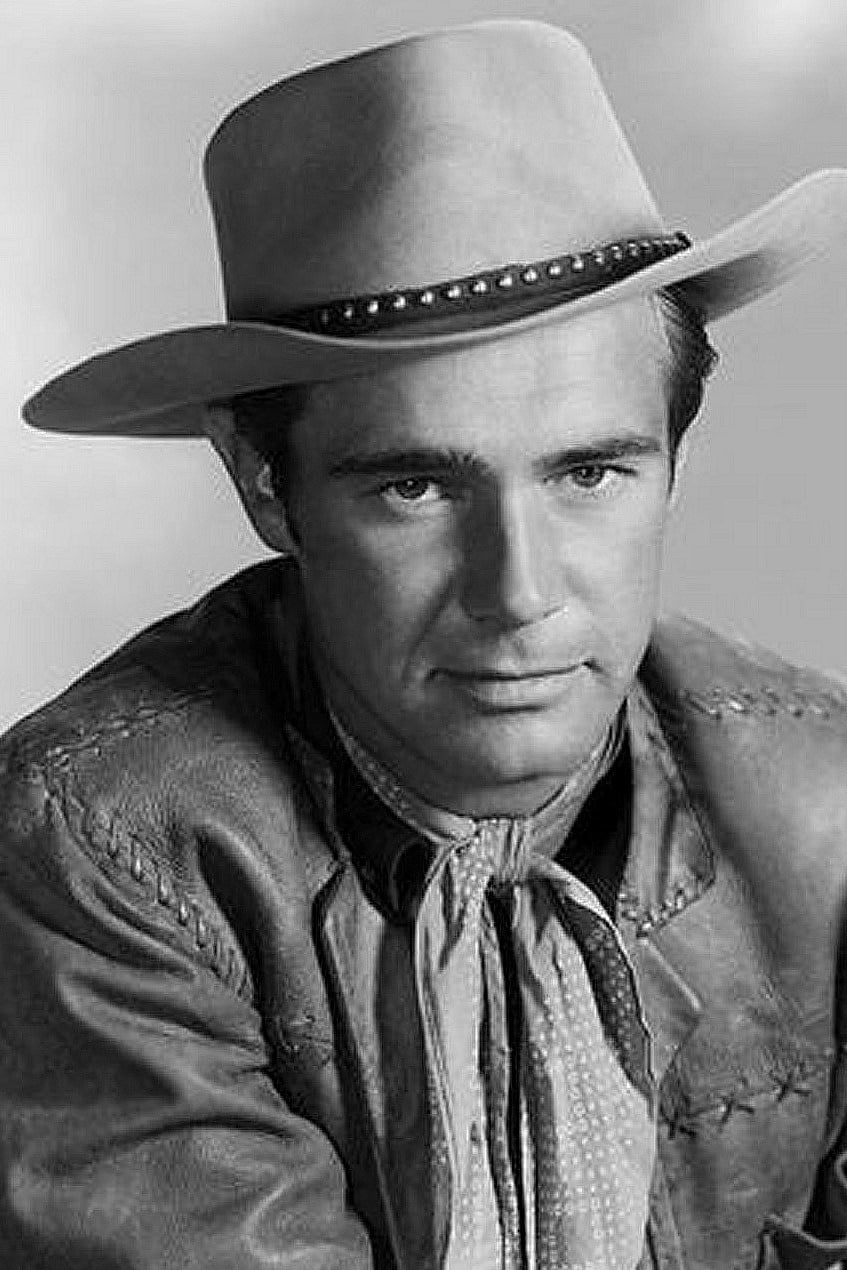

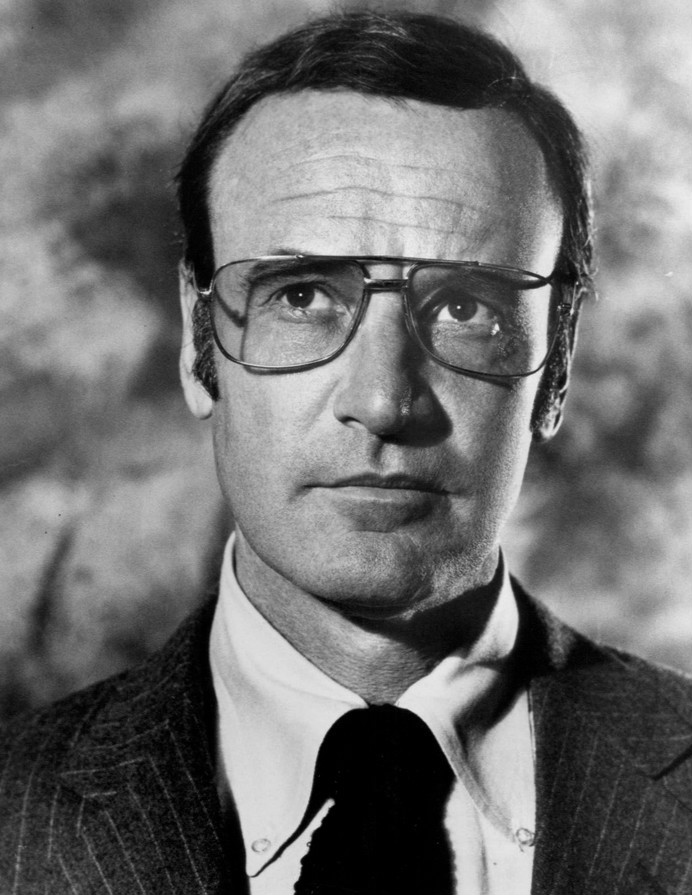
This film was a mild success at the box office, earning MGM a profit of $104,000 (about $1.2M in 2023) according to studio records. It brought in about $110,000 more outside of North American that it did in the USA and Canada - a financial rarity for the time.
The small pistol Carla has is called a pepperbox (or pepperpot). Each barrel is loaded individually and has to be manually rotated to be fired. These types of guns were invented in the 1830s and predate the modern revolver by just a few years.
This was planned to be filmed in 3D, but was eventually filmed in 2D, the first feature to employ spherical Panavision lenses.
Richard Anderson was wounded in his shoulder and leg during the "arrow rain" scene.
Prologue: "In 1863, while the War Between the States still raged, a large group of Confederate prisoners were held in a sun baked stockade at Fort Bravo, Arizona Territory." "Captor and captive--these men in blue and gray--eyed each other with hatred." ?In the wilderness around them a common enemy eyed them both--the deadly Mescalero Indians."
Continuity
Capt. Roper is in a gunfight in Death Valley and is shot in the left shoulder. When riding into town his right arm is in a sling.
When Capt. Roper is camping with his troop for the night and hears the noise of Mescaleros chasing a stagecoach the scene goes from night time to bright sunny day to night time again by the time the stagecoach comes to a complete stop (19:07 to 20:18).
Near the end William Holden gets shot in the left arm when challenging the Indians but at the very end of the movie his right arm is bandaged instead.
Factual errors
Director John Sturges likes to dress his P.O.W officers in their dress uniforms. Common sense would dictate that a soldier is usually not wearing his dress uniform when captured and wouldn't get issued one while in prison.
There were no Union Civil War POW camps in Arizona. In fact the closest one to Arizona would be a Confederate one in Tyler, Texas.
Miscellaneous
All the Union soldiers were wearing brand new uniforms and boots.
Carla has so many outfits that is stretches credulity.
Anachronisms
The ladies' dresses had zippers, which were not invented until 1913.
"Oh Dem Golden Slippers", which is heard in the saloon in Lordsville, was written in 1879;
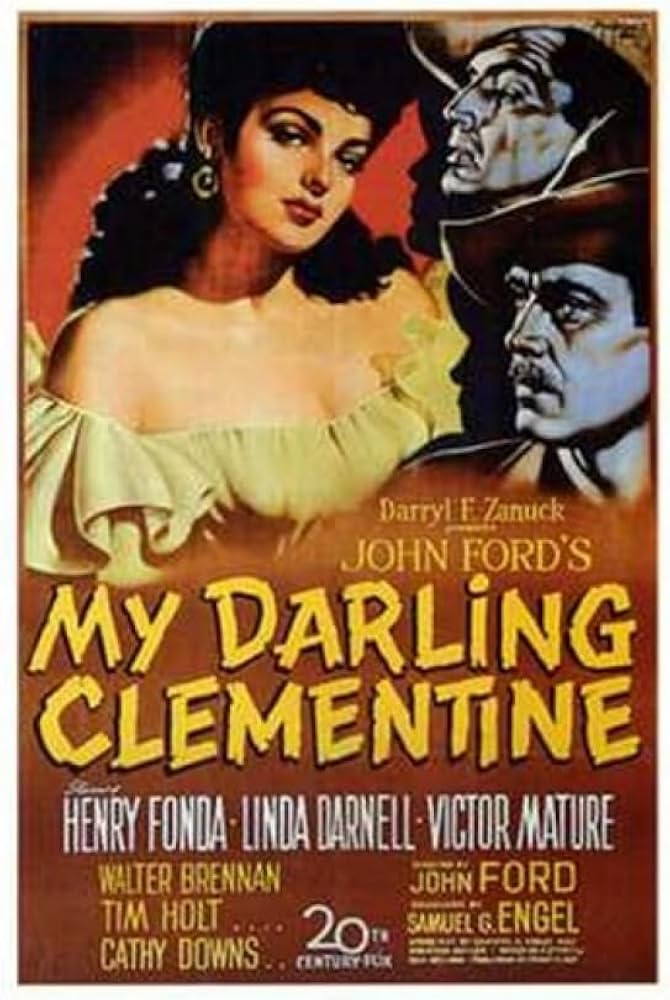
The music at the wedding reception is "My Darling Clementine," which wasn't written until 1884.
Lt. Beecher scans the horizon with a very modern pair of binoculars.
"Little Brown Jug", which is heard as a theme, was not written and published until 1869.
Errors in geography
Although the film is set in Arizona, when Captain Roper is with Carla Forester in the camp after he rescues her from the stagecoach, towards the beginning of the movie, the matte painting clearly shows Devil's Tower which is located in Wyoming.