The Cowboys (1972)

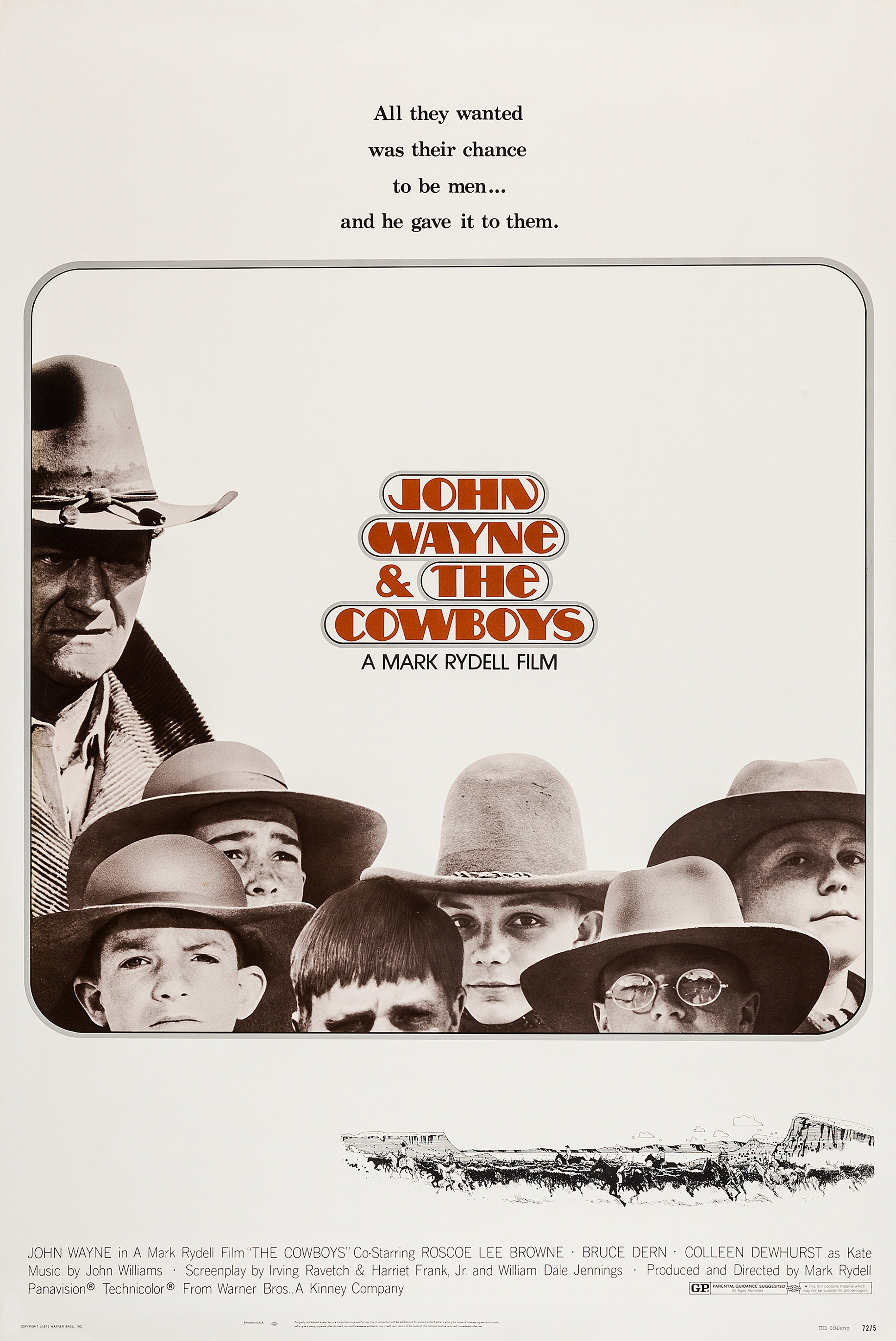
In one of John Wayne's more interesting late Westerns, "The Duke" plays Will Anderson, a crusty veteran cattleman preparing a 400-mile drive to get a herd of steers to market. Shortly before the trip is scheduled to begin, Will's crew quits when they get word of a nearby gold strike. With little time and few alternatives, Will recruits eleven boys, ages nine through 13, and teaches them the basics of herding cattle and riding the range. Bruce Dern plays a memorably foul villain and cattle rustler named Long Hair, while Roscoe Lee Browne portrays Jebediah, the cattle drive cook, and Colleen Dewhurst is Kate, a madam.
"All they wanted was their chance to be men...and he gave it to them."
Wil Andersen: There ain't a kid in that school over fifteen. They're between hay and grass. I need men.
Anse Petersen: How old was you when you went on your first cattle drive?
Wil Andersen: What difference does that make?
Anse Petersen: How old was you,
Bonanza Creek Ranch - 15 Bonanza Creek Lane, Santa Fe, New Mexico, USA
Buckskin Joe Frontier Town & Railway - 1193 Fremont County Road 3A, Canon City, Colorado, USA
Castle Rock, Colorado, USA
Chama, New Mexico, USA
Colorado, USA
Eaves Movie Ranch - 105 Rancho Alegre Road, Santa Fe, New Mexico, USA
Galisteo, New Mexico, USA
Pagosa Springs, Colorado, USA
San Cristobal Ranch - 90 San Cristobal Ranch Road, Lamy, New Mexico, USA
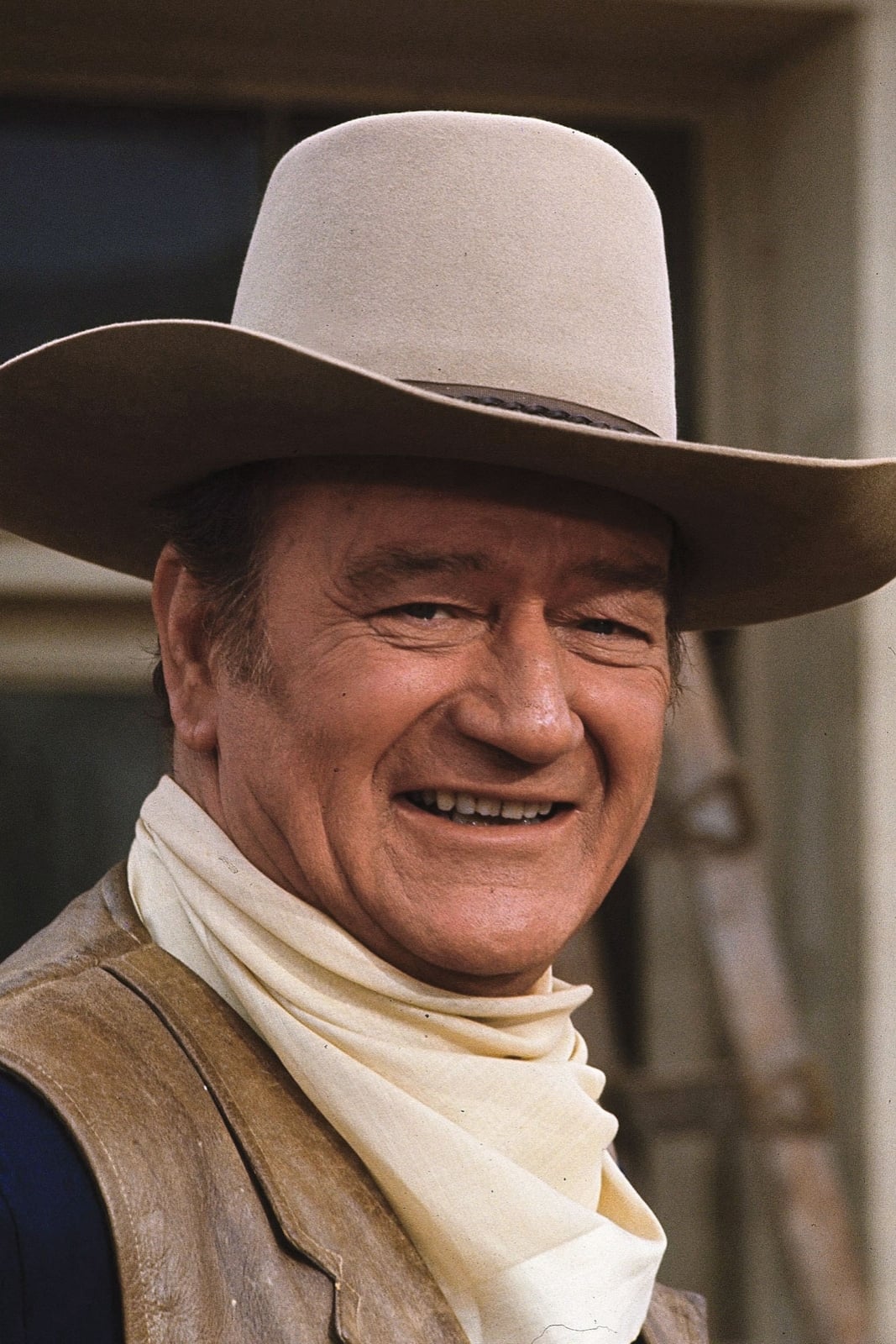
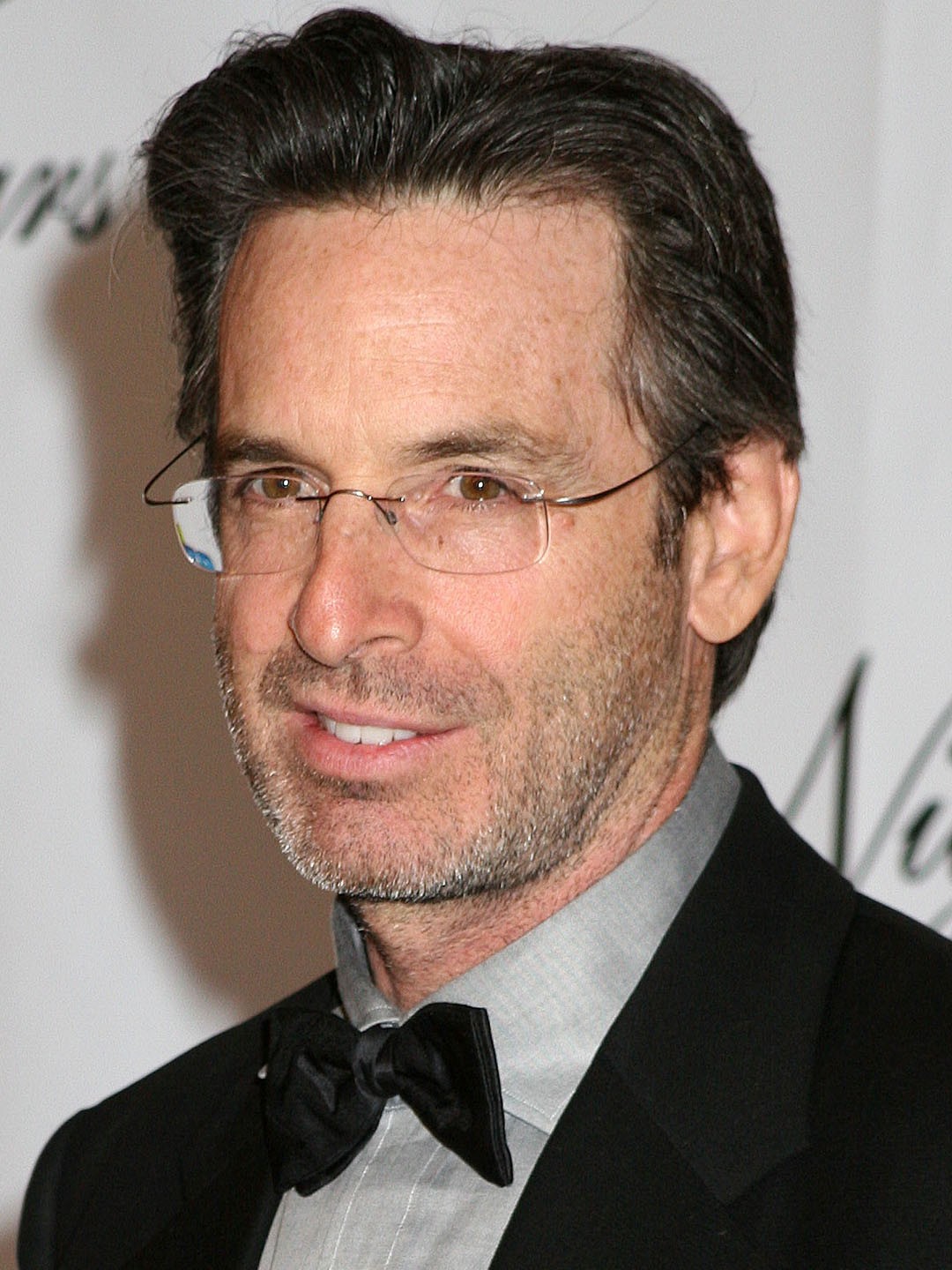
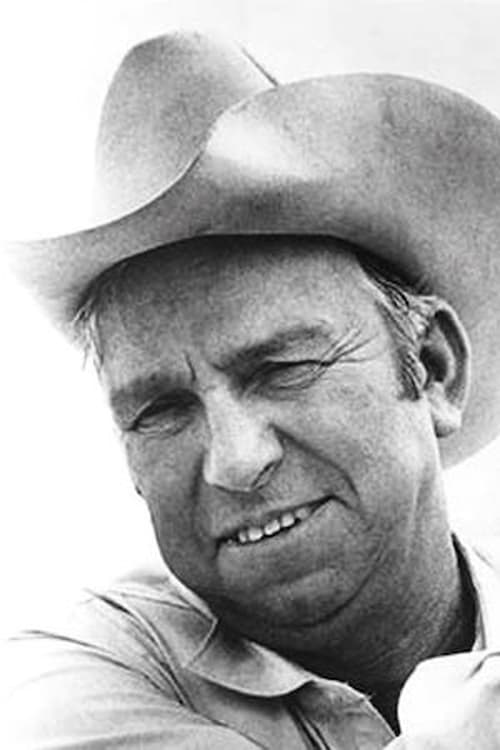
Mark Rydell originally sought George C. Scott for the role of Wil Andersen because he despised John Wayne's views on the Vietnam War and other aspects of U.S. foreign policy. Ironically, some critics in 1972 believed that the way in which Wayne's character drafts the children out of school was a pro-war allegory for Vietnam.
John Wayne actually pleaded with director Mark Rydell to allow him to play Wil Anderson. According to Rydell, he immediately responded to Wayne saying, "How the hell are we going to work together? I hate everything you stand for politically, and you despise my liberal points of view." Wayne replied, "Well, we'll just talk about acting." The two got along after that and Rydell expressed that Wayne told him that working on this film was the greatest experience he had in his life with Rydell later confessing he may have misjudged Wayne, finding the actor to be warm, friendly, and easy to work with. "He sure impressed me," Rydell would say in an interview on the "John Wayne Gritcast with Ethan Wayne."
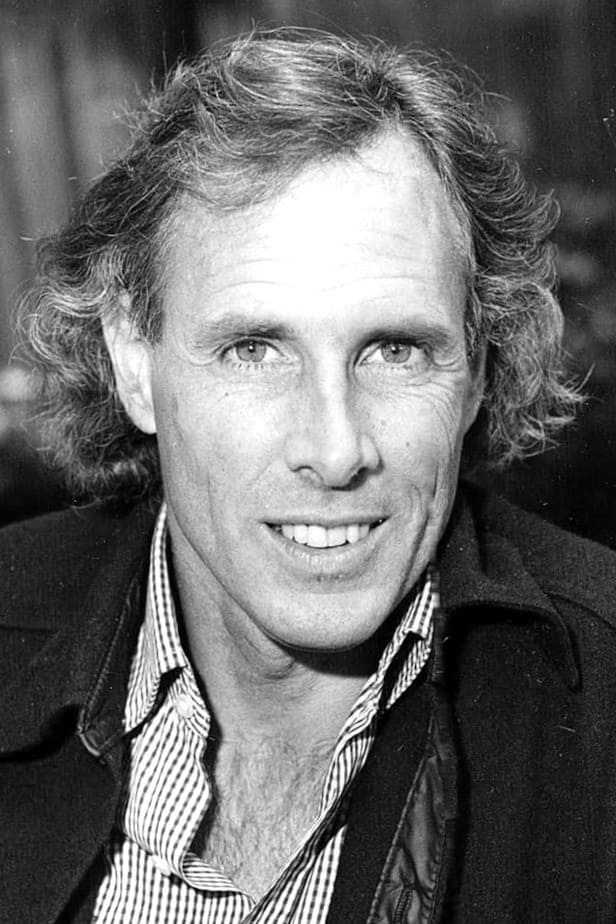
When asked if he was intimidated by working with John Wayne, Bruce Dern replied, "I might have been. But right at the start, he says to me, 'I want you to do us a favor.' He was including himself, [director] Mark Rydell, and the scriptwriters. He said, 'From now on, consider me to be somebody you can publicly kick the shit out of 24 hours a day on the set. Because I want these little kids [playing the cowboys of the title] to be absolutely terrified of you.' He gave me carte blanche to just treat him like a turd. So I was on him, talking back to him and stuff, for the few days I was there. And he would do things like call out: 'Hey, Mr. Dern, would you get over here?' I thought, hey, John Wayne gives you a 'mister' status. My first day, he's calling me mister. How about that? That's pretty cool."
Richard Farnsworth plays a member of Asa Watts's gang, one of the first roles in which his face is actually seen on screen. Farnsworth had been a stuntman and extra since the 1930s.
The film debut of Robert Carradine.
Continuity
When Andersen sends one of the boys back to find Mr. Nightlinger, he is riding a pale Appaloosa. He rides ahead to talk to another boy, but is now riding a red sorrel.
As the Cowboys are taking turns riding Crazy Alice a Flank Strap can be seen, causing Crazy Aice to buck and try to throw the riders off. In between rides, the flank Strap is gone.
When Cimarron breaks Crazy Alice, he is holding the rein in his left hand in the long shots, and in the close up shots it's in his right hand.
Cimarron first rides Crazy Alice, and is able to bring her under control, however, the bucking bronco and the horse under control are clearly 2 different horses. Note the long hair on the coat of Crazy Alice.
In the schoolroom, John Wayne wipes the blackboard with his right jacket sleeve. When he leaves the schoolroom, there is no chalk on his sleeve.
Factual errors
On the DVD special features, images of Sarah Cunningham (as Annie Anderson) are used in the "Cast & Crew" information for Colleen Dewhurst.
Roscoe Lee Brown's height is listed at 6' 1.5", however in his first scene with John Wayne and the boys, he only reaches John Wayne's shoulder, and stands at eye-level with Mrs. Anderson.
Before electricity, candlelight or oil lamps would not have produced enough light to light up every window in the house as seen near the 12 min mark.
Revealing mistakes
After Charlie Schwartz is buried, he rides by in the next scene on his horse while Cimarron and Mr. Andersen talk.
When Mr. Andersen is branding the calf during roundup, he only touches the iron to the calf once even though the brand on other livestock clearly shows two distinct O's. Before he brands the calf, one can clearly see that the iron is a single O.
It appears that the Double O ranch has two different brands. During roundup and later in the film, the cattle wear a brand of two distinct O's separated by about 12 inches. In the scene before they start the drive, one of the horses appears to have a brand consisting of two Os connected horizontally. This brand should be the same as the brand the cattle wear. In addition, the connected Os might be called a lazy 8.
When Mr. Andersen is tying up Crazy Alice for the cowboys to ride, the horse changes from a dark-maned horse to one with a lighter brown mane.
When Dan and Charlie are on the ridge above the cows, they are supposed to be guarding the herd at night. The shot uses a darkening technique to give the appearance of night time (called "day for night") while shooting during the day. However, in several shots, bright blue sky can be seen in the far background and when the boys are on the horses they have sharp, well-defined shadows under them.
Miscellaneous
The "height requirement" line Mr. Andersen draws on the black board changes (gets straighter) after he's gone.
The teacher calls Homer and Bob by each other's names when she asks them to adjust the blackboard.
Anachronisms
Belle Fourche, SD, the destination of the cattle drive in the film did not have a railroad line running to it until the late 1880s well after the setting of the film. In 1877, there would have only been a stagecoach way station.
Before the trail drive, while Andersen is talking to the boys at the homestead, the mountain behind him has a visible white object at the top. The USAF radar site wasn't there until the early 1950s.
When the old bull and young bull are fighting, the old bull is a Brahman cross bull, probably a beefmaster or beefmaster type. This is easily identified by the loose skin, particularly around the sheath, and slightly larger ears. However, the first Brahman cattle were imported into the United States in 1854 from India and were used in a circus; cattle for breeding were not imported until the end of the 1800s. These cattle were kept solely in the Gulf states until well into the 1900s due to the fact that they are extremely heat-tolerant but do very poorly in colder climates. Even today's Brahman and cross cattle could not survive in the extreme winter weather of the north. (See: American Brahman Breeders Association, History of Brahman Cattle) While this would be unnoticed by anyone who was not very familiar with breeds of cattle, it would never occur in real life.
Jet contrails near the beginning.
The story takes place in approximately 1876. The company that made the Big Chief tablets used to prop up the chalkboard in the classroom wasn't established until 1906.
Errors in geography
In the middle of the dust bowl, there would not have been 200 big trees to chop down and turn into log cabin ranch houses and corral posts.
Plot holes
Even if the eponymous Cowboys could have driven the herd to Belle Fourche, it wouldn't have mattered as there was no rail line there in 1877 to move the cattle anywhere else. The railroad arrived in the late 1880's and the first cattle shipment was in 1890.
When Mr. Andersen is in the school, he puts a mark for his ranch, the Double-O, on the board. He states his ranch is here and he draws a line down and to the right (south east) to Belle Fourche, 400 miles away. This would place his ranch around Lewiston, Montana. Belle Fourche did not become a railroad shipping point for cattle until 1890.
Character error
When the boys go to have the tombstone made, they tell the stone carver that the name is Wil Andersen but don't spell it out. This is an unusual spelling of both names (Wil vs. Will and Andersen vs. Anderson) and its unlikely the boys would have known the correct spelling and that the stone inscription would be correct.