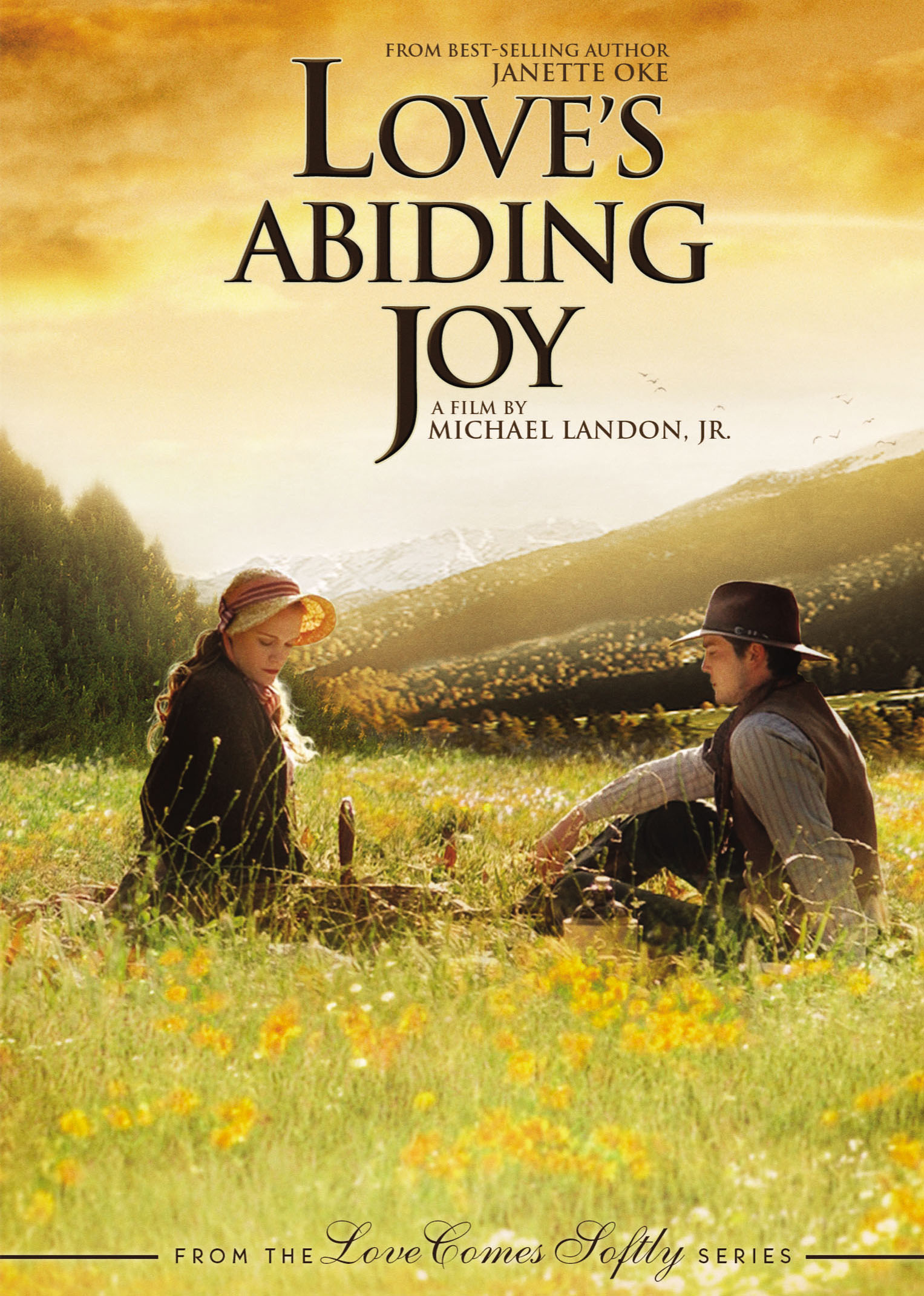
The Caine Mutiny (1954)

During the World War II, the crew of a small insignificant ship in the U.S. Pacific Fleet experience an event unlike any event ever experienced by the United States Navy. A Ship's Captain is removed from command by his Executive Officer in an apparent outright act of mutiny. As the trial of the mutineers unfold, it is learned that the Captain of the ship was mentally unstable, perhaps even insane. The Navy must decide if the Caine Mutiny was a criminal act, or an act of courage to save a ship from destruction at the hands of her Captain?
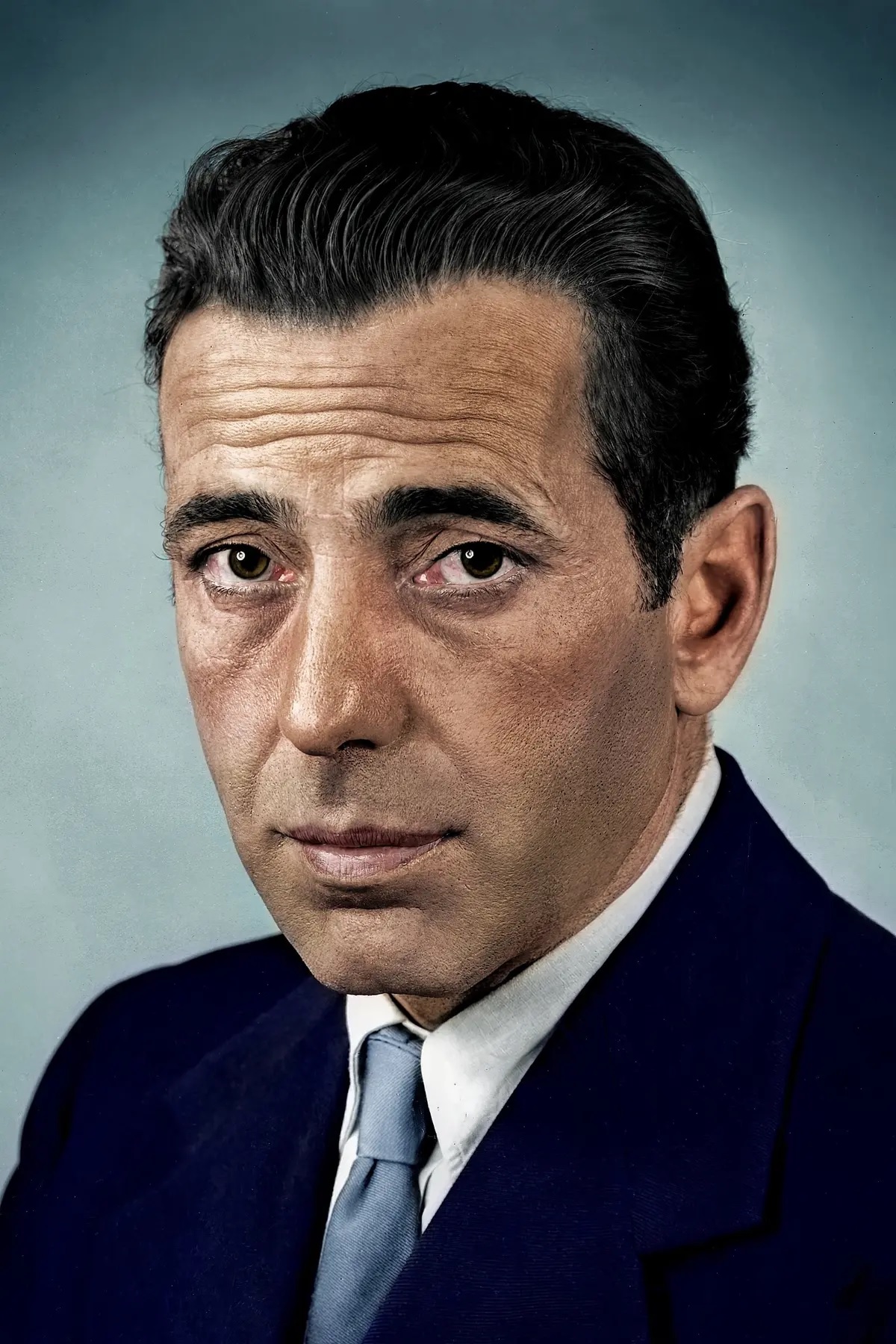
Humphrey Bogart as Queeg... the Captain and the cause of "Caine Mutiny"
Lt. Commander Philip Francis Queeg: Aboard my ship, excellent performance is standard, standard performance is sub-standard, and sub-standard performance is not permitted to exist - that, I warn you.
Captain Queeg: Ahh, but the strawberries! That's - that's where I had them. They laughed at me and made jokes, but I proved beyond the shadow of a doubt and with - geometric logic - that a duplicate key to the wardroom icebox DID exist! And I'd have PRODUCED that key if they hadn't've pulled the Caine out of action! I, I, I know now they were only trying to protect some fellow officers -
[breaks off in horror, becomes hesitant]
Captain Queeg: Umm... naturally, I can only cover these things roughly, from - memory... but if I've left anything out... why, you just ask me - specific questions and I'll be - perfectly happy to answer them... one by one.
[Greenwald staggers into the Caine crew's party, inebriated]
Lt. Barney Greenwald: Well, well, well! The officers of the Caine in happy celebration!
Lt. Steve Maryk: What are you, Barney, kind of tight?
Lt. Barney Greenwald: Sure. I got a guilty conscience. I defended you, Steve, because I found the wrong man was on trial.
[pours himself a glass of wine]
Lt. Barney Greenwald: So, I torpedoed Queeg for you. I
had
to torpedo him. And I feel sick about it.
[drinks wine]
Lt. Steve Maryk: Okay, Barney, take it easy.
Lt. Barney Greenwald: You know something? When I was studying law, and Mr. Keefer here was writing his stories, and you, Willie, were tearing up the playing fields of dear old Princeton, who was standing guard over this fat, dumb, happy country of ours, eh? Not us. Oh, no, we knew you couldn't make any money in the service. So who did the dirty work for us? QUEEG did! And a lot of other guys - tough, sharp guys, who didn't crack up like Queeg.
Ensign Willie Keith: But no matter what, Captain Queeg endangered the ship and the lives of the men.
Lt. Barney Greenwald: He didn't endanger anybody's life; YOU did,
all
of you! You're a fine bunch of officers.
Lt. JG H. Paynter Jr.: You said yourself he cracked.
Lt. Barney Greenwald: I'm glad you brought that up, Mr. Paynter, because that's a very pretty point. You know, I left out one detail in the court martial. It wouldn't have helped our case any.
[to Maryk]
Lt. Barney Greenwald: Tell me, Steve, after the Yellowstain business, Queeg came to you guys for help and you turned him down, didn't you?
Lt. Steve Maryk: [hesitant] Yes, we did.
Lt. Barney Greenwald: [to Paynter] You didn't approve of his conduct as an officer - he wasn't WORTHY of your loyalty! So you turned on him. You ragged him - you made up songs about him. If you'd given Queeg the loyalty he needed, do you suppose the whole issue would have come up in the typhoon?
[to Maryk]
Lt. Barney Greenwald: You're an honest man, Steve, I'm asking you. You think it would've been necessary for you to take over?
Lt. Steve Maryk: [hesitant] It probably wouldn't have been necessary.
Lt. Barney Greenwald: [muttering slightly] There!
Ensign Willie Keith: [horror-stricken] If that's true, then we
were
guilty.
Lt. Barney Greenwald: Ah, you're learning, Willie! You're learning that you don't work with a captain because you like the way he parts his hair; you work with him because
he's GOT
the job, or you're no good! Well, the case is over. You're all safe. It was like shooting fish in a barrel.
[long pause; strides toward Keefer]
Lt. Barney Greenwald: And now we come to the man who
should
have stood trial. The Caine's favorite author. The Shakespeare whose testimony nearly sunk us all. Tell 'em, Keefer!
Lieutenant Tom Keefer: [stiff and overcome with guilt] No, you go ahead. You're telling it better.
Lt. Barney Greenwald: You ought to read his testimony. He never even heard of Captain Queeg!
Lt. Steve Maryk: Let's forget it, Barney!
Lt. Barney Greenwald: Queeg was sick; he couldn't help himself. But you, you're
real
healthy. Only you didn't have one tenth the guts that HE had!
Lieutenant Tom Keefer: Except I never fooled myself, Mr. Greenwald.
Lt. Barney Greenwald: I'm gonna drink a toast to you, Mr. Keefer.
[pours wine in a glass]
Lt. Barney Greenwald: From the beginning you hated the Navy. And then you thought up this whole idea. And you managed to keep your skirts nice, and starched, and clean, even in the court martial. Steve Maryk will always be remembered as a mutineer. But you, you'll publish your novel, you'll make a million bucks, you'll marry a big movie star, and for the rest of your life you'll live with your conscience, if you have any. Now here's to the
real
author of "The
Caine
Mutiny." Here's TO you, Mr. Keefer.
[splashes wine in Keefer's face]
Lt. Barney Greenwald: If you wanna do anything about it, I'll be outside. I'm a lot drunker than you are, so it'll be a fair fight.
Ahwanee Hotel, Yosemite Valley, Yosemite National Park, California, USA
(Willie Keith and May Wynn stay at the hotel)
Naval Station Treasure Island, San Francisco Bay, California, USA
Pearl Harbor, O'ahu, Hawaii, USA
Yosemite National Park, California, USA
(Yosemite Falls, Yosemite Valley, Glacier Point, Ahwanee Hotel)
Royce Quad, UCLA, Westwood, Los Angeles, California, USA
(graduation ceremony at opening of film)
The fate of the USS Hull, one of three US Navy destroyers lost during Typhoon Cobra in December 1944, served as the basis for the mutiny in the story. According to his firsthand account, Boatswain's Mate First Class John Ray Schultz directly confronted Hull's CO, Lt. Cmdr. James A Marks, about his handling of the ship as she was entering the worst of the typhoon. Schultz implored Hull's XO, Lt. Greil Gerstley, an expert ship handler, to assume command but he refused citing fear of a court martial for mutiny. Other surviving witnesses on the bridge described Marks as paralyzed and indecisive, issuing questionable maneuvering orders, and declining to take on leveling ballast to help keep the ship upright after severe rolls, a decision his XO strongly disagreed with. A powerful gust exceeding 100 knots eventually rolled Hull over to her side and she did not recover. The ship flooded rapidly and 202 of her crew were lost. 62 others were subsequently rescued including Captain Marks. A board of inquiry did not find fault with Marks (none of the incidents on the bridge were brought up by anyone) but rather with Adm. Halsey for sending his fleet directly into the massive storm, although no disciplinary action was recommended. Some survivors of the Hull laid the blame for ship's loss exclusively on the Captain. James Marks committed suicide in 1986.
The white cream that the officers put on their faces during combat is anti-flash cream and was designed to protect their faces from skin burns from the fireballs from the ship's guns.
Humphrey Bogart's tour-de-force performance in the climactic courtroom scene was so powerful, that it completely captivated the on looking film technicians and crewmen. After the scene's completion, the company gave Bogart a round of thunderous applause.
Producer Stanley Kramer gave Fred MacMurray a prominent role in this movie during a difficult period in his life--his wife had just died, and work was a needed distraction for him.
The US Navy was never happy about the depiction of Capt. Queeg as a madman in the novel, with the implication that it would hire or keep in place someone so clearly deranged. The film version skirted around that rather contentious issue by making Queeg a victim of battle fatigue or PTSD.
Continuity
During the trial, the windows in the room change back and forth from being wide open to only slightly open, especially the window behind E.G. Marshall.
Just before the Caine runs over the target towline, Queeq is on the bridge chewing out Willie and Keefer due to "Horrible" having his shirt untucked. The film shifts to show the target being run over, then immediately goes back to Queeg and company on the bridge--"Horrible's" shirt is suddenly neatly tucked in (seconds before, Queeq had even ordered him not to tuck it in).
When Willie is talking to May at Yosemite, her hair changes constantly depending whether she's seen from the front (groomed and motionless) or the back (tossed and blowing).
During the typhoon sequence, distant shots show the Caine model missing the forward stack and foremast before the close-up shots showing the actual collapse of both structures.
During the first officers' meeting with Capt. Queeg, Seaman 1st Class Urban enters the wardroom. As the POV switches from behind Queeg to in front of him, his left arm from on the table (from behind) then on the arm of the chair (from in front).
Factual errors
In the opening credits it states that "There has never been a mutiny in a United States Navy ship". At the time of filming there had in fact been one mutiny, in 1842 aboard the brig USS Somers. The mutiny was unsuccessful and three of the mutineers were tried and executed.
When the old Captain is leaving the ship, he says that he cannot accept the watch as a gift, but a departure gift from crewmen is allowed, as long as it is a modest amount and no quid pro quo is implied. A gifted watch would fit that criterion.
In heavy weather, not even typhoon caliber, the weather (exterior) decks of the ship would have been secured; meaning no one is to venture outside except in extraordinary circumstances or to abandon ship. In the real world, Maryk would have communicated Queeg's relief of duty to each officer via phone rather than ordering them all up to the bridge during a typhoon.
At the end when Capt. DeVrees comes on board his new ship, he should have stopped at the gangway, saluted the flag, saluted the OOD (Officer on Deck) and asked for permission to come aboard. He didn't. Given his lax nature earlier in the film, this isn't out of character.
Capt. Queeg, played by 53-year-old Humphrey Bogart, is clearly far too old to have been from the graduating class of 1936. Based on this chronology, the character of Queeg would have to be about 30.
Incorrectly regarded as goofs
When Ens. Keith arrives on the Caine, Lt. Keefer asks for his orders which Keith hands over. Lt. Keefer then gives them to a seaman who disappears with them. On the way to DeVriess' quarters, Keefer and Keith walk down a passageway and no envelope is seen in Keith's or Keefer's hand, yet when they walk through the doorway, the orders are back in Keith's hand. However, if watched carefully, Keefer takes out a single sheet to hand to the sailor behind him. Keefer gives the envelope jacket back to Keith. Keith is then introduced to Maryk who escorts him to see the Captain. Keith has his packet with him in all scenes, sometimes in his hand or under his arm.
The Caine is a Minesweeper. Two references are made as to her being made of steel "rust is holding her together" and a comment about that she should be scrapped to make razor blades. Minesweepers have wooden hulls. The USS Caine is a Destroyer/Minesweeper (DMS), a Destroyer converted to mine-laying/mine-sweeping duty, and therefore, would be made of steel. Only ships built specifically for mine-sweeping duty would be made of a non-magnetic material, i.e., wood. In the novel, the Caine is an old WWI "four poster" destroyer, with four (4) funnels (smokestacks), not the much later two-funnel design used in the film, so converting an old, obsolete WWI-era ship for emergency use in WWII would be expected, to free up more modern ships for front line combat duty.
Revealing mistakes
Throughout the film, every character wears his American Campaign Medal ribbon upside down (rotated 180 degrees), with the interior red stripe incorrectly on the left. This may be a deliberate decision by the filmmakers, to avoid a charge of "Impersonating an Officer". Although the law against this offers an exception to the rule for dramatic performances on stage or in films, many filmmakers still deliberately introduce an error that would have the character "out of uniform" in some way, as an additional safeguard that the actor(s) involved cannot be prosecuted under the statute. For example, in "Crimson Tide" (1995), Gene Hackman, as Captain Ramsay, wears the scarlet baseball cap of a Marine, rather than the Navy Blue cap a Naval Officer would wear aboard ship.
The Jones, the ship the Caine is trying to beat back into port, is plainly shown trailing behind the Caine, as seen from the latter's port side. Yet, when Maryk tells Keith, "The Jones never saw the day she could beat us," the two men are looking forward off the port side, which indicates that the Jones had to be ahead of the Caine. Also, no ship is seen behind them, though the Jones and several others had been shown behind, just moments before.
In movie's first "dinner meeting," Fred MacMurray's character sits down to an empty plate; seconds later, out of nowhere, a bowl of soup appears in front of him.
When Queeg first starts rolling the steel balls after First class Urban leaves the room, his left hand is horizontal to his chest, then vertical and then horizontal again between shots.
Anachronisms
When the Caine is first seen, it has the very large peacetime numbers on the side of the ship, but it should have the much smaller war-time numbers on the side of the ship, as it does later in the film.
When Keefer, Keith and Maryk are riding up the aircraft elevator on the carrier, F9F Panther jets are clearly visible in the background sitting in the hanger bay. The F9F Panther did not enter fleet use until 1949.
Maryk, Keefer and Keith go to a carrier as Adm. William F. Halsey's flagship. While the carrier Enterprise did serve as Halsey's flagship early in the war, his flagship, by this time, was the USS New Jersey, a battleship.
Willie witnesses a Firefall on his trip to Yosemite. The Firefall was suspended at the onset of World War II, and except for one night in 1943 (before the scene is set), was not re-established until after the end of the war.
At the Navy administration building in San Francisco where the trial takes place, most of the automobiles shown are post-war. Among these are a 1949 or 1950 Ford, some early 1950s GM cars (perhaps Chevrolets or Pontiacs) and what looks like an early 1950s Plymouth.
Plot holes
The "Yellow Stain Incident" took place during what was depicted as being a major amphibious operation (in the novel it was said to have happened during the attack on Kwajalein atoll). Many ships and aircraft are shown supporting the attack. Somebody--a pilot, an observer on a another ship, the surviving Marines in the boats (if any in fact survived) the Caine abandoned--should have been able to corroborate the story of the Caine dropping a dye marker and retiring at high speed and without authorization.
Queeg gains a reputation as cowardly during the escort of the landing craft when, under fire, he orders the ship to divert prematurely and instead leaves a yellow dye marker for the landing craft (the "Yellowstain" incident). However, during the typhoon and the Caine is in danger, the XO suggests changing course to a heading that would provide more stability and safety. A coward would readily agree, but Queeg insists they remain on the course as ordered, even though it jeopardizes the ship and men (including, of course, Queeg himself).
Character error
When the Caine receives its orders, the on-screen ticker tape says it's to escort the landing craft to "one thousand yards of beach". It should have said "off", meaning one thousand yards from the beach.